Synopsis: I once suggested to a protege of mine, the CEO of a large bank, that he should chair a meeting using a minimum of words and interruptions: inviting other members to speak in a situation where he would typically hold the floor. He tried, and succeeded. His colleagues found his leadership in that meeting inspiring; the most exemplary and memorable of many such sessions. The great conductors reached the summit of their art by methods that contradicted one another almost point for point. That inconvenient fact quietly dismantles the global trade in transferable best practice — and exposes how often institutions adopt another’s rituals as camouflage for capacity they have never built.
The conductor is the only musician on the concert platform who makes no sound.
I discovered how exposed that leaves you long before I understood why. The Victorian Time Machine was a group of music students from the Victorian College of the Arts — a group whose members would later morph into Elision Ensemble. When I first stood in front of them I possessed a score but no authority beyond whatever they chose to grant me as their contemporary music lecturer. The reality is that orchestral players own every note. The conductor owns only intentions. They remain impalpable until others choose to honour them. All that follows hangs on a transaction conducted almost wholly in silence: a downbeat, a cue, the lift of a shoulder, a glance that either lands or doesn’t.
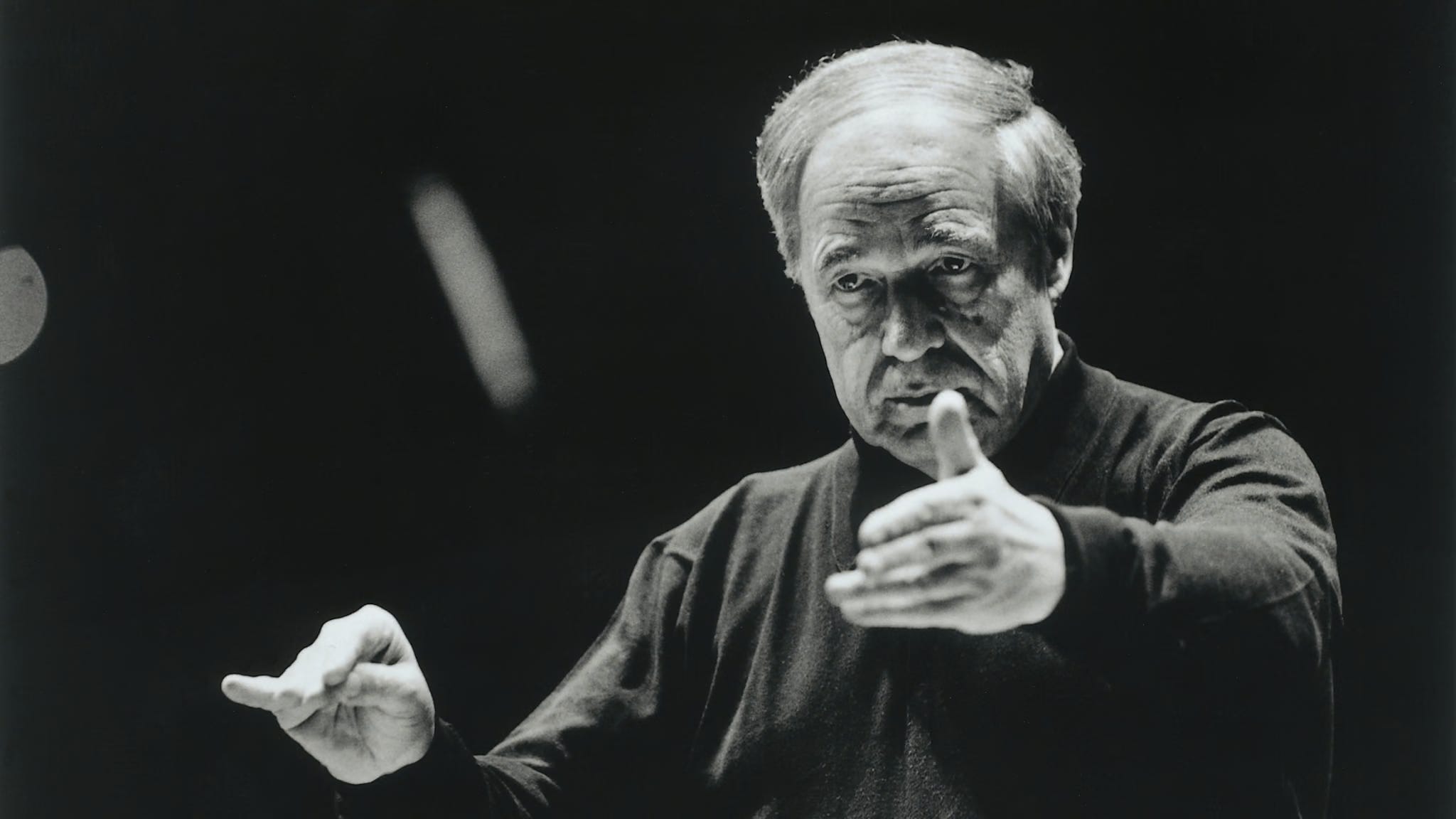
Every young conductor, at that moment, reaches for someone else’s gestures. For me that someone was Pierre Boulez. I had observed him carefully from the cheapest seats in the hall, and part of me assumed that if I moved as he moved, dispensing with the customary baton, the sound would arrive as his did. It does not. Borrowed gestures produce borrowed confusion — the ensemble reads the conductor’s attire and finds nobody inside it.
That early lesson resurfaced this week as I read an unsigned survey of the manias, rituals and obsessions of the twentieth century’s great conductors. It’s an affectionate catalogue. Read closely, it also undoes one of the most profitable assumptions of our age.
Methods that refuse to agree
Arturo Toscanini, who conducted Aida from memory in Rio de Janeiro at nineteen after the scheduled conductor abandoned the podium, spent the rest of his life at war with approximation — shouting, snapping batons, treating a misplaced crescendo almost as a moral lapse. Wilhelm Furtwängler, his great contemporary, cultivated the antithesis: a downbeat so notoriously tricky to locate that orchestral folklore still trades jokes about it, and a tempo that breathed and wandered because he believed music should materialise rather than be measured. Herbert von Karajan closed his eyes and insisted everything be settled in rehearsal, so that the concert could unfold almost of its own accord.
Sergiu Celibidache refused that principle entirely. A performance, he held, could not exist apart from the acoustic of the hall that shaped it — which is why he rebuilt tempi from venue to venue and distrusted recordings as the husks of events already expired. Carlos Kleiber demanded thirty-four rehearsals for his first Wozzeck in Munich; yet in 1982 his first collaboration with the Berlin Philharmonic foundered over his dissatisfaction with the orchestral parts — parts that had been prepared with his own markings. And Leonard Bernstein, decades into his career, walked onto the podium before the New York Philharmonic and told them he had been wrong about Tchaikovsky’s Fifth all along.
Line them up and the many contradictions are incredible. Control against release. The definitive reading against perpetual revision. Each of these men built a method of extraordinary rigour. No two of them built the same one. Indeed, several built its exact inverse. Yet orchestras played for all of them as though possessed.
Excellence, it turns out, doesn’t travel at all well.
Forms without function
Switch then to the management industry. An entire global trade depends on believing the opposing viewpoint. Leadership programmes, executive retreats, cultural transformation consultancies, the airport shelves groaning with revealing founder biographies — all rest on the premise that exceptional performance can be extracted from those who achieved it, distilled into transferable practice, and installed elsewhere. The conductor is a favourite figure in that literature: the visionary on the podium, many voices obeying one will. That image flatters whoever pays for it.
Development economists, trying to understand why decades of institutional reform so often produced so little, found something very close to the young conductor’s predicament — scaled up in this particular case to entire states. Governments under pressure to come across as capable and caring adopt the outward forms of functional states elsewhere: the anti-corruption commission, the expenditure framework, the strategy document with its pillars and indicators. What those institutions actually do barely shifts. Appearance is a substitute for capacity. Worse, appearance is rewarded, since money and legitimacy keep flowing towards whoever looks to be most reformed. Thus the incentive to build genuine capability withers, sometimes for decades. The forms become camouflage.
Nor is this a pathology of poor countries, whatever the donor literature implies. It encompasses the boardroom that installs another company’s ‘agile’ rituals without its culture of dissent. The ministry that imports a dashboard and calls it reliability. The school system that duplicates a foreign curriculum written for children who live somewhere else entirely. The city that buys a masterplan drawn for a coastline it doesn’t have. Each is the equivalent of a young conductor in front of an orchestra, mimicking the arm of a dead maestro and hearing only sound where the music should be.
Rites outlive faith
In fact, the rituals of these conductors were inimitable ways of reducing uncertainty in an activity no individual can fully control. But every one of those habits sprang from a conviction about what music actually is.
Toscanini’s fury followed from a belief that the score was law, and that departing from it amounted to betrayal. Furtwängler’s pensiveness transpired from a belief that music was a living organism rather than mechanism, alive only while it remained slightly unpredictable. Pierre Boulez conducted with bare, sparing hands because he held the opposite faith: the score is an architecture to be made audible, every strand exposed, nothing blurred by sentiment. Celibidache’s endless rehearsals, and his rejection of recordings, followed from a conviction that a concert is an event inseparable from the acoustics of one particular hall. Bernstein’s public recantation followed from a belief that a great work is a conversation still under way, never fully completed, and never a monument. Strip away the conviction and the ritual becomes superstition — gesture with no one behind it, sustained mostly because stopping feels more dangerous than continuing.
This is the stage our civilisation has reached with many of its own rites. The quarterly GDP figure, the growth target, the five-year forecast, the annual strategy offsite: each began as the expression of a belief about how the world works and what counts as progress. Many of those beliefs have quietly hollowed out. The rituals continue — performed with mounting intensity, the way a frightened conductor beats time harder once the players have decided to go their own way.
My own trade is not exempt. I have watched strategic foresight workshops, a practice I have spent decades trying to refine, copied with all the fidelity of a Karajan impersonation — identical sticky notes, the inevitable two-by-two matrix, the closing plenary — and none of the discomfort that once made the exercise worth doing in the first place. Even this essay is tempted towards the same sleight of hand: line up the maestros, extract the lesson, hand it over neatly wrapped. If the argument holds, the package is worthless. Whatever makes Simon Rattle’s performances with the BRSO unique simply can’t be shipped.
After the last chord
What, then, did these men share, if not a method? A psychological need for order possibly? A bizarre character trait? I prefer to think that each had arrived at a logic between what he trusted, how he put that trust to work, and who he was. And orchestras, ruthless detectors of deception at the best of times, recognised precisely that. Furtwängler’s players could follow a beat nobody else could read because they assumed that an unwavering conviction lay behind that baton.
Authority, in other words, was never the conductor’s to possess. The players granted it, rehearsal by rehearsal. Furthermore, they could withdraw it within a single bar. My students in Melbourne taught me that faster than any textbook could have done. Their attention was a loan, renewed only while I gave them reason to keep extending it.
Which leaves an awkward test for anyone who presumes to lead — a government, a company, a movement, or a family. Bernstein’s admission before the New York Philharmonic is a moment to which I keep returning. A man at the summit of his profession, conducting a work he had performed for decades, told the musicians whose trust sustained him that he had misunderstood it all along. Marin Alsop, who was watching, remembered the rehearsal that followed as a revelation rather than an embarrassment. How many of the figures now steering nations or markets could survive saying the same thing? Perhaps they could. I suspect few have ever risked finding out.
There’s a moment at the end of any performance, after the final chord has died and before the applause begins, when every player is still gazing at the conductor. His arms are raised. He has no cue left to give, and no sound of his own. For a brief instant the whole edifice of authority rests on that suspended gaze — on a habit of looking that has outlasted any reason for it.
Most of our institutions are living inside that instant. The music has stopped. We are still watching the arms.