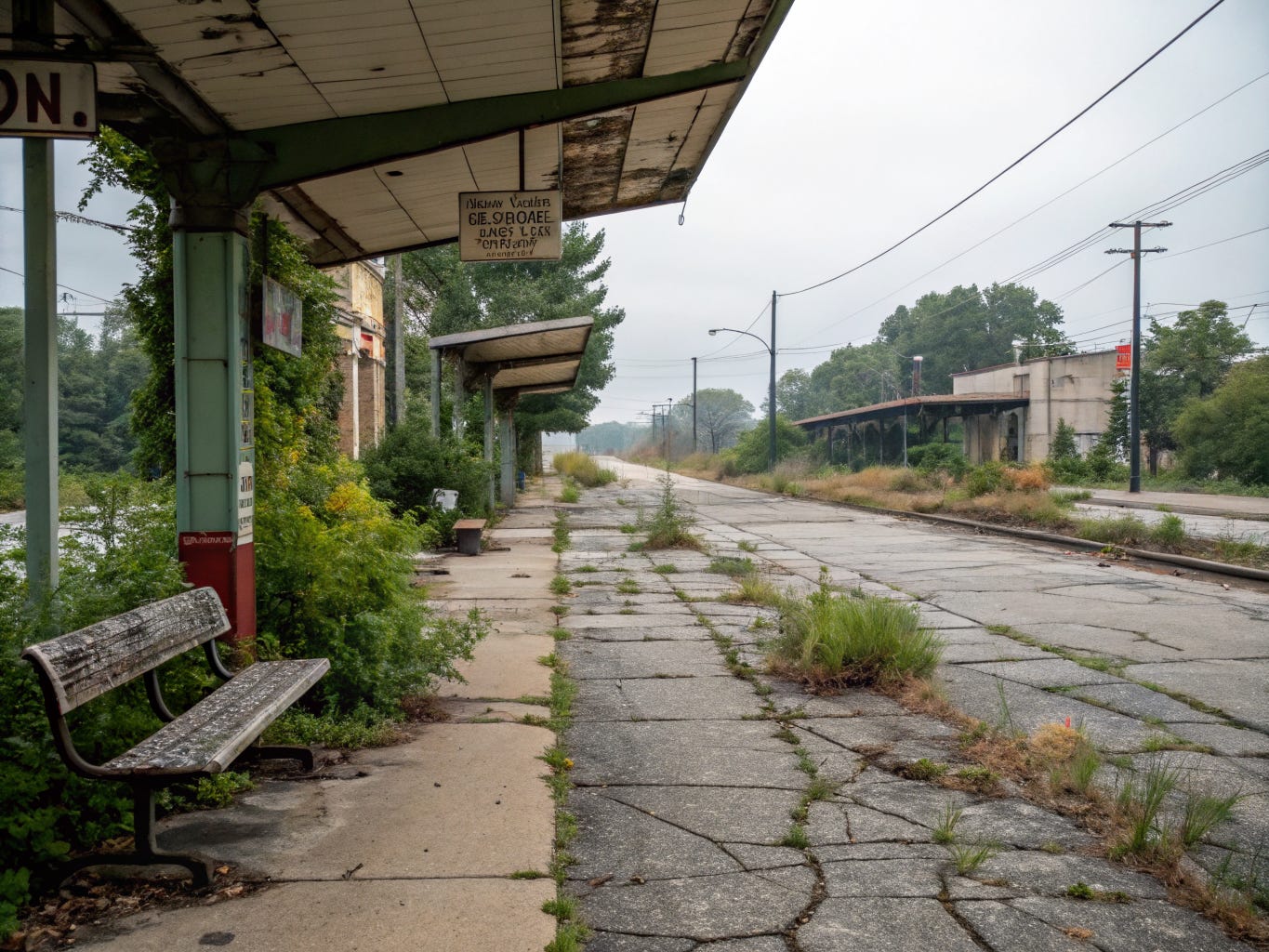
The room is calm. A boardroom in Singapore, a ministry office in Abuja, a project review in São Paulo – it hardly matters which; the temperature is the same everywhere. Everyone is busy. The metrics are challenging but manageable. Somewhere in the second half of the agenda there’s a line about disruption. Someone utters the word ‘climate’, and someone else says the word ‘AI’, and the conversation moves on with the unhurried competence of people who have said these words many times before. No one in the room behaves as though their world is genuinely at risk. They can each recite the risks. They have the slide decks. What they can’t do, sitting there in comfortable chairs, is feel any of it.
That gap, between what a capable person knows and what they’re able to feel, is where my work begins. I am paid, in effect, to disturb the calm. Not to frighten anyone and not to add another crisis to a list that’s already clearly long enough, but to interrupt the strange equilibrium of the room where everything is on fire and nobody is warm.
The field that keeps the present feeling stable
We live inside a manufactured sense of the normal. It is not a lie exactly. It’s a layer of habits and narratives and designs and small daily rituals that work together to keep the present feeling stable even when it has stopped being so. Consider how we fly. We sit in moulded plastic seats seven miles above the earth, eating from a tray, mildly annoyed at the delay, treating a thing that would have struck every previous generation as a miracle as though it were a bus ride with worse coffee. Consider how money moves now, value and intimacy alike, travelling as light through a sheet of glass in the palm, instant, weightless, detached from any substance we could point to, and experienced as the dullest thing in the world.
This smoothing is not so much a defect as an immune response. The mind can’t hold the full strangeness of its own conditions and contradictions and keep functioning, so it dampens them, files the extraordinary under ordinary, and frees us to get on with the day. Every healthy person does this. Every working society does this. The issue is the trouble with all immune responses: what protects an organism at one stage can turn and attack it at another. The same machinery that lets us tolerate the miraculous lets us tolerate the intolerable, and it can’t tell the difference between the two. It smooths whatever arrives.
From a quirk of the brain to a design principle
Psychologists have a narrow name for one part of this, the normalcy bias, the reliable human assumption that tomorrow will resemble today even as the evidence of rupture stacks up in plain view. People in a flooding building finish their coffee. People in a falling market explain why this time is just a correction. The bias is old, and on the scale of a single nervous system, it’s mostly harmless and often kind.
What’s happened in our era is that this quirk of the individual brain has been built outward into the architecture of our institutions, until it’s no longer a bias we suffer but a principle from which we design. Organisations are constructed on the assumption that growth continues, that the climate is a stable backdrop rather than a contestant, and that whatever technology breaks, more technology will mend. Leaders are trained, rewarded, and promoted for their ability to read every shock as a blip, every rupture as a cycle, every emergency as manageable volatility. The smoothing has migrated out of our heads and into our interfaces. It hides complexity behind clean dashboards. It domesticates catastrophe, in the language of policy, into challenges. It translates existential threat, in the mouths of corporations, into headwinds. We have automated the immune response and pointed it at the very signals we most need to feel.
The things we have agreed to call normal
Meet the people I work with, the senior executives and public officials and founders and builders of movements, and notice what they have come to treat as ordinary. Wildfires and floods and heatwaves that arrive on a schedule now, displacing people by the million, reported and forgotten in the same news cycle. Once-in-a-century events that turn up every few years without anyone revising the phrase. Political systems that can’t pass a basic reform yet can set up a surveillance apparatus overnight. Work cultures in which exhaustion is the baseline condition and is praised, when it’s named at all, as high performance.
Watch the language do the manufacturing. The new normal. Volatility. Headwinds. A market correction. Manageable risk. Each phrase is a small appliance for converting something that should stop us in our tracks into something we can put on a slide and move past. So here is the first question worth sitting with, and it’s not rhetorical. When you say this is just how things are now, to what precisely are you consenting? Whose arrangement are you ratifying with that calm little sentence?
How the smoothing actually works
The machinery that keeps the abnormal feeling normal is worth taking apart because it’s rarely sinister but almost never visible. Some of it is design: the dashboard and the quarterly report that turn questions of survival into coloured indicators trending the right way. Some of it is narrative: the media habit of framing breakdown, even at a world-system level, as a sequence of unrelated dramas, each one episodic, none of them a pattern. Some of it is simple habit, the way genuine disruptive insight gets buried under the next email, the next flight, the next set of targets, until there’s no quiet space left in which it could be heard. And some of it is culture, the unwritten rule in most elite gatherings that real fear is not to be spoken, that to name dread is to be unprofessional, that composure is the price of a seat at the table.
These mechanisms are global, though each culture flavours them differently. In some places the denial wears the face of optimism, the relentless conviction that it will all work out. This is certainly the tone in my own country of Australia. In others it wears the face of fatalism, the shrug that says it has always been this way and always will be. The optimist and the fatalist arrive at the same destination by opposite trails: neither has to act. And almost none of this is anyone’s dastardly plot. It’s an emergent property of systems built, at every level, to route around discomfort. Discomfort is information. We have engineered ourselves not to receive it.
When normalising became a virtue
Here the argument twists, turning on a word that has lately become a badge of good leadership. We praise leaders now for normalising things, and rightly, much of the time. Normalising conversation about mental health, about stress, and about the permission to be a whole and sensitive person at work has had real benefit; it has reduced stigma and widened the circle of what can be said aloud. I would not undo a gram of it. But there’s a paradox folded inside the virtue, and it is sharp.
The very capacity that makes a leader humane and approachable, the gift for making tough things speakable and bearable, is also the capacity that makes them an efficient manager of decline. If everything can be normalised, then nothing can be permitted to remain intolerable. There are two quite different things hiding under the one word. There is normalising an experience so that people can turn and face reality together, without shame, with their feelings intact. And there’s normalising a condition so that people can be brought to endure what they ought instead to refuse. The first restores agency. The second quietly removes it while feeling, at least from the inside, benevolent. The question for anyone who leads is which of the two they’re actually practising, on any given day, with any given team, about any given arrangement that everyone has stopped objecting to.
The sedative
In mentoring I meet the same figure again and again: a person of real talent and capability who can speak with fluency about climate and intelligence systems and inequality and the fracturing of the geopolitical order and who keeps filing every one of these under external factors, as though they were turbulence on the flight rather than a catastrophic wing failure. The “manufactured normal” works on such a person as a sedative. It lets them stay calm by severing the feeling from the fact, keeping the knowledge while removing its sting. And it lets the organisation around them go on drawing value out of systems it knows, at some level, to be failing, because the knowing has been disconnected from anything that would oblige a response.
Engineers have a name for the slow version of this: the normalisation of deviance, the process by which a small departure from what is safe or right, having caused no visible harm this time, becomes the accepted standard, and then the platform from which the next small departure is measured, until one day the accumulated drift produces a disaster that was, in retrospect, scheduled. We are living inside the civilisational form of it. Data taken without consent, ecological overshoot, and the casualisation of work until security is a luxury good. Each of these was a scandal within living memory and is now simply the water we swim in, unremarkable, ambient, normal. So the harder question follows from the easier one. If you keep your people calm while the structure they depend on quietly corrodes, whose side, exactly, are you on?
What it means to mentor someone out of it
Let me say plainly what the work is, without dressing it up as a product. It’s an attempt to interrupt the field. It’s not therapy, and it’s not motivation. I am not there to heal anyone or to fire them up. I am there to disturb the relationship between three things that have come apart in capable people: what they know, what they feel, and what they’re prepared to act on. In most of the leaders I sit with, those three have been living in separate compartments for years.
In practice it’s quieter and stranger than it sounds. I ask a leader to name, without euphemism, everything in their world they have come to call normal: the delays, the attrition, the corruption worked around rather than confronted, the environmental cost booked as someone else’s problem, and the incentives everyone privately knows are distorted. Then we track the language, the way something travels downhill from intolerable to unfortunate to regrettable but necessary and finally to just how it is, and we notice how quickly that descent can take. And sometimes I do nothing at all but hold the silence long enough that the distance between what a person says they value and what they have agreed to live with begins, gently, to hurt. The aim is never guilt. Guilt is just another sedative. The aim is to return accuracy to their sense of the present, to let them feel the actual temperature of the room they’re standing in.
What becomes possible when normal is no longer sacred
When the field loosens, the first thing that often arrives is not relief but vertigo. The manufactured normal was load-bearing; it was the scaffold a person had been standing on, and for a while after it goes, there can be a genuine despair, a sense that if this is not fine, then nothing is. I have learned not to rush that. For others the dominant feeling is relief, sometimes enormous relief, because a private sense of absurdity they had carried alone for years has finally been given words, and they discover they were not insane after all, just accurate.
What people do on the far side of that rupture is theirs, not mine, and I am wary of turning it into a method. But I have watched certain moves recur. Leaders reconceptualising what they count as success so that it includes the things that were previously externalised – the health of an ecosystem, the resilience of a community, the tangible condition of the people doing the work. Leaders are declining profitable activity because continuing it would require maintaining a lie about its consequences, and they have run out of appetite for the lie. Resources moving, quietly and without announcement, out of public relations and innovation theatre and into the unglamorous labour of repairing what’s broken. Smaller and more honest circles forming, spaces where a few people can say what they see without performing the composure demanded in larger gatherings. None of this tends to begin with a grand strategy. It begins, almost always, with one person who is no longer willing to call a particular intolerable thing normal and who says so out loud, once, and cannot then unsay it.
The cost of leaving, and the deeper cost of staying
I owe honesty to the reader who is half drawn to this and half afraid of it, because the fear is not foolish. Leaving the manufactured normal will strain your relationships with the peers who still depend on it and who will experience your clarity as a kind of accusation, whether or not you intend it so. It can put at risk the parts of a career that quietly reward reliable denial. And it can unsettle your sense of who you are, because a great deal of any accomplished person’s identity is built out of mastery of exactly the norms now in question. To leave normal behind is to loosen your grip on an identity you worked hard to construct.
Set against that, though, is the cost of staying. This is larger. It arrives more slowly and is therefore easier to ignore. To remain inside the field is to drift toward irrelevance while retaining all the outward signs of status, a kind of comfortable institutional hospice care in which you grow ever more expert at optimising a world that’s dying under your hands. There is no neutral ground here, and this is the part people most want to be untrue. Continuing to call this moment normal is not a way of declining to decide. It is already the decision. Calm, in a burning building, is not the absence of a choice. It is a choice, and a consequential one, and it is being made by everyone in the room who is still sitting down.
An invitation, not an answer
Return to the room we began in, the one where nothing seemed wrong. I want to be clear that nothing in that room has changed. The metrics are the same. The agenda still has its tidy line about disruptive innovation. The chairs are still comfortable. The only thing that might be different, if any of this has done its work, is the reader’s ability to keep trusting that feeling of normality, that low background hum of “acceptable” that the field exists to produce.
So I will leave questions rather than a map, because a map would be one more way of smoothing. What in your world has become normal that is intolerable and should never once have been accepted? Where, in the particular language you use, do you domesticate the intolerable and turn it into something you can carry to the next meeting? And who, somewhere near you, is already living as though none of this were normal, and what might you have to learn from them if you let yourself look? Picture the leader at the end of the day, closing the laptop before the next task, and instead of rising, sitting one minute longer than usual in the emptying room and allowing themselves, just for that minute, to feel how strange this normal really is. That minute is not yet a strategy. But everything I have ever seen change began somewhere very close to it.