Synopsis: Why do societies mock the tenderness they claim to admire? From a Belgian mining district in 1879 to the modern economy, the workplace, the attention trade and our own reflexes, gentleness and integrity are too often met with a sneer. A civilisation that treats these qualities as defects to be purged may be losing the very people best placed to warn it of harm.
In the winter of 1879 a young Dutch lay preacher in the Borinage coal country of southern Belgium began giving away his clothes. He’d already left a comfortable lodging for a hut, where he slept on straw. When a firedamp explosion tore through a nearby pit, he nursed the burned miners and cut up his own linen for bandages. The evangelical committee that had sent him there watched with growing embarrassment, and before long they let him go. They faulted him, more or less, for practising too literally the virtue he’d been hired to preach. He didn’t look like a minister anymore. He looked like one of the poor.
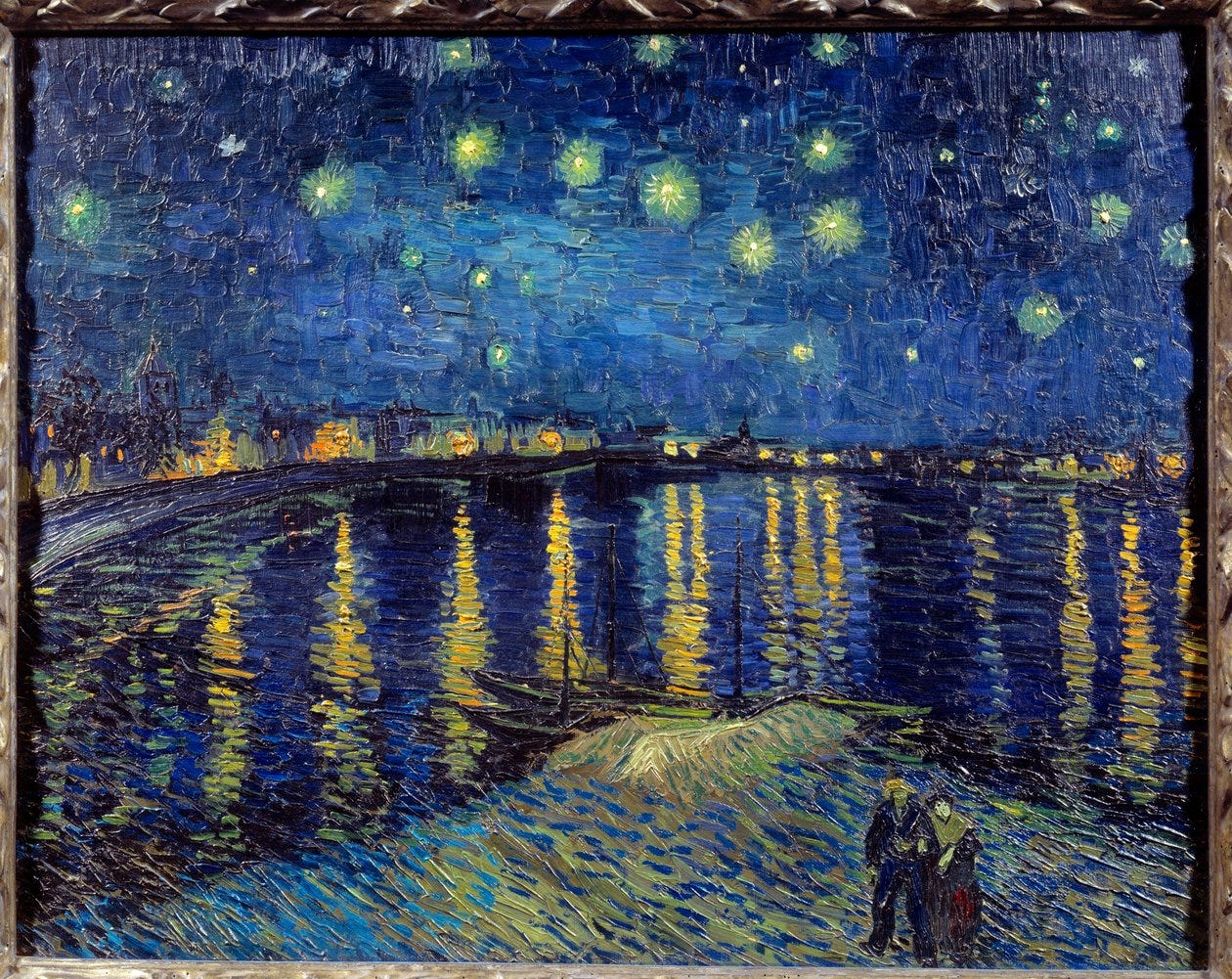
Within a year of his dismissal, Vincent van Gogh had begun to draw in earnest. Some ninety years later a ballad about him set millions of listeners wondering whether the world had ever deserved him. Its lament, as I hear it, is that so tender a man was unsuited to the world into which he had been born. The song is lovely. But it slips in a verdict I’ve come to distrust, one that locates the fault in Vincent’s tenderness rather than in the world’s response to it.
I recognise that verdict because it’s been passed on me, sometimes fondly, more often not. Too sensitive. Too soft for serious work. I can sob openly when listening to some music, gazing at a sunset, or reacting to a smile from someone I love. I’ve never understood why anyone reaches for violence while other options remain. Through most of my life these traits have been handled as charming deficiencies, to be indulged in private and discounted in public. I’m far from unusual. Every school, every workplace, every family has its gentle members. Most of them learn to keep quiet about it in order to avoid the bully.
Why should gentleness attract derision at all? The obvious answer, that hard worlds reward hard people, explains neglect. It doesn’t explain the sneer. For that, a peculiar finding from social psychology helps. People who behave more ethically than those around them, by refusing a task others accepted or declining meat at a shared table, are frequently disliked by those same peers, even when they’ve uttered no criticism. Their conduct is received as an accusation. The gentle person in a harsh setting performs the same unwelcome service. Their patience exposes our haste. Their distress at cruelty reveals how comfortably we’ve learned to live alongside it. Mockery restores the balance, because if the tender one is a fool, the rest of us needn’t feel ashamed.
Then there’s the arithmetic. Industrial economism prices what it can count; care and gentleness resist being counted. The nurse who stays with a frightened patient falls behind on the roster. The teacher who notices a child’s silence has fallen behind the syllabus. The manager who won’t make an example of a struggling colleague is judged soft on performance. The punishment of tenderness rarely needs a nemesis. The incentives do the sorting, as reliably as a sieve separates gravel from sand. At least one large study has found that highly agreeable workers, men in particular, earn noticeably less than their more abrasive colleagues. The bluntness and swagger we claim to deplore turn out to be quietly rewarded. How much of the gap reflects choice and how much reflects penalty remains an open question. What the figures do suggest is that hardness in a man still reads as competence.
Gender sharpens the sieve. Boys learn early that “soft” is an insult. Girls learn that tenderness is expected of them, which is a different way of being told it’s not worth much. A quality assigned to women is easily discounted along with them in a society where male is the default. A man who displays it anyway is quietly demoted from his sex.
Culture changes the accent without always changing the outcome. In Thailand, where I’ve lived for most of two decades, a cool heart and a scrupulous regard for others’ feelings are prized in principle, and a raised voice still marks a loss of face. Yet the expressways and condominium towers rising over Bangkok answer to the same logic as everywhere else. Courtesy can be honoured in speech while the economy runs on its opposite. That same regard for others can also be bent into enforced silence, a way of keeping the sensitive deferential rather than heeded. Gentleness that’s been domesticated into compliance poses no threat to anyone. It’s the gentleness that notices, and says so, that invites punishment.
Online, the sieve becomes a centrifuge. Tenderness travels slowly. It hesitates, qualifies, admits it might be wrong. Contempt can be shared before it’s been pondered. A social media platform that pays in attention will promote the sneer over the considered thought every time, and the sensitive learn either to harden their voices or to fall silent. Many choose silence. Their absence goes unrecorded, because nobody counts the posts never written.
This publication isn’t exempt, and neither am I. An essay defending gentleness is still an essay that hopes to win an argument, honed to cut through a crowded feed. I’ve spent decades learning to sound more certain than I feel, because a tentative warning gets dismissed at the first slide nobody can follow. Each time I sharpen a sentence so that it will be heard, I concede a little of the premise I’m defending. I’m not sure there’s a way around that. I’m fairly sure I haven’t found one.
What’s at stake is larger than the bruised feelings of those who exhibit tenderness. The sensitive are often the first to register harm: the child who senses the parents’ marriage failing, the clinician who notices the patient no test has flagged, the citizen disturbed by a policy everyone else has assumed to be a necessity. A society that trains this faculty out of its members gives up its early warning system. It learns about cruelty, ecological or political, only once the damage is too large to miss, by which time the people who saw it coming have long since been told they were overreacting.
The committee in the Borinage were right that its preacher made them uncomfortable. They were mistaken about the reason. Perhaps the ballad has it backwards, and the world was actually made for people like Vincent and has spent a very long time arranging itself to pretend otherwise. If so, every child we tell to toughen up and stop crying is being trained, patiently and with the kindest of intentions, as one more vote on the next committee and one fewer Vincent to love.