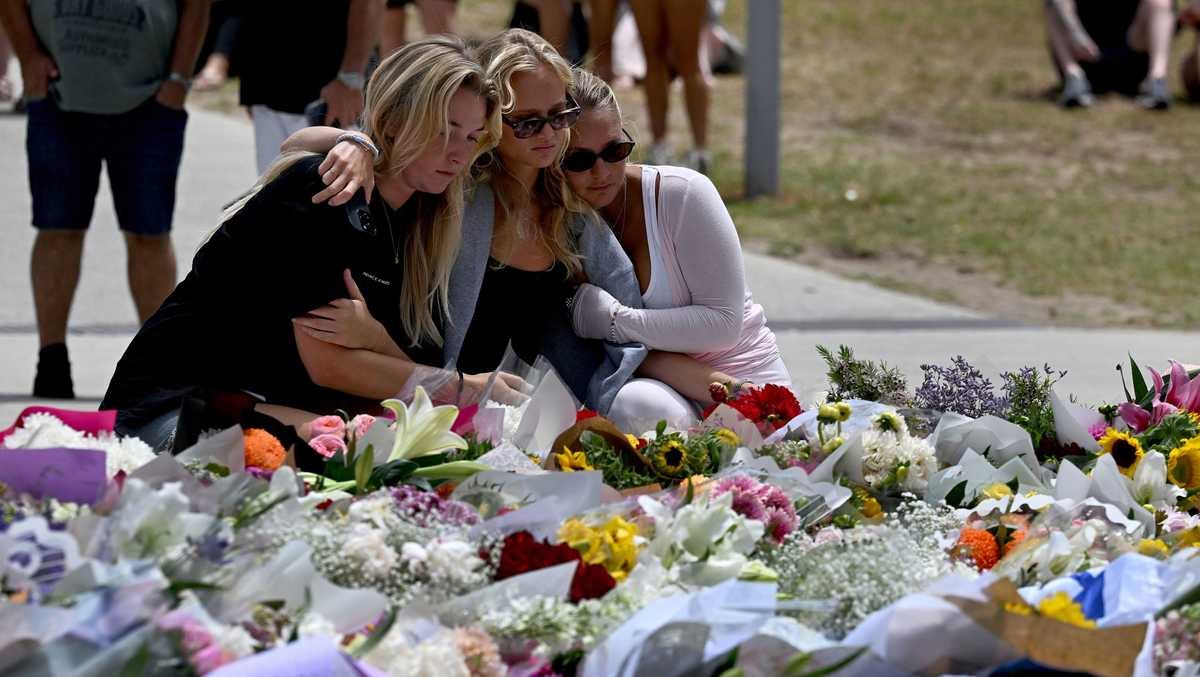
On the evening of 14 December 2025, an Islamic State–inspired gunman opened fire on roughly a thousand people gathered at Bondi Beach to light candles for Hanukkah. Fifteen people were killed; forty people, including at least two police officers, were injured. A menorah stood somewhere on that sand, unlit or half-lit, and by morning it had become a term in a national argument that would run for the rest of the year. This is what a body count does that grief alone cannot: it converts a wound into a case.
Within a month, the Royal Commission on Antisemitism and Social Cohesion had been established — 9 January 2026. Within four months, its interim report was released — 30 April 2026, fourteen recommendations, aimed almost entirely at strengthening counterterrorism responses. A nation had done, with remarkable speed, exactly what nations are built to do when horror needs housing. It had named the crime, appointed the inquiry, and set the machinery of justice in motion.
And yet something didn’t fit the frame. The Albanese government had not responded to all the recommendations in a report delivered in July 2025 by the special envoy to combat antisemitism, and NSW Police and security agencies were criticised following media reports that the Jewish community had requested a stronger police presence than that which was ultimately deployed for the event. The warnings existed. The apparatus existed. What failed was not law but something closer to attention — the slow civic muscle that notices a community’s fear before that fear becomes a body count. No amount of counterterrorism legislation drafted afterwards restores what should have been paid before.
This is the trap every frightened society falls into, from Bondi to Beirut, from a Lagos market bombed for the wrong faith to a Lima neighbourhood emptied by the wrong accent: the crime arrives already wearing a label, and the label feels like an explanation. Antisemitism. Islamophobia. The word names the wound with total accuracy and tells you almost nothing about why the wound exists in this place, at this moment, aimed at these particular bodies rather than some other convenient set of bodies. A label is not a diagnosis. It’s a signature left on the surface of something that was assembling itself for years beneath.
Ethnicity, religious hatred, racial animus — these matter, and they kill. But treat them as the root and you will spend a generation pruning leaves from a tree whose roots you never touched. Prejudice is better understood as the place where several older, duller forces meet and take on a face. It is the visible plumage of something with no face of its own.
Watch how the elements gather. A shared ancestry or tongue does no harm sitting quietly inside a person’s sense of self — humans have layered such belongings for millennia without butchering their neighbours over them, in trading ports and mixed cities from old Malacca to old Sarajevo. The trouble starts when that belonging hardens into a wall, when it stops being one thread among many and becomes the only thread that counts, the line beyond which a person ceases to be fully human in your eyes. Colonial registries did this on purpose once, taking fluid, intermarrying communities and stamping them onto identity cards as fixed, permanent categories; the wall came first, and the hatred grew to fit it afterwards.
Once that wall exists, prejudice does the rest of the work with terrible efficiency. It takes a neutral fact — this person prays on a different day, buries the dead differently, carries a different surname — and reads danger into it. Antisemitism required nothing from Jewish communities themselves to manufacture centuries of suspicion; Islamophobia requires no evidence from a billion and a half people to sustain the idea of a single threatening mass. Tropes resurface repeatedly online and in the media that Islam is culturally incompatible with a nation’s values, that to be Muslim is to support terrorism, and that all Muslims are the same and should be held responsible for the acts of a few. Prejudice is the converter, not the current. It changes ordinary human difference into something that feels, to the frightened mind, like a threat requiring a response.
Beneath the converter sit the generators. Religion and shared conviction can bind a village together with a warmth nothing else quite matches — and the same warmth, turned outward and welded to national purpose, becomes a border. A theology does not need to change one syllable of its own text to go from neighbourly to lethal; only its political use needs to change. Scarcity does something similar without needing belief at all: when land, work, and safety run thin, groups become rivals for a fixed pool of dignity, and old grievances that lay dormant through a decade of shared plenty come roaring back the moment the pool shrinks. Nationalism narrows the circle of who counts as fully deserving of care, drawing tighter and tighter until whoever stands outside it looks less like a stranger and more like a threat. And grievance, once it has a story to attach to, needs no fresh evidence to keep breathing — a betrayal three generations old can be reheated by a rumour spreading online in an afternoon, faster than any campfire tale could once have travelled between villages.
None of this excuses what happened on that beach, or what has happened on ten thousand other streets under a hundred other flags. It relocates the question. Ask an Australian whether the problem is antisemitism or Islamophobia and you get a live political argument with two constituencies each certain the other is being indulged. Ask instead what conditions of fear, scarcity, and narrowed belonging are being expressed through this particular wound, aimed at this particular community, and the argument changes shape — because the answer, in outline, would look much the same in Karachi or Manchester or São Paulo, wearing different clothes but walking the same gait.
Australia’s own response has, at moments, understood this — and at other moments forgotten it entirely. The Special Envoy to Combat Islamophobia, Aftab Malik, told the Royal Commission that combating antisemitism, Islamophobia, and other forms of prejudice requires addressing the broader conditions that let hatred take hold in the first place — polarisation, unmoderated online environments, declining trust in institutions. That is the register this essay has been reaching for: hatred as expression rather than origin, one root system throwing up several different flowers depending on the season.
But a democracy under acute fear rarely holds that register for long. When Jillian Segal, the envoy appointed to speak for Jewish Australians, suggested publicly that the attack followed as something like a logical consequence of two years of pro-Palestinian protest, the co-founder of the progressive, non-Zionist Jewish Council of Australia called the remarks “highly irresponsible.” Watch what happened in that exchange: two people, each speaking from within the same wounded community, reached for opposite tools — one for a wider net of blame, one for a narrower one — and both were arguing, in effect, about where the circle of legitimate grief should end and the circle of political suspicion should begin. That argument cannot be settled by better security cameras.
Here is where the ground shifts, if it’s going to shift at all. It would be comforting to treat Bondi as a story about a specific, curable failure — a gap in policing, a missed intelligence flag, a piece of legislation not yet passed — because curable failures can be closed. But the deeper unease sitting underneath the Australian case is that almost nothing about it is specific to Australia. Swap the beach for a market, the menorah for a mosque’s minaret, the flag for a different flag, and the pattern still holds: a frightened population wants punishment and reassurance in roughly equal measure, and government, needing to be seen to act, reaches first for the visible symptom because the visible symptom is the only part of the disease that photographs well. A royal commission is a magnificent instrument for examining what happened. It is a poor one for examining why a society had, for two years beforehand, been quietly accumulating the scarcity, the online rage, and the narrowing moral circle that made the attack thinkable in the first place. The instrument photographs the wound. The photograph is mistaken, again and again, for the whole disease.
You will recognise this pattern even if you have never set foot on that beach or in that country, because the pattern does not belong to Australia any more than a fever belongs to the thermometer that reads it. Wherever scarcity tightens and belonging hardens into a wall rather than a thread, some community becomes available to carry the fear that a frightened society cannot otherwise metabolise. The name on that community changes. The mechanism generating the need for a target does not.
What, then, is owed to a beach that cannot hold the weight now sitting on it? Not a tidier commission, and not a sharper definition of hatred to be codified and enforced. The Segal exchange already showed the fork hiding inside the word “cohesion”: one path widens the circle of belonging until dissent sits safely inside it; the other widens the circle of suspicion instead, until a march reads as evidence and a placard reads as a warning. A commission convened to prevent one kind of hatred can, by choosing the second path over the first without quite meaning to, manufacture the conditions for the next — the same wall rebuilding itself under a different name, on a different stretch of sand, in a different decade.
Perhaps what is owed, then, is only this: a willingness to sit with the harder question of what a society was frightened of, hungry for, or nostalgic about in the years before the sand was stained — a question with no single culprit to summon and no single recommendation that could close it, though the Commission’s own choices in the months ahead will already be answering it one way or the other, whether anyone names that as its task or not. The candles will be lit again next December, on that beach and on others like it around the world. Whether they burn over a wound still being misread as its own cause is not something any commission, however diligent, was built to tell us.