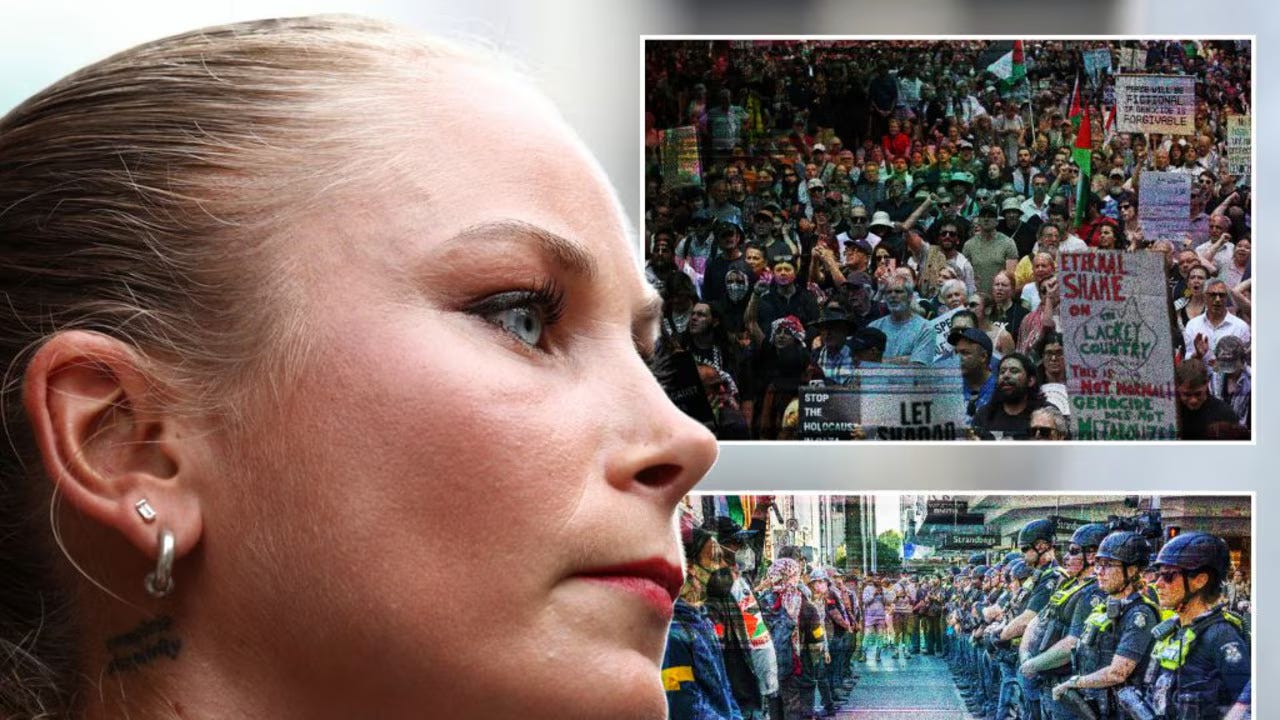
A friend of mine posted something on LinkedIn this morning that I could not put down. She was writing about Grace Tame, a young Australian woman who is neurodivergent and who, at fifteen, was groomed and raped by a teacher decades her senior. In 2021 the country named her Australian of the Year. A few weeks ago the prime minister of that same country described her as difficult and problematic. I read it twice, sat with it, and felt the familiar weight settle in my chest. Not surprised. Recognition.
We have a habit of treating such moments as lapses. A bad call by a tired politician, a media cycle that turned, a woman who pushed too hard. I want to argue the opposite. What happened to Grace Tame is not a lapse in the system. It is the system working precisely as designed. And once you see the design, you can’t unsee it in anything else.
What the filters are holding up
When people complain that Grace speaks without filters, they imagine they are describing manners. They are not. The filters they have in mind are the small acts of self-management a woman is expected to perform before she is permitted to be heard. Soften the edge. Add the reassuring aside. Make the listener comfortable before delivering the inconvenient truth, so that by the time the truth arrives, it has been worn smooth and costs the listener nothing. We mistake this for politeness. It is closer to load-bearing. Remove it and something behind it begins to tilt.
Neurodivergence, especially in a woman, has a way of declining the performance. Not as defiance, often, but as wiring. The choreography of de-escalation that the rest of us run almost without noticing simply doesn’t run the same way. So the truth arrives uncushioned. And the response it provokes tells you everything about what the cushioning was for. The fury that meets an unfiltered woman is not fury at her being wrong. It is fury at her being efficient, at the cost she has refused to absorb on the listener’s behalf. She has handed it back.
I have come to think of this as one of the quieter operations of what I call industrial economism, that long civilisational habit of converting every living thing into a measure of its usefulness. We are accustomed to seeing it in clear-felled forests and gutted rivers. We are less practised at seeing it in a conversation. But it’s there too. A woman’s acceptability is an asset on a ledger, and the labour she performs to make powerful people comfortable is the dividend that asset is expected to pay. Grace Tame stopped paying. The market responded as markets do.
The economy of difficulty
Christine noted, almost in passing, that Grace has lost work, stages, and sponsorship. I would ask that we not let that pass. It’s the whole argument in three nouns.
There’s an economy at work here, and it’s not metaphorical. A woman in public life is rewarded in close proportion to her capacity to leave powerful men feeling at ease. The label ‘problematic’ is not a moral judgement. It’s a price signal. It tells the sponsors and the agents and the committees that this particular asset has depreciated because it will no longer reliably generate the comfort it was bought to supply. Notice what triggers the downgrade. Grace was tolerable, even celebrated, as a survivor advocate, because that role keeps harm from individuals, a terrible thing done by one man to one girl. She became intolerable the moment she spoke for Palestine, because that crosses from the individual to the structural, and the structural is the one thing this arrangement cannot afford to have named aloud.
This is power in its present form, and it rarely needs to raise its voice. It doesn’t silence through force when it can simply turn off a tap. The reputational injury, backed by the withdrawal of money, does the work that an earlier age would have needed coercion to achieve. And the most efficient part is that it recruits the rest of us into the enforcement. We learn to flinch at the word ‘problematic’ before we have asked whether the woman wearing it might be right.
A single architecture
Here is what I find hardest to say plainly and most necessary. The reason an unfiltered woman becomes dangerous is that she tends to see the seams. The mind that will not soften its delivery is frequently the same mind that will not honour the partitions we have built between one harm and another. It looks at the grooming of a fifteen-year-old, the extraction that strips a watershed, and the bombardment of a refugee camp, and it declines to file them in separate drawers. It notices that they share a grammar of treating the vulnerable as material to be used and discarded.
We work very hard to keep those drawers shut. The advocacy is supposed to stay in its lane. Domestic violence over here. Climate over there. Palestine, perhaps, never. The compartmentalisation is not an accident of busy lives. It’s a defence mechanism because the connections, once drawn, indicate a single architecture rather than a scattering of unfortunate exceptions. A woman who collapses the partitions is not adding new accusations. She is revealing that the old ones were always the same accusation. This is why such women are pursued with an intensity out of all proportion to their platform. They are not louder than the rest. They are clearer.
What gives that architecture its persistence is something I have elsewhere called the gravity of ghosts, the way inherited worldviews go on exerting force from inside our institutions long after anyone consciously believes them. Nobody in that sponsorship circuit needs to hold an explicit theory about the proper silence of women. The pattern runs itself, gravitationally, from within. Which is exactly why it is so resistant to argument and so vulnerable to the person who simply will not bend to it.
Medicalised and gendered at once
There’s a particular cruelty in how the discrediting is done, and it is worth mentioning because it’s a pincer movement rather than a single blow. When a man speaks bluntly against an injustice, we reach for a generous vocabulary. He is strong. Decisive. A leader who tells it as it is. When Grace Tame does the identical thing, two older instruments come down at once. The first is gendered. She is shrill, emotional, and difficult, the catalogue we keep ready for any woman who declines to be agreeable. The second is clinical. Her neurodivergence is quietly produced as evidence that she can’t be trusted to judge her own situation, that the very faculty letting her see the pattern is a malfunction.
Held together, the two instruments do something neither could manage alone. Her sex makes her unreasonable, and her wiring makes her unwell, and between the two there’s no version of her testimony left standing. She is gaslit by the language of diagnosis and silenced by the language of decorum in the same breath. The behaviour under attack, let us be clear, is the pursuit of justice. We have simply found a way to pathologise it when it appears in a body we were not expecting it from.
On becoming more difficult
Christine ended her piece with a call to be more difficult, and I want to take that seriously rather than sentimentally, because I think she is right and I think the rightness has a structure to it.
To be more difficult, understood properly, is not a matter of temperament. It’s a structural refusal. The arrangement I have been describing does not hold because a handful of powerful people are strong. It holds because the rest of us keep performing the small rituals of deference that lend it weight: the softened critique, the swallowed objection, the reflexive distance we put between ourselves and the woman who has just been declared problematic. Each of those is a quiet tribute. Withhold the tribute often enough and the gravity weakens.
I keep returning to an image of the way a caterpillar becomes a butterfly. Inside the dissolving body of the old creature, certain cells appear that already carry the pattern of the creature to come. The surrounding tissue treats them as a threat and attacks them, because by every measure available to the old form, they are foreign, disordered, and wrong. They are imaginal cells. They are also the only part of the animal that knows where it’s going. I have watched Grace Tame and Greta Thunberg be treated as precisely that kind of threat, and I have come to think the treatment is diagnostic. The system attacks them not despite their carrying the next form but because they do.
So I find myself agreeing with my friend, though I would put it in my own words. We are told that safety lies in silence, that survival means softening the truth until it can no longer wound anyone. These women are betting their whole lives on the opposite. The silence was never safety; it only postponed the reckoning. The forests are still falling, the children are still under the rubble, and the ledger that turned a raped girl into a depreciating asset is still open on the desk. If the old body is dissolving regardless of what we do, the only question worth asking is which cells we mean to be.