The woman who grills chicken over charcoal at the mouth of my soi has raised her prices twice since the second week of July. She doesn’t follow naval movements in the Gulf. She has never heard of the memorandum that was signed and then unsigned, and I’m sure she couldn’t place the Strait of Hormuz on a map, because she has never needed a map that reaches past the canal at the end of the road. What she knows is the price of a gas cylinder.
Follow the cylinder back far enough, and you arrive at a channel of water some thirty-nine kilometres across at its narrowest — a distance many people in Jakarta or São Paulo travel daily without remarking on it — through which roughly a fifth of the world’s traded oil has passed for as long as oil has been traded. This month the strait carried something else: burning ships, and with them the news that the most heavily armed navy ever assembled could not escort four vessels through contested water without losing them.
The temptation is to read the smoke as an obituary. Hegemony humiliated at a chokepoint, allies hedging, adversaries watching with the patience of creditors — the elements of a fall are all present, and there’s a large audience, from Caracas to Tehran to certain seminar rooms in Beijing, ready to hear the eulogy. The temptation should be resisted, though for reasons less comforting than the ones Washington would offer.
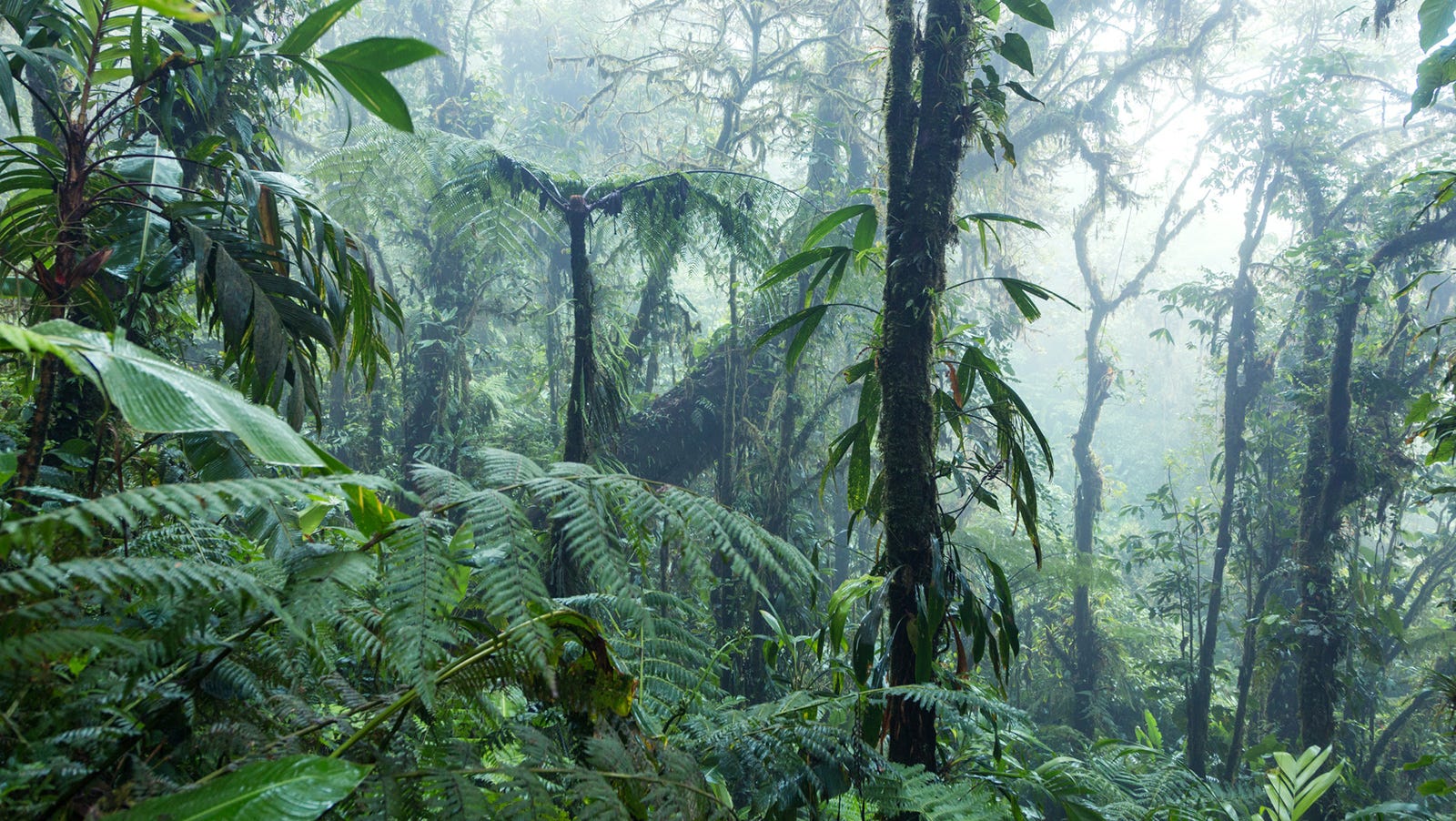
Watch how a forest dies. It doesn’t crash down in a single season. The great trees stand dead for decades, still shading out the understorey, their root systems still binding the soil against whatever might grow in their place. A dead canopy can suppress a living succession for a generation. The end of American primacy, if that is indeed what we’re watching, will look less like a felling and more like this: an enormous residual structure, no new sap, and a long twilight in which the old order can no longer nourish the world it once organised yet retains the mass to fall on anything growing beneath it.
This is the first truth worth extracting from the wreckage in the strait, and it cuts both ways. The United States can still devastate almost anywhere on earth if it has a mind to. What has been diluted is the capacity to decide with any degree of confidence — to convert violence into settlement, pressure into acquiescence, and presence into order.
Hegemony was never chiefly a matter of military reach. It was the ability to make one’s own preferences feel like the weather, something other nations dressed for rather than argued with. That ability has been leaking away for twenty years, through Baghdad and Kabul and a financial crisis manufactured at the system’s own heart. No strike package can recover it, because every strike now advertises the gap between what American power can destroy and what it can compel. Iran appears to have read this gap precisely. The Gulf monarchies, whose entire security posture is a wager on American reliability, are reading it too.
The second truth concerns energy, and here the notes on my desk make their boldest claim: that the vast liquefied-gas export capacity built on the American coast over the past decade made so little commercial sense at the time that it can only have been constructed in anticipation of the disruption from which it now profits. I can’t demonstrate intent, and I distrust any account of the world in which everything that happens was planned by somebody; empires drift into their advantages at least as often as they engineer them. But intent may be the least interesting question. An organism doesn’t need to plan in order to metabolise a windfall. What can be said plainly is this: each time Gulf energy falters, tankers loading on the American coast raise their rates, and Asian economies sign longer contracts on tougher terms. When the party positioned to profit from a fire is also the party with matches in its pocket, the distinction between arson and opportunism starts to matter less than the pattern of who keeps getting burned. Whether the demolition is controlled or simply convenient is a question worth keeping open.
Beneath the tankers runs a quieter contest, and it may be the decisive one. The stories through which the world understands events like those of 7 July still mostly begin in English, pass through a handful of newsrooms and platforms, and arrive everywhere else pre-framed. That monopoly built the consent for every intervention of the past three decades. It is waning now — audiences in Lagos and Hanoi and Karachi long ago stopped taking the framing on trust. The framing knows it, which accounts for some of its rising shrillness—but waning is a long way from being broken. A power that loses the ability to compel yet retains the ability to narrate can go on setting the terms of its own decline, deciding which of its failures remain visible and which of its rivals are villains. That is a form of primacy the obituarists rarely price in.
And notice where the anger goes. It goes to faces: a president, a prime minister, an ally cast so perfectly as villain that outrage exhausts itself on him. It doesn’t go to the ownership structures that persist untouched beneath every administration, the arms and energy and platform interests for whom elections are a change of foliage on the same root system. No conspiracy is required for this; complexity does the work of concealment on its own. Politicians rotate like leaves. The mycelium endures.
Here the subject of my essay changes. This was never a piece about America. A hegemon’s persistence is a relationship, and relationships have two sides. The order now visibly failing in the strait is co-produced, daily, by every government that looks at the pattern, understands it perfectly, and concludes that intervening now would be expensive and tomorrow will do. Each capital runs the same private calculation: yes, we see it; yes, we could be next; let’s wait and see. It’s the logic of a village watching a neighbour’s house burn while gauging the wind direction—and it has been, for three decades, the single most reliable pillar of American primacy. More reliable than the navy. The multipolar world is arriving; on that the evidence is broad, but it arrives the way a tide arrives: without a general, without a plan, lifting boats that share no destination.
And before you nod along from Hanoi or Lima or Melbourne, the arrangement is in your pocket. The device on which you are reading this, the platforms that carried it to you, the payment rails behind your morning’s first transaction: the system’s deepest cunning has been to make quiet beneficiaries of nearly everyone it constrains, so that the united front the moment seems to demand keeps dissolving into a billion small conveniences, mine among them.
The strait will reopen; the arithmetic of oil insists on it. Prices will drift back towards something the spreadsheets can describe as normal, communiqués will reassure, and the woman at the end of my soi will edge her prices down by less than they rose, as she always has. On the surface, that looks like recovery. Underneath, nothing essential has been repaired.
What has changed is not the volume of tankers but the texture of knowledge. It is now ordinary understanding, in ministries and markets alike, that critical arteries of the global economy can be choked at will, that those who do the choking can survive it, and that the state long imagined as guarantor of openness could not guarantee four ships. That knowledge does not reset when the crisis passes; it lingers as altered expectations, as quiet hedging, as a new baseline of doubt about promises made in Washington.
If we treat all this as theoretical, we help to preserve it. A danger that is acknowledged only in analysis does not disturb habit. Governments keep postponing coordinated action to restrain an overextending power. Corporations keep building business models on the assumption that someone, somewhere, will keep the sea lanes open, citizens keep buying the same products from the same firms whose interests depend on the old order lasting just a little longer. The empire decays; the behaviours that sustain it do not.
That is the asymmetry I have been circling in this essay. Those with least access to the stories—the woman counting baht beside the charcoal grill, the mechanic in Basra, the clerk in Lagos—adapt first because they have no choice. They respond to the cylinder price, the outage, the absence of ships in port. Those saturated in data and commentary are slower, precisely because they have the luxury of treating the diagnosis as an idea to agree with or dispute. The people who move the world’s cargoes and budgets, have already begun to price in a future where US guarantees are one risk among many. Most of us who can see that future in detail still live as if it were hypothetical.
The forest does not fall at once. Long after the sap has stopped rising, the old trunks go on casting their shade, and what tries to grow beneath them does so in crooked, compromised forms. If there is a turning point in the Hormuz crisis, it’s not in the missiles or the speeches but in this: enough people have now learnt that the canopy can be damaged without bringing the whole forest down. Whether that lesson becomes the seed of a different kind of order or simply another reason to wait for tomorrow, the ships are already sailing towards it, long after this particular smoke has cleared.