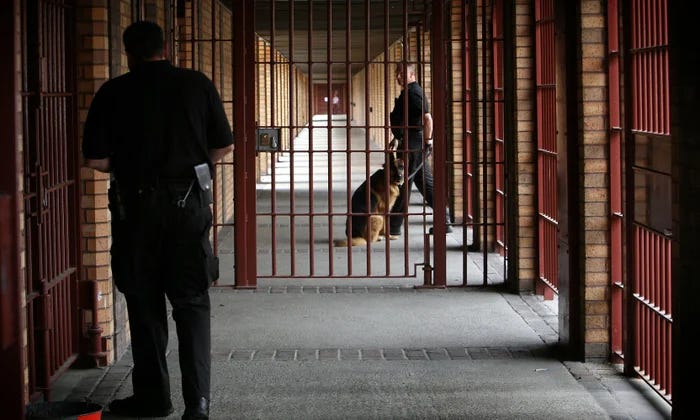
In recent years, the United Kingdom has witnessed a troubling, though hardly mentioned, trend: environmental activists being sentenced to prison terms for acts of civil disobedience. These individuals—often young, well educated, and deeply concerned about the climate crisis—find themselves confined within a prison system that appears designed to punish rather than reform, to isolate rather than rehabilitate. Their experiences illuminate not only the challenges faced by those who take direct action for environmental causes but also expose the profound dysfunctions within the British corrections system.
The conditions these activists encounter are frequently harsh and dehumanizing. Many report enduring extreme heat in poorly ventilated cells, particularly during increasingly frequent summer hot spells—an ironic consequence of the very climate change they protest. Dietary restrictions are treated as inconveniences rather than legitimate needs, with vegan prisoners sometimes subsisting on biscuits and water-soaked cereal. Communication with loved ones—a vital lifeline for psychological wellbeing—becomes unnecessarily complicated, with application forms mysteriously 'lost' or 'forgotten' by staff. These conditions reflect not just administrative inefficiency but a systemic indifference to the basic dignity of prisoners.
Daily life within UK prisons follows an oppressively regimented structure. Weekdays offer some reprieve for those fortunate enough to secure work placements, while others remain confined to their cells for up to 23 hours daily. Outdoor access—critical for mental and physical health—is severely limited, with some prisoners reporting just minutes of fresh air each day. Weekends become particularly grueling, stretching into seemingly endless hours of isolation that exacerbate feelings of loneliness and despair. This rigid monotony serves no rehabilitative purpose whatsoever. Rather, it appears designed solely to break spirits and reinforce powerlessness.
The imprisonment of climate activists raises profound questions about democratic engagement in an age of converging crises. When speaking to these people, many emphasise that their actions followed years of participation through conventional democratic channels—voting, petitioning, lobbying elected officials, taking part in sanctioned protests—all to no avail. When faced with political systems that acknowledge climate change yet continue to approve new fossil fuel projects, these activists make a compelling case that civil resistance becomes not merely justified but a moral necessity. Their incarceration by the state represents not just personal hardship but a troubling response to legitimate democratic expression.
The effectiveness of such activism, even when it results in imprisonment, cannot be dismissed. Environmental groups point to concrete policy shifts following high-profile direct actions, including the Labour Party's eventual adoption of opposition to new oil and gas drilling. This suggests that civil resistance—despite its costs to participants—can indeed influence political discourse and policy outcomes, even when all other avenues have been exhausted. The imprisonment of activists may silence individual voices temporarily but often amplifies their message through broader public attention to their cause as well as their personal sacrifice.
Perhaps most frustrating for these imprisoned activists is the knowledge that politicians have understood climate science for decades yet failed to implement meaningful action. Since at least the 1980s, governments have received increasingly urgent scientific warnings about the consequences of carbon emissions, yet political action has remained woefully inadequate. This governmental inertia—seemingly driven by short-term political calculations and the influence of the fossil fuel industry—stands in blatant contrast to the principled convictions demonstrated by those willing to forfeit their freedom for protection of the environment.
Notoriously, at least since the incarceration of Julian Assange in Bellmarsh Prison, the UK prison system represents a profound failure of public policy, one that extends far beyond its treatment of environmental activists. Unlike Nordic countries that prioritize rehabilitation and maintain recidivism rates below 30 percent, British prisons have become warehouses of human suffering that actively undermine successful reintegration. With reoffending rates approaching 48 percent within a year of release for adult offenders (and higher for shorter sentences), the prison system demonstrably fails at its most basic purpose: reducing criminal behaviour.
This failure stems from multiple systemic dysfunctions. Severe overcrowding—with many facilities operating at 150 percent capacity—creates dangerous and degrading conditions. Mental health support remains pitifully inadequate despite approximately 70 percent of prisoners experiencing mental health issues. Educational and vocational programs, proven to reduce reoffending, are underfunded and inconsistently available. In reality, the system emphasizes punitive measures over evidence-based rehabilitation approaches that have proven to be so successful in countries like Norway, Finland, and Germany.
Perhaps most concerning is the absence of meaningful transitional support. Prisoners are often released without secure housing, employment prospects, or community connections—the very foundations needed for successful reintegration into society. The contrast with Germany's comprehensive release preparation programs, which begin months before a prisoner's sentence ends, or Finland's open prisons that facilitate gradual transition to normal life, could hardly be plainer. The UK system is perfectly designed to perpetuate cycles of imprisonment rather than end them.
Additionally troubling are the extensive license conditions imposed upon release, particularly for those imprisoned for activism. These conditions often explicitly restrict political involvement in any further events, limit involvement with specific organizations, prohibit attendance at demonstrations, and restrict social media expressions related to environmental causes. Such constraints extend punishment beyond the prison walls and represent a concerning infringement of basic rights to freedom of expression and assembly—rights ostensibly protected under the European Convention on Human Rights, which the UK remains signatory to despite Brexit. These restrictions create a shadow system of surveillance and control that monitors former prisoners long after their formal sentences have concluded.
The criminalization of environmental activism and the dysfunctional prison system that houses these activists reflect deeper societal failures. When considered alongside the UK government's continued support for fossil fuel expansion, despite climate commitments, a disturbing picture emerges: a state apparatus more committed to punishing those who demand environmental protection than addressing the planetary crisis itself. This represents not merely a failure of criminal justice policy but a moral abdication in the face of an existential threat.
Reform of both climate policy and the prison system requires a fundamental rethink of societal priorities. Regarding incarceration, the evidence from Scandinavian countries demonstrates that humane, rehabilitation-focused approaches not only better serve humanity but also reduce crime far more effectively. Germany's emphasis on maintaining prisoners' dignity and social connections, Norway's principle of 'normality' (making prison life resemble outside society as much as possible), and Finland's open prison system all offer proven alternatives to the UK's punitive approach, which appears to be lifted straight out of the world of Charles Dickens.
For those concerned with both environmental protection and human rights, or indeed democracy, the imprisonment of climate activists in a broken corrections system represents a triple injustice. It punishes those acting from moral conviction, fails to address the urgent planetary crisis they highlight, and treats democratic principles with contempt. True justice would require both comprehensive prison reform—prioritizing rehabilitation, dignity, and successful reintegration—and meaningful climate actions that together eliminate the necessity for civil disobedience.
Until such reforms materialize, the archaic UK prison system will continue to serve as both symbol and an instrument of a society that prioritizes punishment over progress, retribution over rehabilitation, and the maintenance of a harmful status quo over vital transformation. The voices of imprisoned environmental activists, speaking from within this broken system, deserve not just our attention, but our commitment to transformational change.