For most of my life I trusted that the evening news, however imperfect, was at least attempting to describe the world as it is. That faith has evaporated. Not because journalists suddenly became less capable, but because the architectonics of information has since been captured by interests with very different priorities from truth-telling.
Mainstream media are no longer public windows onto reality. They have become shopfronts in an international mall where attention is the only currency that matters and where the stock is curated to keep us scrolling, clicking, buying, fearing, and obeying. Social media, which once promised a wild commons of liberated voices, has evolved into something even more insidious: a machine for atomising imagination into monetisable fragments, fed back to us through opaque algorithms.
We are, in effect, outsourcing our sense-making to systems that were never designed to serve our understanding.
News was once framed as a public good. You didn’t have to accept every editorial choice to see attempts at some kind of civic duty. That ethos still exists in pockets, but the dominant logic of the media–industrial complex is distinct. What now shapes coverage in most countries is a blend of media ownership, political access, advertising dependencies, and algorithmic incentives.
If we accept that no institution can be trusted to filter the world on our behalf, then our role subtly alters. We stop asking, “Which channel should I watch?” and begin asking, “What am I willing to take responsibility for knowing?” That question is inconvenient. It demands that each of us adopt a few simple disciplines—reading beyond our favourite outlet, checking whether an outrage is actually documented, noticing who benefits from the stories that most inflame us. These gestures don’t require a doctorate degree or a newsroom, only a refusal to hand our cognitive sovereignty entirely to profit-seeking systems.
When a handful of conglomerates control most of what we watch, read, and share, should we be surprised that the spectrum of “acceptable” opinions is narrow, while the theatre of superficial disagreement is wide? One outlet treats oligarchical finance as sacred, another defers slavishly to militaristic narratives, a third drapes extractive economics in the language of progress. They all offer biased “coverage” of the facts while the underlying operating system remains largely untouched.
Even public broadcasters like the BBC, once celebrated as a trusted source of the truth, fall into the trap when striving to ensure their reporting remains fair and accurate. Political correctness insists upon “balance”. But this tends to mean placing a carefully chosen critic opposite an authorised defender of the status quo, then calling the resulting dialogue uncensored. Genuine challenges are either ignored, caricatured, or parked in late-night slots where they can be safely admired but never truly acted upon.
We still receive facts about the weather, sports scores, tallies and schedules—but most other events arrive in pre-packaged stories about what matters, who counts, and what is possible, or not. The product is not information but a projected worldview with tacit assumptions.
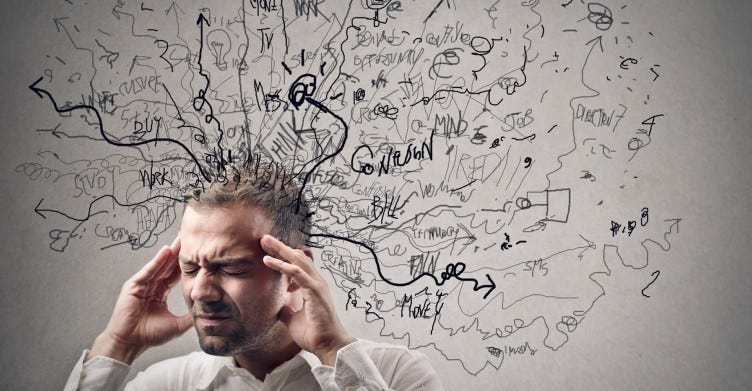
If legacy broadcasters and newspaper publishers are constrained by owners and advertisers, digital platforms are constrained by code. Their editors are not supervisors in a newsroom but machine-learning systems optimised to maximise engagement, growth, and profit. These systems don’t care whether something is accurate, humane, or wise. They simply learn what keeps us watching the screen. Fear and apprehension work. Outrage too. Tribal affirmation works even better. So the collective emotional life of billions of people is now being sculpted in real time by statistical models trained to keep us in a state of low-grade tension.
In this environment, “truth” is not suppressed in some crude authoritarian manner. It is suffocated. Facts compete for oxygen in a typhoon of distraction, memes, staged authenticity and fabricated conflict. Long-form context is defeated by the sheer velocity of discrete fragments. Complexity is crushed into slogans. Subtle shifts in power are overshadowed by celebrity gossip and curated indignation.
The old censors wielded red ink and rubber stamps. The new censors use ranking, throttling, redaction, and the quiet burial of disfavoured content beneath an infinite scroll. Across the world I hear the same lament from very different constituencies: “I don’t know who to believe any more.” This isn’t simply a media issue. It’s a civilisational fracture. When people lose confidence that any public source can be broadly reliable, they retreat into small echo chambers—ideological, religious, tribal, or conspiratorial. Within those bubbles, everything “inside” is granted automatic credibility while everything “outside” is dismissed as propaganda. We then mistake group loyalty for discernment.
In that climate, even well-intentioned journalism is easily dismissed and genuine whistleblowing filed under “fake news”. Meanwhile, actual disinformation slips through by mimicking the emotional tone of whichever tribe it wants to seduce. Is it any wonder that authoritarians thrive in this fog? When the shared ground of any verifiable reality erodes, politics becomes a contest of myth-making. Whoever can tell the most compelling story, regardless of its connection to evidence, gains the spoils.
Beneath the surface of these media dysfunctions lies a deeper problem I have been writing about for decades: an industrial conception of progress that treats people, ecosystems, and cultures as resources to be extracted, managed, and then discarded at whim. In this world-system, the purpose of communication is not education or even mutual understanding but behavioural control. News becomes a blatant lever for administrating sentiment. Platforms become instruments for profiling, prediction, and nudging.
If the overarching goal of the dominant system is the relentless expansion of economic throughput, then our attention is prime real estate. Any story that slows consumption, questions extractivism, or challenges structural inequity becomes inconvenient. It might still emerge, but it’s highly unlikely to be amplified or sustained.
This is why attempts to re-establish independent journalism so often struggle financially, and why social movements for deeper systemic change are either trivialised or co-opted. They are swimming upstream against an information ecology optimised to keep the underlying paradigm intact.
Many people still attempt to diagnose this crisis using the old left–right vocabulary. One side blames “liberal media”, the other rails against “conservative propaganda”, as though the problem were simply which tribe currently holds the megaphone. What if the problem is more radical than this? What if the primary distortion is not that one camp has captured the narrative, but that almost every prominent narrative is framed within assumptions that are themselves defective? Assumptions such as:
· That perpetual economic expansion on a finite planet is both possible and desirable.
· That competition is the principal engine of human progress.
· That complexity must be governed from the top down.
· That success is measured in quarterly returns, not in the flourishing of life.
Media built upon such highly flawed assumptions will continue to mislead, even when individual facts prove to be correct. The real story is rigged long before any journalist sits at a keyboard.
If traditional avenues of television and newspapers no longer convey the world in a way we can trust, and social media is a hall of mirrors, where do we turn? The uncomfortable answer is that no institution can now be safely granted the authority to do our sense‑making for us. We must reclaim, individually and collectively, a discipline of inquiry that has been outsourced for far too long. That does not mean treating all sources as equally corrupt. Some outlets do maintain higher standards of verification, public accountability and investigative rigour than others. But even these need to be approached as fallible contributions, not as final arbiters.
We need new habits. To read across borders and languages where possible, instead of immersing ourselves in parochial or convenient echo chambers. To scrutinise original documents—laws, treaties, court rulings, scientific papers, budget statements—rather than relying exclusively on mediated interpretations. To follow the rigorous work of independent investigators, open‑source analysts and on‑the‑ground witnesses, while still subjecting them to critical scrutiny. Such an ecology is not a new institution waiting to be built; it’s a pattern of relationships we choose to enter or ignore every day.
We enter it when we subscribe to a small investigative outlet instead of yet another entertainment platform; when we take the time to listen to someone at the sharp end of a policy rather than only to those who drafted it; when we ask our children what they are seeing online and treat their answers as data about our world rather than as a nuisance. These are trivial gestures in isolation. Aggregated across millions of lives they amount to a quiet refusal to let a handful of actors monopolise the story of reality.
If at all possible we also need to revive some old practices that we unthinkingly discarded in the haste for expedience: lengthy, concentrated reading; critical scrutiny; deep, wide‑ranging inquiry; tolerance of views with which we profoundly disagree; the readiness to change our minds when the evidence shifts; the humility to say, “I do not know enough yet.”
I no longer believe it’s useful to search for a solitary, “trustworthy” authority that undertakes to explain the world to us. That dream belongs to an era when information was scarce and could be centrally edited. Today it functions more as a comforting illusion than as a strategy. What we need instead is a living ecology of “truth‑seeking” that’s difficult to hijack or choreograph from above. Such an ecology will be untidy by design. It will likely draw on mainstream journalists who still take evidence and verification seriously, while refusing to treat any newsroom as a secular priesthood. It will listen to local witnesses and organisers whose lives are directly affected by decisions that remote commentators treat as abstractions. It will rely on scholars who test claims against method rather than fashion, and on technologists who can reveal how algorithms quietly weight some stories and bury others. It will also turn to elders and memory‑keepers who remember how meaning was shared before platforms began slicing human experience into monetisable snippets.
None of these, taken alone, can carry the burden we lazily tried to place on “the media” for so long. Woven together—through free-flowing conversation, mutual critique, and a willingness to expose their own assumptions—they can begin to form a distributed capacity for sense‑making that’s far harder for any state, corporation, or ideology to bend entirely to its will.
We should not pretend this ecology will assemble itself while we remain seated as audiences. It comes into being only when enough of us refuse the role of passive consumer and step, however modestly, into authorship. That might mean funding the work that refuses to flatter us, tracing a viral claim back to its origin rather than sharing it on instinct, or convening small, local spaces where people can speak without being reduced to data points. None of that is spectacular. Yet without such unremarkable acts of attention and refusal, the field remains open to those who are all too eager to manufacture our reality for us.
It’s tempting to blame “the media”, “the platforms”, or “the elites” as though they were separate species. Yet their power rests on our compliance: our clicks, our indifference to corrections, the hunger to have our prejudices stroked. If we continue to treat information as background noise, selected for us by invisible curators, then we should not feign surprise when those curators optimise for everything but truth. A civilisation that can’t be bothered to examine the stories it lives by will always be governed by those who can.
We are long past the point where one more scandal at a prestigious broadcaster, or one more leak about an algorithmic tweak, will fix any of this. The deeper challenge is to grow up, cognitively and morally, to the point where we no longer expect a single trusted voice to tell us what’s real and what’s not. Only then do we have a chance of shaping an information ecology that serves life rather than consumption, curiosity rather than control, and understanding rather than obedience.