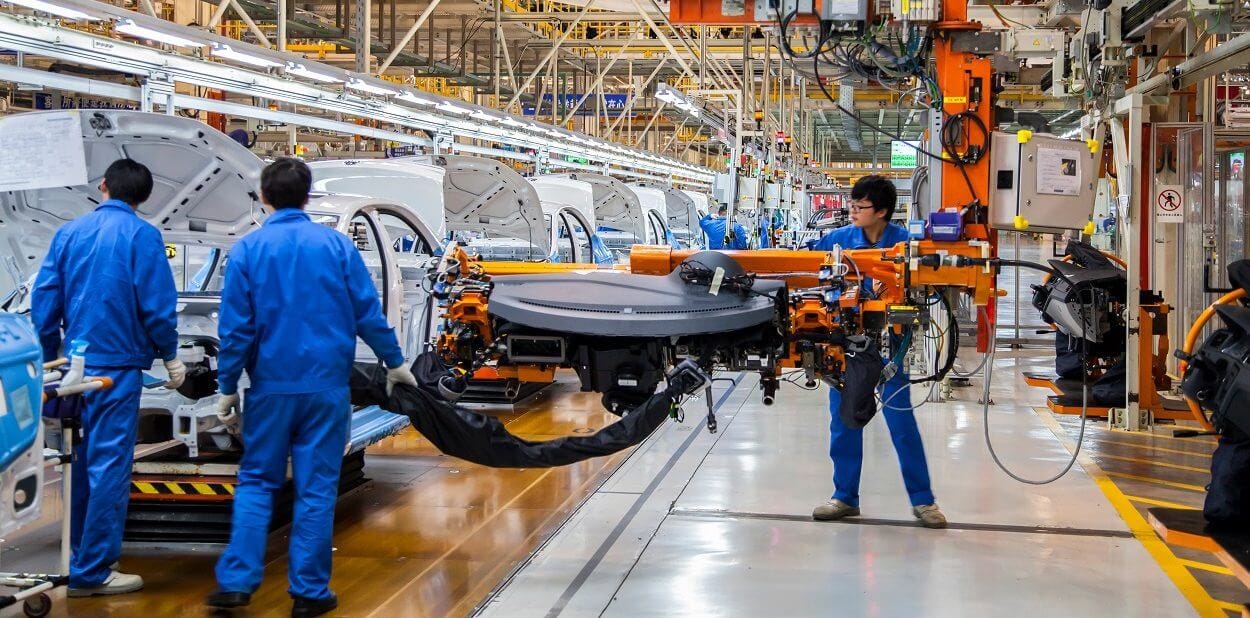
In the early 1980s I found myself walking factory floors in a Japan many American executives still assumed was an industrial backwater. I knew better. By then I had been working with W. Edwards Deming and was already steeped in what later became fashionable under the banner of Total Quality Management. I had seen, close-up, how statistical thinking, process discipline, and respect for front-line intelligence could transform organisations like Sony and Toyota.
Yet even with that familiarity, there was something shocking about the Japanese experiment. The shock was not only in the gleaming plants, the almost ascetic care with which problems were surfaced, or the calm pride of workers who had been told – and believed – that they were custodians of quality. It was the dawning realisation that the Americans who had brought Deming to Japan after the war as a technical adviser were now flying in, decades later, as tourists of their own abandoned ideas. They were not just behind in engineering capability. They were behind in epistemology – in how they knew what they thought they knew.
Today, when Western executives step into parts of China and feel the same jolt – confronted by an industrial, digital and infrastructural sophistication that confounds their preconceptions – we are seeing the same drama, staged within a different civilisation, under radically different technologies, yet driven by a familiar failing: a mindset that confuses past success with present truth.
This is not a story about Japan, or China, or the United States as discrete entities. It’s a story about an industrial worldview, now global and increasingly exhausted, that blinds its beneficiaries to their own obsolescence. It’s a story about why those who think of themselves as masters are frequently the last to notice that they have stopped learning.
From Deming to Toyota: Lessons the West Declined
Deming’s approach – which I and many others went on to develop and apply in various guises – was disarmingly simple, though never simplistic. Look at the system, not just the individual. Use data in real time, not as a post-mortem. Treat variation as a signal, not a nuisance. Involve those doing the work in redesigning the work. Learn continuously.
None of this required exotic metaphysics. It did, however, require a deeper shift in consciousness: away from the illusion that control comes from command, and towards the insight that genuine control comes from understanding.
The Japanese, rebuilding from the ruins of war, were unencumbered by the industrial arrogance that had already taken hold elsewhere. They listened to Deming and Juran with an intensity many Western executives at the time reserved for their accountants. They modified, improvised and integrated these ideas into their own cultural sensibilities about craft, duty, and mutual obligation. Quality circles, just-in-time flows, error-proofing, the refusal to treat defects as inevitable – these were not “programmes” but elements of a new habit of mind.
By the time Detroit and other Western centres of mass production woke up to what had happened, the change was civilisational in its implications. An entire production culture, built on linear throughput, inspection, and the tacit assumption that workers were replaceable, had been quietly surpassed by a systems culture that treated learning as a daily ritual.
The American executives who walked those plants in the 1950s and 60s came with a script: they were visiting cheap imitators. The reality – that they were walking through laboratories of the future – simply did not fit into that narrative. So they did what human beings, especially powerful human beings, often do when faced with data that does not match their story: they trivialised it, compartmentalised it, and went home reassured.
Industrial economism – the prevailing credo of extraction, scale, and quarterly numbers – made this all but inevitable. In a worldview where markets are the only judges that matter, and where winners prove their virtue by winning, there’s no obvious reason to sit at the feet of former colonies or defeated enemies.
The deeper tragedy is that the knowledge was not hidden. It was rejected because it threatened the self-image of those who believed they already knew how the world worked.
China: The Second Shock
Fast forward to the present day. I have lived in Asia for two decades now – in Thailand, looking at the Chinese experiment from a vantage point that is both inside and outside Western discourse. I advise leaders in China and across the global South who no longer ask whether the old West is in decline, but what shape the decline will take – and what, if anything, can be salvaged from its better traditions.
Many Western executives still arrive in China with the same clichés in their carry-on luggage: counterfeit goods, unsafe products, a culture of copying. These stereotypes have some basis in experience – counterfeiting and lax safety standards have been real issues in particular sectors at particular times. Yet they function psychologically as defensive myths, permitting people to avert their gaze from a more awkward truth: in a growing range of domains – electric vehicles, batteries, industrial robotics, high-speed rail, logistics, and the integration of digital platforms into everyday life – China has built capabilities many Western systems can barely comprehend, let alone replicate quickly.
Visitors who venture beyond the staged corporate showrooms and tourist zones often describe an unsettling mixture of awe and disorientation. Product cycles move at what feels like an unnatural pace. Supplier networks behave like living organisms, reconfiguring themselves in weeks rather than years. Data flows bind consumer behaviour, finance, logistics, and manufacturing into a single feedback loop. Infrastructure appears almost overnight where, in other parts of the world, plans can languish in committees for decades.
Again, I am not idealising. China faces profound systemic challenges – demographic pressures, environmental degradation, property bubbles, and political centralisation among them. Yet however those tensions play out, one should at least be honest: in many spheres, China is now setting performance benchmarks, not just chasing them. The question for Western leaders, and indeed for any society socialised into industrial economism, is whether this recognition can occur without the usual theatre of denial, paranoia, and blame.
The emerging reflex has been to reach for familiar tools – sanctions, tariffs, national security rhetoric – as if a rival’s competence can be quarantined at the border. That may slow diffusion of particular technologies. It does nothing, however, to address the underlying incapacity to learn from a system that offends one’s ideological sensibilities.
When a society has convinced itself that it owns the copyright on innovation, discovering that others innovate differently – and sometimes more effectively – is not just uncomfortable. It is existentially threatening.
Mindset as an Operating System
What, then, is this elusive “mindset” that blocks learning? Not a few cognitive biases scattered through individual brains, that’s for sure. It’s more akin to a computer’s operating system – an invisible grammar of expectations, metaphors, and habits that scripts what we see, what we ignore, and what we refuse to see even when it’s right in front of us.
Industrial economism, now global, encodes a cluster of such habits. Growth is equated with goodness. Efficiency is equated with virtue. Competition is treated as a natural law rather than a design choice. Success is read as proof of superior merit rather than contingent advantage. Within that framework, certain patterns recur.
First, the conviction of inherent superiority. After 1945, American industry occupied a position of unprecedented dominance. Many executives took that as evidence that their methods were not only effective, but definitive. One can still detect the same disposition in contemporary Western commentary: we lead in innovation; others will always be followers or impostors. This identity is fragile. Any hint that a formerly “less developed” nation has leapfrogged in some domain feels like theft rather than learning.
Second, the narrowing of time horizons. Quality, as Deming understood, is not an inspection protocol but a long apprenticeship in systemic discipline. The same is true of the complex manufacturing and digital ecosystems now seen in East Asia. They are not accidents of a single five-year plan or one charismatic founder. They are the result of sustained investment in infrastructure, education, coordination, and experimentation. Yet the internal clocks of most large Western corporations – and increasingly, governments – have been recalibrated to quarterly earnings, electoral cycles, or the half-life of a press release.
Short horizons punish learning because learning looks wasteful at first. It requires experiments that do not pay off immediately. It exposes incompetence. It unsettles comfortable rituals. The industrial mindset prefers the illusion of control delivered by spreadsheets over the messiness of genuine inquiry.
Third, the contempt for “outside” knowledge. In the 1950s, Deming was revered in Japan while being treated as an eccentric statistician at home. Today, how many Western institutions are willing to treat Chinese practices in, say, digital payments, integrated logistics or manufacturing automation as legitimate sources of insight rather than curiosities from an authoritarian system?
Here the moral narratives do their most insidious work. Yes, values matter. Yes, there are serious questions about surveillance, labour rights, corruption and ecological impacts in many fast-growing economies – including Western ones. But when moral critique functions as an alibi for not learning how something actually works, it becomes lazy. It’s so much easier to dismiss a rival’s success as “cheating” – unfair subsidies, stolen IP, looser environmental standards – than to ask which of their institutional innovations expose our own complacency.
Finally, the sacralisation of the status quo. Once an industrial system is built – the plants, standards, regulations, educational curricula, reward structures – it congeals into something resembling theology. To question it feels like heresy. I have felt this directly. My work is often labelled provocative, occasionally dangerous, not because it’s implausible, but because it points out that our most cherished assumptions may be symptoms of a dying worldview.
In that sense, what I saw in those early days of TQM, and what we are watching now in China’s rise, are anything but isolated episodes. They are case studies in how a civilisation’s dominant operating system responds when the world no longer obeys its instructions.
Industrial Economism and the Art of Not Seeing
The industrial credo I dubbed industrial economism is often misdescribed as “capitalism” in some generic sense. In truth, various forms of market exchange and private ownership have existed for centuries across cultures. What is distinctive about industrial economism is its obsessive focus on extraction, linear growth, instrumental reasoning, and money as the final arbiter of worth.
In the early phases this credo does extraordinary things: it builds roads, factories, hospitals; it pulls millions out of destitution. But it also trains people to see only certain phenomena as real. If something cannot be measured in this quarter’s results, it becomes marginal. If a practice does not scale immediately, it is dismissed. If a different civilisation evolves alternative institutional logics, these are caricatured rather than studied.
Quality in Deming’s sense did not fit easily into that narrow accounting. Neither does the ability to orchestrate entire ecosystems at high velocity – which is what we now witness in parts of China, India, and elsewhere in the global South. Both require orchestrational finesse across time, across boundaries, and across hierarchies. Both depend on trust – not the sentimental variety, but the hard-earned confidence that others will honour their commitments because your fates are entangled.
Industrial economism, however, thrives on modularisation: breaking complex wholes into pieces that can be bought, sold, and relocated. Workers are interchangeable, suppliers disposable, communities transient. When the system works, profits soar. When it fails, nothing in the ideology equips its beneficiaries to ask whether the assumptions themselves might be flawed.
The inability to learn from Japan in the 1950s, and the reluctance to learn from China today, are symptoms of this same blindness. It is difficult for those trained to treat the market as an infallible judge to accept that markets can reward short-term gains while undermining the very capabilities needed for long-term flourishing.
Rival Civilisations, Shared Predicament
It’s tempting to narrate these developments through the usual geopolitical melodrama: rising powers, declining hegemons, strategies and counter-strategies. That story has some descriptive power, but it misses a more interesting – and, I would suggest, more consequential – dimension. Underneath the flags, cultures are experimenting with alternative ways of understanding and accomodating complexity. Some experiments deepen participation, broaden responsibility, and nurture learning. Others centralise power, exploit fear, and extract compliance. Most contain elements of both, because human beings are magnificently contradictory.
Japan’s adoption of Deming’s ideas was one such experiment: a hybrid of Western statistical method and Japanese organisational culture that gave birth to a distinctive production philosophy. China’s current phase is another: a synthesis of ancient bureaucratic disciplines, modern data systems, global supply chains, and a ruthless determination to avoid the kind of dishonour experienced during its “century of humiliation”.
Western societies, including the United States and Europe, are also running experiments: attempts to retrofit sustainability into consumerism, to reconcile crumbling public trust with permanent campaigning, to reinvent education while preserving obsolete assessment rituals.
Every society today – whether it admits it or not – is wrestling with the same underlying predicament: how to reconfigure its mindset so that learning can keep pace with the complexity it has unleashed.
The question then becomes: who is still capable of changing their mind?
The Price of Certainty
If I sound impatient with Western complacency, it’s because I have watched, up close, how stubbornly institutions cling to their own mythology. I have seen boardrooms nod sagely as they “embrace” quality, innovation, sustainability, or digital transformation, while leaving the fundamental power structures, incentives, and mental models entirely intact. The words change; the mindset remains.
Working with Deming taught me that most organisational failure is not due to stupidity or malice among individuals. It stems from systems that punish curiosity and reward theatre. When workers are blamed for systemic faults, they hide problems. When executives are lionised for hitting numbers regardless of how they are achieved, they learn to suppress inconvenient truths. When entire nations equate their identity with superiority, they invert the logic of learning: anything that challenges them must be wrong.
China now plays an uncomfortable mirror to the West in this respect. As its own successes accumulate, the temptation will be strong to believe that the present arrangement is vindicated by results; that what worked in the last thirty years will work in the next fifty. This is how civilisations ossify. Japan too has struggled with this, as its once-ferocious learning dynamic gave way to deference and demographic stagnation.
The mechanism is the same everywhere. Certainty sedates inquiry. Status pacifies imagination. The more tightly we cling to our stories of exceptionalism, the more likely we are to miss the signals that the story is fraying.
Recovering the Learner
What would it look like, practically, for executives flying to Shenzhen or Shanghai today to avoid the mistakes their predecessors made in Nagoya and Tokyo? Not a new “best practice” manual. Not another round of self-congratulatory conferences about innovation. It would begin with a very old discipline: humility. Not the counterfeit humility of the town-hall speech, but the genuine admission that “we may be successful yet profoundly wrong about how the world is changing.” That sentence, spoken honestly, would do more to restore the capacity to learn than any consulting framework.
From there, one might ask questions rarely voiced in polite corporate conversation. For example:
What are they doing that we cannot currently do? What tacit habits, relationships, and institutional arrangements make that possible? What would have to die in our own culture – which rituals, power structures, rewards, and myths – for us to attempt something similar?
Such questions are hazardous because they threaten internal hierarchies. Quality initiatives in the Deming tradition unnerved many executives precisely because they empowered front-line workers to surface problems that managers preferred to ignore. In the same way, learning deeply from Chinese or other non-Western systems would expose how much of Western “leadership” has been little more than rent-seeking dressed up as strategy. This is why mindset, not information, is the real obstacle. There’s no shortage of reports, case studies, or data on what is happening in East Asia, Africa, Latin America, or the Middle East. What is missing is the willingness to let that information rearrange the furniture in Western heads.
Beyond Industrial Economism
The deeper issue, however, is not whether the West can imitate China, or China can imitate the West. The larger question – one I return to in my work because it refuses to go away – is whether any civilisation can transcend the industrial fixation on extraction, rivalry and control in time to avert the cascading crises already visible: ecological, social, psychological.
Industrial economism has delivered wonders and wounds in equal measure. Its signature achievements – vast cities, instantaneous communication, medical breakthroughs, global trade – sit alongside its signature devastations – mass extinction, systemic inequality, and the subtle erosion of meaning.
Neither Japan’s quality revolution nor China’s manufacturing and digital prowess automatically escape that logic. High-quality products can still feed an insatiable consumer machine. Ultra-efficient supply chains can still accelerate planetary overshoot. If learning is restricted to doing the wrong things more efficiently, we simply optimise our way towards collapse.
The more interesting frontier, for me, lies elsewhere: in those emergent spaces where people are experimenting with entirely different purposes for collective intelligence. Communities designing economies around regeneration rather than depletion. Organisations that treat care as infrastructure, not a cost to be cut. Technologies that extend our capacity to listen – to each other, to ecosystems, to the future – rather than merely amplifying our desire to dominate.
From that vantage point, the drama of Western executives being shocked by Japanese or Chinese competence looks almost parochial. Of course systems can learn faster than their former masters imagine. Of course latecomers can surpass incumbents. History is full of such reversals. The more profound question is whether any of us are capable of abandoning the industrial story altogether and co-creating an alternative that’s not predatory by design.
A Final Reflection
Many people describe e in embarrassingly grand terms: polymath, futurist, philosopher-activist, adviser to governments and corporations from the global North and South alike. Strip away the titles and what remains is simpler: I am a learner who has spent a lifetime watching powerful people avoid learning.
When I walk through advanced factories today – whether in Seoul, Osaka or Shenzhen – I still see Deming’s ghost, not as a relic of bygone management fashion, but as a reminder that genuine quality is inseparable from genuine inquiry. The moment we believe we have arrived, we begin to decline.
Japan taught the West that lesson once, at great economic cost. China is teaching a version of it again, this time with geopolitical consequences woven in. Yet the most important lesson may not be about who leads in cars, chips, or data centres, but about who still remembers how to question the beliefs that built those things in the first place. If we cannot re-learn how to learn – as individuals, organisations, and civilisations – no amount of technology, no surge of national pride, no clever policy will save us from the logic of the mindset we currently inhabit.
And if we can, then the next time a delegation of executives lands in a foreign city and walks a factory floor, they might see something more than a threat or a curiosity. They might glimpse, faintly at first, another way of being human together – and recognise that they are, once again, students.