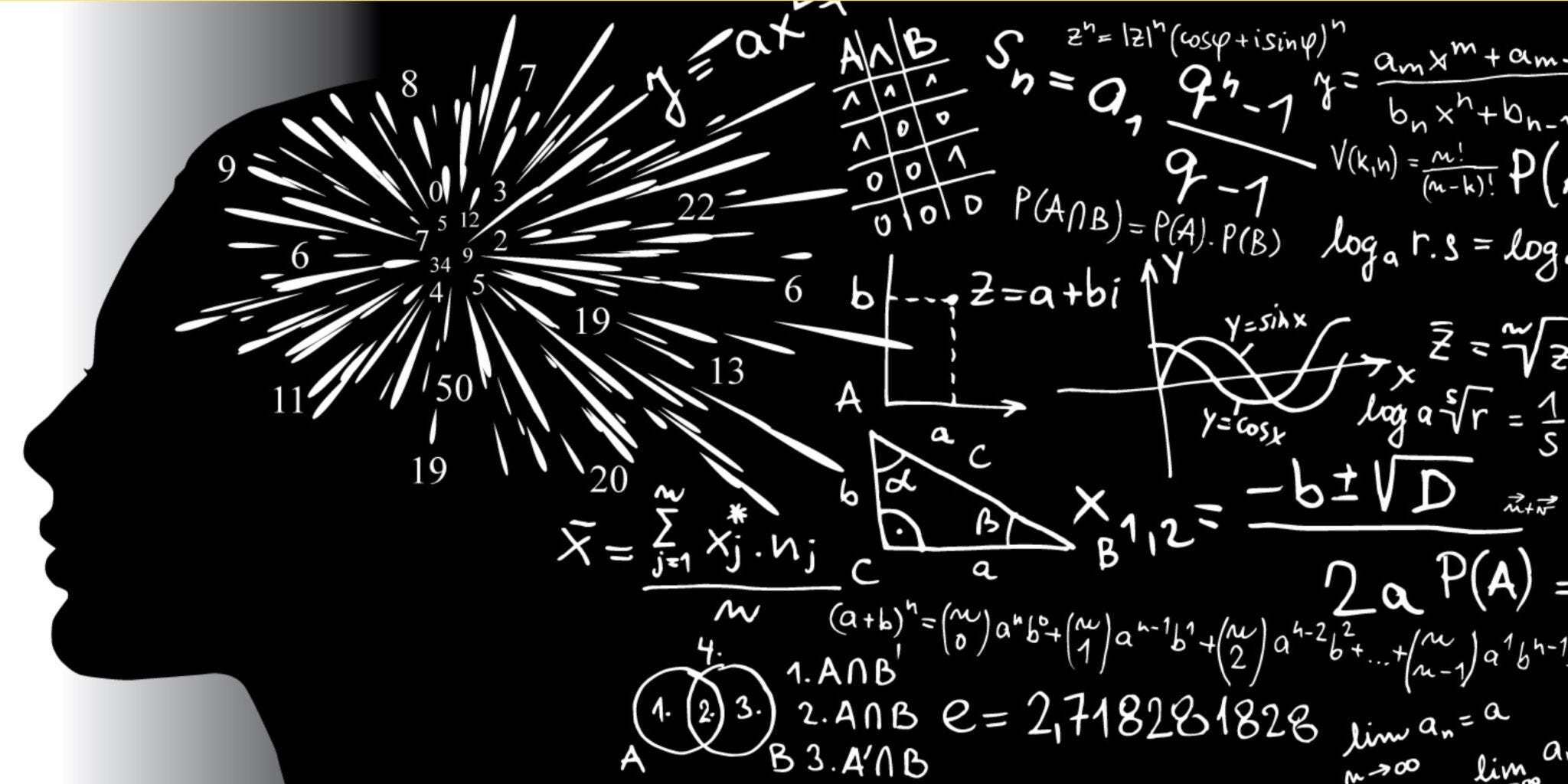
The claim that a single formula might “prove” the existence of God has once again entered the conversation. Predictably, the scientific establishment has reacted with a blend of scepticism and curiosity. Faith communities have responded with equal parts hope and caution. Meanwhile, the rest of humanity stands somewhere between intrigue and indifference. Yet beneath these surface reactions lies a far more significant phenomenon — the resurfacing of an idea that simply refuses to die: that the structure of reality carries traces of intention.
I have watched versions of this debate emerge, recede, and reappear during my decades of working at the intersection where cosmology and culture intersect. What interests me is not the headline but the civilisational impulse underneath it. Whenever science and spirituality are coaxed into the same frame — even tentatively — we witness a population struggling to reconcile two deep intuitions: that the universe behaves lawfully, and that the universe might not be indifferent. This tension is ancient, but its expression in a technological age takes on new significance.
Mathematics as a Cultural Mirror
Mathematics is often described as the language of the universe. Whether that is literally true remains open to inquiry, but it’s undeniable that mathematical patterning permeates the observable world — from the orbital choreography of planets to the growth habits of marine shells. Scientists from different cultures and eras have pondered why abstract symbols devised by humans map so cleanly onto cosmic behaviour. Is this simply the nature of human cognition selecting patterns it’s capable of perceiving, or does it tell us something about the universe itself?
Take just one example often cited by physicists: a number known as the fine-structure constant. It is dimensionless, hovers around the value 1/137, and governs the strength of electromagnetic interaction. If it were appreciably larger or smaller, atoms would not form in stable ways and chemistry, as far as we currently understand it, would be impossible. That a single constant participating in Maxwell’s equations and quantum theory should also sit at the heart of every star and every molecule is precisely the kind of “coincidence” that keeps theorists awake at night.
That simple question crashes in on our state of mind. In one direction lies the belief that mathematical order precedes physical form — that it’s woven into the fabric of existence. In another direction lies the conviction that mathematics is a human construction which just happens, through extraordinarily good fortune, to align with physical reality. A third view holds that the alignment is neither coincidence nor design but an artefact of the mind studying aspects of itself through the medium of nature.
Each worldview generates a different narrative. And like all civilisational worldviews, they don’t remain abstract. They materialise in institutions, economies, governance models, and education systems. A culture that believes the universe is inert tends to organise itself differently from a culture that believes the universe is conscious and pregnant with meaning. Mathematical debate is not just an academic pastime; it’s a proxy for how we choose to inhabit the world.
In one story, it feels natural to build extractive economies and adversarial security doctrines, as though competition and control were simply “how things are”. In another, regenerative design, reciprocity and mutual assurance make more intuitive sense, because coherence rather than indifference is taken to be fundamental.
The Formula That Isn’t
Most claims about a mathematical “proof” of divinity eventually fall into three broad categories. Some attempt to demonstrate that life-permitting conditions are too improbable to have arisen randomly. Others draw attention to recurrent patterns — from the golden mean to ratios in cosmological measurements — arguing that they resemble fingerprints of intent. Still others are philosophical arguments dressed in symbolic notation to borrow the prestige of science.
None constitutes empirical proof. But they are not trivial. Each represents an effort to articulate unease with a purely mechanistic understanding of existence. Whenever a scientist announces another coincidence — a physical constant so finely balanced that a minute deviation would collapse the possibility of stars, chemistry, or consciousness — the mechanistic worldview absorbs another hairline crack. These cracks may not amount to evidence of intention, but they do raise legitimate questions about the assumptions we continue to inherit.
The point is not whether a single formula exists. The deeper issue by far is the cultural desire to locate meaning within the architecture of reality itself. Why has that desire persisted across civilisations, even in societies that pride themselves on rational detachment? Why do people feel compelled to return to the idea that mathematics might reveal purpose?
The Fragility of Our Explanatory Habits
Modernity trained us to separate domains that earlier civilisations regarded as inseparable. We constructed silos — one for physics, another for metaphysics, yet another for ethics — and congratulated ourselves on having achieved conceptual clarity. But clarity is not the same as truth, and compartmentalisation often distorts what it seeks to illuminate.
By insisting that science concern itself with mechanism while spirituality deal with meaning, we created a false dualism that now infects global discourse. Not only does it distort our understanding of consciousness, ethics, and collective identity; it also blinds us to questions that cannot be answered within a single disciplinary frame. Whenever mathematics touches transcendence, the guardians of the silos panic. The reflex is to accuse one side of trespassing onto the other’s territory, when in fact the territory has always been shared.
We’re entering a moment where such boundaries no longer serve us. Technologies that mimic cognition, manipulate biology, and shape planetary systems have forced us to confront the inadequacies of our inherited categories. Artificial intelligence alone raises questions about intention, awareness, emergence, and meaning that no single discipline can answer without borrowing insights from others. In that sense, the renewed interest in mathematical metaphysics signals a broader transition: the crumbling of 20th century epistemological partitions.
Even within mathematics and logic, aspirations to complete, self-contained certainty have been quietly abandoned. Results proved last century showed that any formal system powerful enough to describe basic arithmetic will contain true statements that cannot be proved from its own axioms, and that not every well-posed question has a procedure that settles it one way or the other. If mathematics cannot even secure absolute closure on mathematical truth, asking it to deliver final answers on divinity or cosmic purpose may be asking more than any formalism can give.
Patterns, Intention, and the Architecture of Mind
Once we acknowledge that mathematics is not value-neutral, a further issue arises: what if the universe is intelligible because mind is not an accidental late-comer but an intrinsic feature of existence? That suggestion has been explored in philosophy, theology, and speculative physics, though no consensus exists. But the mere posing of the question destabilises the assumption that matter precedes meaning. If meaning is woven into reality, then the universe may be less machine and more organism — evolving, adapting, learning.
Such thinking will be dismissed by some as romantic, but it’s no more speculative than the multiverse hypothesis which proposes an untestable infinity of universes to account for fine-tuning. When both our dominant scientific theories and our spiritual narratives venture into terrain that can’t be verified, we’re effectively dealing with competing mythologies dressed in different attire. The point is not to compare them but to recognise that each contains assumptions which deserve interrogation.
The emergence of a global technological civilisation forces us to revisit these metaphysical questions. Whether we like it or not, large-scale systems — financial, climatic, informational — behave in ways that resemble intentionality. They generate patterns, feedback loops, and trajectories that can’t be reduced to the simple aggregation of individual choices. Human agency merges with algorithmic agency, producing outcomes no single actor intends yet which nonetheless exhibit structure. If meaning can emerge from systems, why not from the universe itself?
We already accept in other domains that wholes can display properties no catalogue of their parts would have led us to predict. The mathematics of networks, phase transitions, and non-linear dynamics illustrates how new behaviours can appear when elements interact in sufficient number and with sufficient density of connection. At one scale, everything looks mechanical; at another, patterns arise that can easily be mistaken for purpose. It’s not unreasonable to ask whether our readings of cosmic “fine-tuning” belong in that family.
Worldviews, World-Systems, and the Search for Orientation
Worldviews don’t merely shape how we think; they anchor the institutional architectures we call world-systems. A civilisation that sees reality as accidental tends to create systems designed around control, scarcity, and competitive advantage. One that sees reality as relational tends to value coherence, regeneration, and shared wellbeing. When mathematical discourse hints at hidden coherence, it subtly shifts the cultural mindset, nudging societies to re-evaluate what they take for granted.
This matters because we’re approaching thresholds that require a re-examination of the myths underpinning modernity. Ecological instability, geopolitical rivalry, economic precarity, and technological acceleration all point to an absence of adequate worldview scaffolding. If our civilisation is built on assumptions that no longer hold, the entire edifice becomes fragile. The renewed fascination with a mathematically infused cosmology may reflect an instinctive search for orientation — a need to feel that the universe retains intelligibility even as our systems spiral into chaos.
Whether that orientation points to a conscious designer, a self-organising cosmos, or something as yet unimagined remains unresolved. The point is not to settle the debate but to recognise that its resurgence signals a kind of cultural transition. Civilisations re-negotiate their grand narratives whenever the prevailing ones fail to explain the conditions people experience. We’re in such a moment now.
The Value of the Question
In the end, the real significance of the claim that mathematics might reveal intentionality lies not in its literal truth but in its provocative power. It compels us to revisit assumptions that have become masked through familiarity. It exposes the intellectual exhaustion of a worldview that treats consciousness as an epiphenomenon and meaning as an illusion. It invites us to imagine a universe where the emergence of mind is not an anomaly but an expected outcome.
The mathematicians searching for divine fingerprints may not find what they expect. But their search is part of a larger movement — a civilisational effort to make sense of a world that no longer fits the frames inherited from the industrial age. Whether the universe is fundamentally intentional, indifferent, emergent, or something none of us has words for remains an open question. But the willingness to pose that question with sincerity and intellectual courage is a step towards a more mature and grounded relationship with reality.
And perhaps that’s the real value here. Not the formula. Not the claim. Not the debate between believers and sceptics. But the collective realisation that meaning itself is not an outdated superstition but a force that shapes civilisations — and that the architecture of reality might be more hospitable to meaning than we once assumed. In that sense, when numbers whisper sweet nothings, they are not offering us a verdict but an invitation — to re-examine the stories we live by, to notice how deeply those stories are entangled with our equations, and to accept that the most important work may not be to prove the universe meaningful, but to act as though it could be, and see what kind of civilisation that assumption makes possible.