Time will pass anyway. There’s a cruelty and a kindness in that observation. Cruel, because it exposes our irrelevance. Kind, because it quietly frees us from the delusion that we’re in control of very much at all. The river keeps flowing whether we are alert or asleep, whether we are composing symphonies, firing missiles, wiping a child’s tears, or just staring blankly at a cracked ceiling wondering how it all came to this.
The cliché appended to that observation – use it wisely – is both banal and terrifying. Banal, because it has been repeated so often that it has lost its sting. Terrifying, because once we genuinely allow it to land, it confronts us with questions we would much prefer to avoid: wisely for whom, to what end, and according to which story of what a human life is for?
In a civilisation saturated by industrial production and consumption – the banal global doctrine that measures vitality by throughput, profit and growth – “using time wisely” has come to mean “being productively occupied” in service of metrics most of us didn’t choose and rarely question. Busyness has become an anaesthetic. We calendar ourselves out of noticing that we’re not living the lives we secretly hoped might be possible. So perhaps the first move is to reclaim the phrase from that worldview.
Every human being, regardless of geography or circumstance, has been issued the same exquisite indignity: a finite span of days with unspecified length and an unknown expiry date. We speak as though time were a resource we own – something we can save, spend, manage. In truth, time is not a possession. It’s more like weather: it moves through and around us, indifferent to our plans. What we actually control is not time but attention – the direction in which we aim our awareness as the minutes and hours slip by.
When we say yes to anything – a meeting, a drink, another episode, an argument we already know by heart – we are in effect saying no to almost everything else the universe might have offered in that moment. Economists call this opportunity cost. Philosophically, it’s the soft tragedy in the background of every choice. To live at all is to renounce billions of possible lives.
This would be paralysing if we tried to take it all in at once. Yet ignoring it doesn’t make it vanish. Too many people eventually discover that “I didn’t have time” was simply a polite cover for “I traded what mattered for what was immediately in front of me, because that was easier than pausing to challenge what I was doing.”
If time will pass anyway, then the only coherent question becomes: what trade are you actually making, day after day, often without noticing?
Human beings everywhere harbour the same strange superstition: that later will be more hospitable than now. Later, we tell ourselves, we will learn the language, mend the relationship, rest properly, get serious about our craft, stop colluding with stupidity at work, stand up to corruption, take our spiritual life seriously. For now, we just need to get through this week, finish this project, wait until the children are older, until the political climate improves, until we feel... ready.
But the same river doesn’t pause in empathy with our excuses. Time passes whether or not the conditions we’re waiting for ever arrive. The danger in postponement is not that we might miss one opportunity but that postponement becomes a way of life. Eventually “later” hardens into “never”, not through an explicit refusal, but through a slow accretion of small, cowardly deferrals.
Procrastination is usually described as a failure of discipline. I am not so sure. Quite often it’s a failure of meaning. Why move now, if the story animating your efforts is not your own? Why begin the painting when all your life you have been rewarded for filling in other people’s templates? Why risk telling the truth in a culture that silently punishes candour and venerates polite duplicity? In that sense, the most dangerous use of time is not overt idleness. It is automatic compliance with scripts written by others, under worldviews you have never adequately examined.
Industrial economism has perfected one astonishingly effective device: the endless distraction loop. You know its texture whether you live in Bangkok or Berlin. You wake to a small glass rectangle that tells you what to be anxious about today, presents you with curated outrages, pings your nervous system with notifications designed to hijack the very attention that’s your only true currency.
What steals time from us is less often a deliberate choice to do “nothing” than a kind of entrancement – a trance of low-grade agitation and mild amusement in which we’re always vaguely preoccupied, never fully present, and almost never asking: Why am I giving this hour of my one wild and irrevocable life to this? Autopilot is not neutral. In a culture where profit depends on capturing and monetising your attention, your distraction is somebody’s revenue stream. What appears to be free entertainment is frequently an industrial machine for converting your awareness into data, your restlessness into consumption, your unease into dependency. Using time wisely, under those conditions, begins with a small act of rebellion: reclaiming the right to direct your own attention instead of renting it out to the highest bidder.
The conventional sermon about time encourages people to cram more activity into each day: wake earlier, work harder, optimise, hack, squeeze. If you listen carefully, there’s an almost religious fervour to this compulsion – as if salvation lay in getting through more emails before breakfast.
But the experience of people who have actually reflected deeply on their lives, across cultures and epochs, hints at a different balance. Time that feels well used tends to weave together four currents, though the mix will differ for each person and across life stages.
One is meaning: not in the airy sense of abstract purpose, but in the visceral feeling that this – whatever you’re doing right now – is somehow congruent with who you understand yourself to be. Meaning comes when your actions rhyme with your deepest sensibilities.
A second current is progress – the sense of moving, however slowly, towards something that matters to you. It might be a book slowly taking shape, a skill deepening, a community becoming more capable, a body healing. The velocity is less important than the direction. Stagnation rots the spirit because living systems are wired to adapt, to explore, and to grow; not because rest is wrong.
Third is connection – time spent in genuine companionship with others, where presence is not constantly fractured by devices and distractions. For most of our evolutionary history human beings entrusted their survival to small bands. Isolation, both social and emotional, turns time into a burden. Shared endeavour lightens it.
The fourth is renewal: rest, play, contemplation, and all the small rituals that restore a distressed nervous system. Here industrial economism is especially illiterate. It treats human beings as endlessly exploitable units of labour, surprised when they break. Yet all complex living systems rely on cycles of activity and dormancy, expansion and fallow periods. A forest that never knows winter eventually burns.
When these four currents are lopsided – when life is full of “progress” but hollow of meaning, rich in connection but starved of renewal, busy beyond measure but devoid of any felt trajectory – time acquires a bitter taste. We begin to experience our own days as something being done to us, rather than something we are consciously shaping.
Sometimes “wasting” time is the wisest act. There’s a paradox lurking here. If using time wisely means only “maximising useful output”, the human being is reduced to an instrument. The violin forgets it was carved to make music and starts boasting about how many hours a day it can lie in its case.
Some of the most fertile uses of time look, to an efficiency-obsessed culture, like waste. Aimless wandering. Staring at the horizon. Listening with no agenda. Watching how light falls through late-afternoon dust. Cooking slowly when there is a faster way. Letting a conversation ramble past its “useful” conclusion into shared silence. These are not always inefficiencies. They are the compost from which insight, creativity and tenderness grow.
There’s a difference, though, between idling with intent and being stolen from. Collapse on the sofa after a long day can be deeply restorative if you have chosen it and if it aligns with what your body and mind genuinely need. Numbing yourself in front of a screen for hours, then waking with the sense that a part of your life has been siphoned off into nothingness, is another matter entirely. The distinction is not visible from the outside. It lies in the quality of attention you bring to the moment. You can “waste” time wisely when you are conscious of the choice and clear about its place in your life as a whole.
“We all have the same 24 hours” is a slogan that sounds empowering until you scratch it. It takes only a casual glance across the planet to see that people’s degrees of freedom vary wildly. A woman working two jobs and caring for relatives in Manila, a refugee in a camp on the Syrian border, a hedge fund manager in London, a subsistence farmer in rural India – each has access to radically different forms of structural support, coercion and possibility. Any serious reflection on using time wisely must acknowledge this asymmetry. To urge a burnt-out nurse in an underfunded public hospital to simply “prioritise better” is indecent. Their time is already entangled in economic, political and institutional arrangements over which they have very limited say.
And yet, even inside those constraints, slivers of sovereignty remain – small pockets of decision in which you can reconfigure your relationship to the roles you inhabit. Sometimes wisdom in the use of time may consist in resisting the exploitation of your labour, joining with others to change conditions, or quietly redirecting effort from activities that merely perpetuate an unjust status quo towards those that might, over years, alter it.
In that sense, time is always a political question. What we collectively deem a respectable use of time reveals what we worship. When a society showers honours on those who multiply financial returns through speculation, while barely acknowledging those who tend the elderly, grow food, or hold fracturing communities together, we learn something about the underlying worldview. We also glimpse why so many people feel that their time, however busy, is misaligned with their conscience.
Leadership, then, is not an individual hero striding ahead, but what occurs when groups of people begin to reorient their time towards improving some facet of what it means to be human. When that happens, calendars and schedules quietly mutate. Meetings that previously gobbled up hours for no discernible purpose start to feel intolerable. Whole swathes of busywork are exposed as placeholders for courage.
We tend to romanticise dramatic gestures – the sudden resignation, the grand adventure, the televised act of defiance. They have their place. But when you study how lives actually change, the pattern is more humble: slow accretion.
Read ten pages, and you are not transformed. Do that every day for a year, and your inner landscape shifts. Spend twenty minutes moving your body today, and nothing obvious happens. Do that, clumsily but consistently, for five years, and your trajectory of health is altered in ways that any physiologist can trace. One courageous conversation doesn’t heal a relationship. A series of them, over months, often does.
Small, deliberate uses of time behave like seeds. Their true power is hidden at first, then emerges cumulatively. The industrial mindset, infatuated with quarterly results, is impatient with such gestation. It prefers the visible gesture to the quiet, generative habit. Yet the future we actually inhabit is largely the outcome of countless tiny, repeated decisions about how we spent our afternoons.
In that regard, time behaves more like a living soil than a machine. Throwing more hours at a problem doesn’t automatically yield more fruit, just as flooding a field doesn’t guarantee a better harvest. What matters is what you are sowing into those hours – the quality of attention, the alignment with your deeper values, the degree to which your actions are congruent with the kind of person, and the kind of civilisation, you would be willing to defend in public.
One way of testing your current relationship with time is disarmingly simple, though not always comfortable. Ask yourself, somewhere between waking and sleep: If I lived today on repeat for a year, where would I end up?
Don’t answer that kind of challenge with abstractions. Let the concrete details surface. The foods you reached for. The people you gave your full presence to – or failed to. The time you donated to causes or enterprises you privately question. The hours lost to agitation about events you cannot influence. The moments of genuine curiosity, gratitude or play.
If repeating today would steer you towards a life that feels more alive, more awake, more in tune with who you sense you could be, then your use of time – however messy on the surface – is probably tending in a wise direction. If not, then you have at least uncovered a signal: something in your current configuration of habits, commitments and excuses is off-key.
Another perspective comes from walking, imaginatively, to the far end of your life. Picture yourself at eighty – or whatever age still allows you to recognise yourself – looking back at this week. What would that elder version of you wish you had spent more time on? What would they regard as an almost comical waste?
Answers to questions like these vary enormously by culture, personality and circumstance. But there’s a striking convergence in the testimonies of people who have actually reached that vantage point. They speak less about wishing they had earned more or won more arguments, and more about wishing they had dared, rested, loved, created, and forgiven more. They regret, most often, their own timidity.
Using time wisely, then, might have less to do with squeezing more in, and more to do with subtracting what quietly diminishes you. Our current global operating myth – capitalist production – interprets time primarily as input to be harnessed for “more”. The future, in that story, is a kind of external frontier: an empty warehouse waiting to be filled with more stuff. Under that spell, any hour not bent towards productive accumulation can feel suspect, even sinful. There’s never enough of anything.
Yet there’s another way of inhabiting time, one more resonant with older wisdom traditions. In those lineages, time is not so much a corridor we race down as a depth we fall into. The point is not to outrun mortality, or to pile up experiences as if life were a shopping spree, but to ripen. To grow into a more lucid, less fearful, more generous version of ourselves. To weave a life that, taken as a whole, could be offered without embarrassment to those who come after.
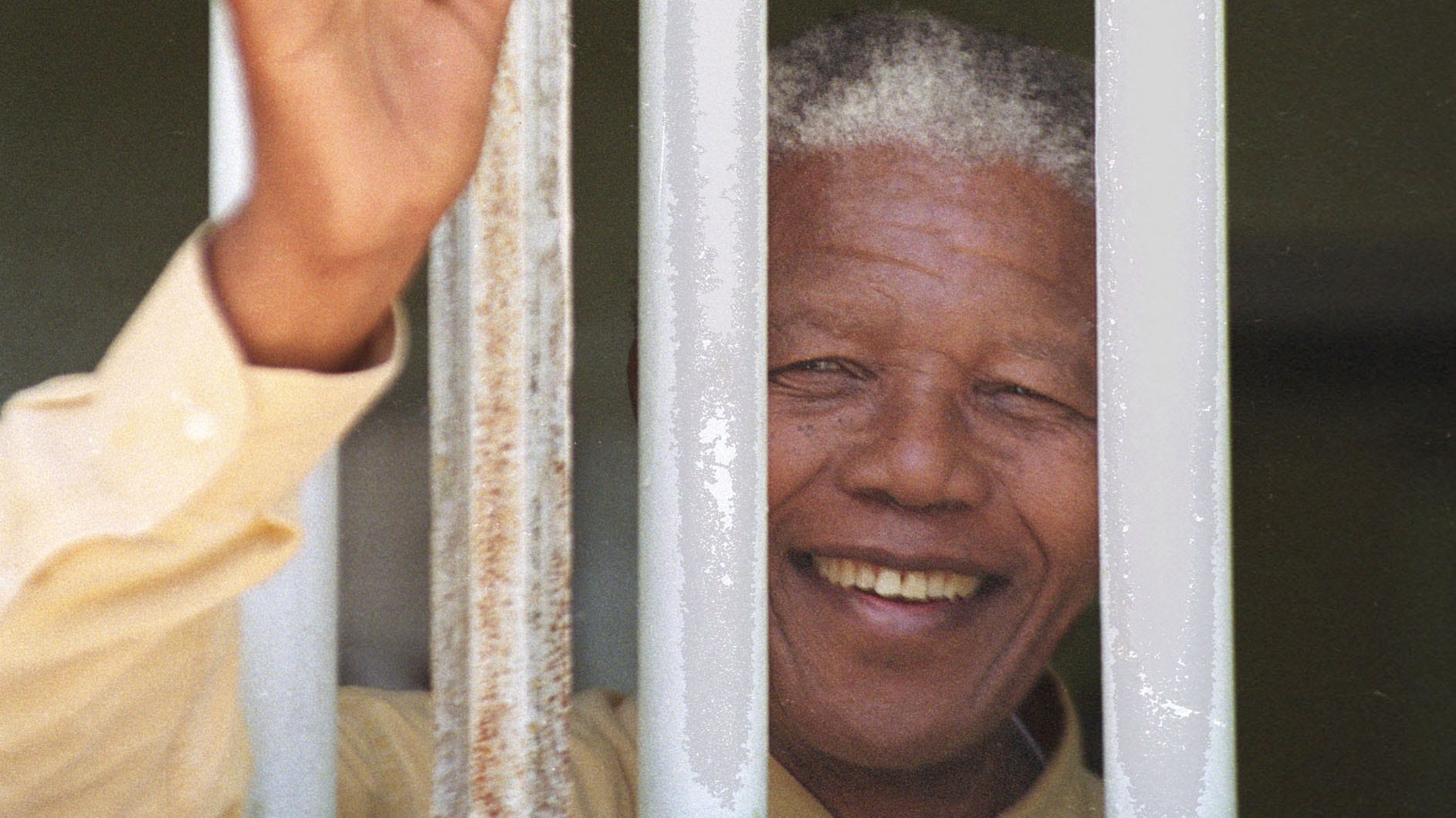
Nelson Mandela’s long imprisonment is one of the clearest demonstrations we have that time, even under conditions designed to crush the human spirit, can be turned into a kind of inner laboratory. Twenty-seven years in a cell is, among other things, an experiment in what a human being does with days that have been stripped of conventional markers of success. No promotions. No bank statements. No public applause. No guarantee that the struggle will prevail, or that the sacrifice will be remembered kindly. Just the slow grind of seasons observed through bars; the same warders, the same routines, the same hypocrisies.
If time is merely something to “get through”, then a quarter of a century in gaol is a form of living death. Yet Mandela came out of that ordeal recognisably altered in a way many South Africans, across ideological divides, still testify to. Not softened into submission. Not radicalised into a frenzy of vengeance. Ripened. Calmer, more spacious, more strategically astute, less centred on personal grievance and more on what might be needed for a future in which everyone could still look at themselves in the mirror.
It would be naïve to romanticise this. Prison also scars, distorts, traumatises. Many people subjected to similar conditions don’t emerge with enlarged compassion; they come out broken, or hardened, or both. Which is precisely why Mandela’s use of that time is so instructive. The walls were the same. The daily humiliations were similar. What differed was the inner choreography.
He treated the passing years as material. Language study. Political conversations with comrades. Observing his captors as carefully as his allies – their fears, their narratives, their blind spots. Attending, relentlessly, to his own impulses: anger, vanity, despair. Asking, again and again, what kind of leader might be required if liberation ever did arrive, and whether he was becoming that person or merely rehearsing old wounds. In other words, he remained an apprentice to his own ripening under the least auspicious conditions, without any guarantee there would ever be a harvest.
I vividly remember standing inside Mandela’s cell trying to fathom out how he remained sane. Most of us will never know Robben Island from the inside. Yet almost everyone, irrespective of culture or class, will spend stretches of life in their own versions of confinement: the office that feels like an open-plan cell; the refugee camp where days congeal into waiting; the cramped apartment or the village where opportunities seem to pass elsewhere; the marriage that has turned into a negotiation of silences; the body that no longer complies.
We tend to think: once I escape this, once I get the promotion, the visa, the diagnosis, the revolution – then I will live. Then I will use my time wisely. Meanwhile, years are squandered resenting the very circumstances that, harsh though they may be, are the only actual arena in which our character can be forged.
Mandela’s example doesn’t invite passivity. He didn’t “accept” apartheid as an inner teaching and retire into private enlightenment. He remained committed to transforming the outer conditions as far as he was able. But he also refused to allow the regime to dictate the quality of his consciousness. In that delicate tension – fierce resistance without internalising hatred as his organising principle – lies the essence of becoming apprentices to ripening.
The site of that apprenticeship is always specific. For Mandela it was a stone quarry and a narrow cell. For someone else it may be the night shift in a garment factory, a crowded bus terminal, a boardroom in which decisions are taken that will never affect those seated around the table, but will reverberate far away in forests and slums.
The question is less: How do I get out? and, at least initially, more: While I am here, however long “here” turns out to be, what kind of person am I becoming with each hour that passes? Am I sharpening my resentments or my discernment? Am I rehearsing my victimhood or my capacity to act, when a real opening appears, in ways that expand the circle of dignity rather than merely invert the hierarchy?
To answer like that – in a prison cell, or in an air-conditioned office where decisions are made by spreadsheet about people never met – is to reclaim some sovereignty from the dominant story of industrial economism. It is to decline the role of a passive unit of time deployed by others and to reinhabit one’s own consciousness as the primary site of leadership: the place where the future begins, very quietly, to be shaped.
If time will pass anyway, and it will, then we might as well be apprentices to that ripening. That does not mean retreating to a cave. It means bringing a different quality of awareness to whatever our individual circumstances happen to be: office, rice field, prison cell, refugee camp, parliament, temple, street stall, kitchen.
The river keeps flowing. We can’t command it to stop, nor can we swim upstream back into the days we have squandered. But we can alter how we meet each new bend. We can step out of trance for a moment, look up from the glowing rectangles and inherited scripts, and ask myself, here, now: If time is passing anyway, what is the most truthful, most alive use of this next hour? Not the most impressive. Not the most profitable. The most truthful, given who I am, where I stand, and what the world is asking of me.
Answer that question honestly, even haltingly, again and again over years, and you may discover that “using time wisely” is not a pious slogan after all, but a quiet revolution, enacted one ordinary day at a time.