What Is An Education For?
It's time for education to get real - to reject conventional schooling, along with the routine induction of obsolete social etiquette and civil discipline, in order to step boldly into the 21st century and to solve real-world problems.
We no longer inhabit the era of Victorian manners, although you might not grasp that if you were a fly on the wall in many public school systems. Critical thinking, moral reasoning, eloquence, and a genuine appreciation of the natural world are more vital than ever before. But the anachronistic memorization of facts, rote learning of math tables, physical training, handwriting, and preparation for industrial jobs, are no longer needed in our digital civilization.
At its most virtuous in a diverse, globalized and technology-driven world, education should ignite genuine curiosity, cultivating open inquiry and encouraging deviant thinking. It should inspire the investigation of human experience in its totality and from multiple angles, and challenge convention.
When schooling becomes a substitute for real learning, and education is confined to nothing more than exploring rigid thinking patterns, or focuses on indoctrination, it slides into dogma--a fixed set of beliefs resistant to questioning or revision. And dogma - political, economic and societal - is one of today's most obvious and perilous traps.
True learning thrives on intellectual flexibility. Curiosity drives us to ask "why" and "what if," pushing beyond accepted wisdom to discover new connections and hypotheses. This exploratory approach develops the critical thinking skills needed for surviving in today's multi-layered complexity.
Dogmatic education, by contrast, stifles development. When we're taught that there's only one correct approach or interpretation, we develop narrow perspectives that limit our problem-solving abilities. Add to that the widespread propensity to apply Cartesian logic and dialogue in every aspect of business and government, and you can see how constrained we are by path dependent choices and designs.
The most effective learning environments balance structure with openness; they provide foundational precepts, some of which may well be provisional, while encouraging us to question our assumptions and explore alternative viewpoints. This prepares us not merely to absorb and regurgitate information like robots, but to evaluate it critically and apply it creatively.
The Architecture of Obsolescence
Our current educational model resembles a once-magnificent edifice now crumbling under its own weight. Built for the industrial age when conformity, standardization, and hierarchical thinking produced reliable workers for factory floors, it continues to churn out graduates prepared for a world that no longer exists. This architecture of obsolescence - with its rigid timetables, siloed disciplines, and credentialing fetishism - perpetuates a dangerous mythology: that learning occurs primarily within institutional walls, concludes with formal qualifications, and progresses linearly through predetermined stages.
The physical manifestations of this mythology—factory-like buildings with identical classrooms, bells signaling the compartmentalization of knowledge into separate disciplines, standardized assessments privileging memorization over meaning-making—reveal how deeply industrial metaphors have colonized our conception of learning. The arrangement of desks in rows, facing forward toward the central authority figure, isn't just furniture placement but ideology made palpable—training in hierarchy and the passive reception of information rather than collaborative creation.
The metrics we still seem to worship - test scores, graduation rates, university admissions - tell us nothing about adaptive capability, ethical reasoning, collaborative capabilities or social resilience. These industrial-era measurements bear little correlation to success in a world characterised by exponential change, distributed intelligence, and emergent complexity. The mismatch between educational paradigms and lived reality widens daily, creating psychological dissonance in learners having to negotiate this widening chasm.
This dissonance manifests as epidemic levels of anxiety, disengagement, and existential confusion. Young people intuitively recognize the hollowness of preparing for stable careers in a world of accelerating disruption, of mastering obsolete skills while emergent capabilities go uncultivated. They sense the absurdity of educational institutions claiming to prepare them for the future while remaining themselves resistant to fundamental transformation.
The mechanistic organisation of schooling is a major part of the problem. Nature never arranges itself into neatly circumscribed compartments. The arbitrary boundaries between physics, biology, economics, and aesthetics, for example, exist nowhere in natural systems--they are conceptual conveniences that have hardened into intellectual prisons. Real education must transcend these artificial divisions to embrace knowledge as a living ecosystem where patterns continuously interconnect within and across domains.
This compartmentalization not only fragments understanding but reinforces the illusion that reality itself is neatly separable—that we can address climate change without transforming economics, or develop and code technology without considering ethics. The most critical challenges confronting humanity exist precisely at the intersections our educational systems have trained us not to notice. The results are specialists who excel at optimization within specific domains while remaining blind to systemic consequences.
Other Wisdom Traditions
Indigenous knowledge systems, largely marginalized in conventional education for reasons that are mostly to do with colonial hubris, have preserved this integrated perspective. They understand that wisdom emerges from recognizing relationships rather than isolating components. The Aboriginal dreamtime, Polynesian navigation methods, and Andean agricultural practices all embody sophisticated understanding of complex systems thinking that Western education is only beginning (and then reluctantly) to rediscover.
These traditional knowledge systems recognize that cognition extends beyond the individual human brain—that rivers, mountains, plants, and animals are not merely objects of study but contributors in an ongoing dialogue of mutual becoming. This perspective doesn't romanticize pre-technological societies but acknowledges that certain awareness capabilities have been systematically devalued in our rush toward mechanistic efficiency.
Learning ecosystems need to become regenerative rather than extractive--creating conditions where curiosity self-propagates rather than requiring constant external motivation. When students engage with real-world complexity through project-based challenges, mentored internships, and community problem-solving, they develop not just technical competencies but the metacognitive awareness to navigate uncertainty with confidence.
Such regenerative learning environments recognize that motivation isn't something to be imposed but emerges intrinsically when learners experience agency, purpose, and meaningful contribution. They understand that assessment becomes most powerful when it serves as feedback for growth rather than judgment of worth. Most crucially, they acknowledge that genuine learning involves transformation—not just of what we know but of who we are becoming—a process that requires safety, vulnerability, and profound respect for the learner's intrinsic dignity.
Technological Symbiosis and Embodied Learning
The digital revolution demands that we rethink the role of technology in education. Rather than treating digital tools as mere delivery mechanisms for traditional content, we must explore how human-machine symbiosis creates entirely new cognitive possibilities. Artificial intelligence, extended reality, and neural interfaces are not simply educational aids but partners in an expanding definition of intelligence.
This emerging cognitive symbiosis requires a fundamental re-examination of what constitutes knowledge itself. When information retrieval becomes instantaneous, memorization diminishes in value while pattern recognition, critical evaluation, and creative synthesis gain prominence. The capacity to ask meaningful or profound questions often matters far more than possessing readymade answers. Technical partnerships enable cognitive off-loading—freeing up human attention for higher-order thinking while algorithmic systems handle routine information processing. This redistribution of cognitive labour doesn't diminish human capability but rather focuses it where uniquely human qualities like ethical reasoning, aesthetic appreciation, and empathetic understanding remain indispensable.
Digital environments also permit unprecedented customization of learning pathways. Adaptive systems can respond to individual learning patterns, providing appropriately calibrated challenges that maintain the delicate yet understandable balance between frustration and mastery. Such personalization, when thoughtfully designed, can democratize educational opportunity—offering learners multiple entry points and progression routes rather than the "one-size-fits-all" approach of traditional instruction. The most sophisticated implementations recognize that personalization must serve agency rather than replace it, offering learners increasing control over their educational journeys rather than black-box algorithmic determination.
Paradoxically, this technological integration must be balanced with renewed emphasis on embodied cognition. We would agree that the body is not merely transportation for the brain, but an integral part of how we make sense of reality. Movement, sensation, emotional response, and physical interaction form the foundation of meaning-making. Educational models that neglect somatic awareness produce disembodied thinkers incapable of sensing the consequences of their ideas in material reality.
The sensory impoverishment of excessive screen time—the reduction of multidimensional experience to visual and auditory channels within fixed rectangular frames—creates subtle but significant cognitive distortions. We are evolved for multisensory engagement with three-dimensional environments, for proprioceptive feedback, for the subtle chemical exchanges of physical proximity. Learning that engages the full sensory spectrum embeds comprehension more deeply than the consumption of disembodied information. The most promising educational technologies recognize this reality, seeking not to replace embodied experience but to enhance it through augmented reality and environments that respond to physical engagement.
Attention itself—increasingly recognized as our most precious cognitive resource—requires careful curation in digital environments designed for continuous capture. Educational approaches must develop attentional discipline alongside technological fluency, teaching discrimination in information consumption rather than merely accelerating its pace. This includes the intentional practice of digital detachment—intervals where learners engage with slower-paced, physically grounded experiences that develop the capacity for sustained focus, deep reflection, and presence.
The pandemic-enforced experiment with remote learning revealed both the potential and limitations of digital education. It demonstrated that geographic constraints on knowledge access can be transcended while simultaneously highlighting the irreplaceable value of social learning and physical presence.
This global experiment made visible the educational divide between those with robust digital access and those without—revealing technology not as inherently democratizing but as amplifying existing social advantages without deliberate intervention. It showed that effective online learning requires not just technical infrastructure but new pedagogical approaches and social scaffolding. Most poignantly, it demonstrated that while information transfer can occur through digital channels, the developmental needs of young people remain stubbornly embodied—requiring safe physical spaces, face-to-face mentoring, and material communities of practice.
The future of education lies neither in techno-utopianism nor in nostalgic return to pre-digital practices, but in thoughtful integration that recognizes both the extended cognitive capabilities offered by technical partnerships and the irreducible embodied nature of human understanding. The most meaningful learning experiences will move fluidly between digital and physical domains, leveraging each for its unique benefits while remaining centered in the fundamental reality that education is not primarily about information but about transformation—a process that engages the whole human being in relationship with others and with the living world.
The Economies of Learning
Our current educational economic formulae reward uniformity, penalize experimentation and neurodiversity, and commodify the experience of learning. The credential-industrial complex - where degrees function primarily as expensive signaling mechanisms rather than indicators of capability - has created perverse incentives that prioritize institutional prestige over actual learning outcomes.
This economic distortion manifests in the spiralling costs of formal education in many countries, creating systems where access depends increasingly on financial privilege rather than intellectual potential. While several European countries—notably Germany, Norway, Finland, Sweden, and Denmark—have maintained commitments to tuition-free or low-cost higher education as a public good, much of the world has moved toward marketized models with significant financial barriers. The contrast is striking: where education is treated as a commons - a national asset and resource rather than a private investment - students can pursue knowledge pathways aligned with genuine interest and societal need rather than projected income.
The student debt crisis in countries like the US represents not merely a financial burden but a profound constraint on life choices—forcing graduates to prioritize immediate income over meaningful contribution, career advancement over continuous learning, and financial security over risk-taking and innovation. Countries maintaining free or affordable education demonstrate an alternative paradigm where graduates enter professional life unburdened by significant debt, allowing greater freedom to pursue socially valuable work regardless of compensation levels. The resulting risk-aversion in debt-burdened systems shapes not just individual decisions but our collective capacity for social evolution, creating societies where financial security trumps purpose-driven innovation precisely when transformative thinking is most needed.
And then there are qualifications. The labour market's over-reliance on credentials as filtering mechanisms has contributed to credential inflation—where positions once requiring high school diplomas now demand bachelor's degrees, and roles previously filled by undergraduates now require graduate study. This inflationary spiral diverts enormous human potential into securing increasingly expensive diplomas rather than developing genuine capability. The resulting economic inefficiency is staggering—billions invested in credential acquisition rather than in solving the urgent challenges facing humanity.
A regenerative education economy would value different metrics: adaptive capacity, ethical reasoning, collaborative capability, and creative confidence. It would amplify and reward systems that cultivate compassion and cooperation rather than merely transmit information. This transition requires reimagining both the funding mechanisms for education and the economic assumptions embedded within curricula themselves.
Such a transformation demands new economic instruments beyond traditional tuition models. Income share agreements, lifelong learning accounts, community-funded education, and skill-focused micro-credentials all represent promising experiments. More radical approaches include treating education as essential public infrastructure—acknowledging that an educated populace benefits the entire society.
The artificial separation between "learning" and "working" also needs dismantling. Internship models that integrate authentic contribution with guided learning, sabbatical systems that normalize periodic deep-learning intervals throughout careers, and recognition systems that value mentorship alongside productivity would better reflect the continuous nature of human learning and development. I have no doubt that organizations functioning both as productive enterprises and learning communities represent the future of work, especially in knowledge-intensive industries.
Perpetuating the Status Quo
The socio-economic narratives still mostly taught in schools are also an issue as they perpetuate the highly questionable mode of neoliberal capitalism, which many are now beginning to perceive as exploitation dressed up as progress and the source of many problems facing humanity. Real education would challenge the assumptions underpinning industrial economism, introducing pluralistic frameworks that acknowledge planetary boundaries, prioritize wellbeing over growth and sufficiency over extravagance, and recognize the fallacy of infinite expansion on a finite planet.
This curricular transformation requires more than adding "sustainability" units to conventional economics courses. It demands fundamentally recontextualizing economic activity within ecological reality—teaching circular economy design, regenerative sufficiency, total cost accounting, and non-extractive business models as central rather than peripheral frameworks. Students must understand how financial systems can be redesigned to serve human flourishing rather than merely maximize capital accumulation.
Indigenous economic systems—with their emphasis on reciprocity, gift economies, and intergenerational stewardship—and peer-to-peer practices offer vital wisdom largely absent from mainstream economic education. Exploring these alternatives opens conceptual possibilities beyond the artificial constraints of neoclassical models, revealing that our current economic arrangements represent historical choices rather than inevitable realities.
The metrics guiding educational investment must expand beyond narrow ROI calculations focused solely on income differentials. Value frameworks that incorporate well-being impacts, ecological regeneration, community vitality, and collective meaning-making would better align educational economics with genuine societal needs. These expanded metrics would recognize education's role not merely in workforce preparation but in cultural evolution—the development of new understanding, values, and practices essential for navigating planetary transitions.
Perhaps more fundamentally, education must challenge the scarcity mindset embedded in conventional economics. While material resources have limits, human creativity, collaboration, and care represent potentially abundant resources whose development education uniquely nurtures. Learning environments that cultivate appreciation of sufficiency rather than endless acquisition help students recognize that fulfillment emerges more from meaningful contribution than from consumption volume.
In this reconstructed economics of wisdom, education would be valued not primarily as a private investment yielding individual returns, but as a commons-creating activity generating shared cultural capabilities essential for collective flourishing. The resulting allocation of resources would reflect education's true significance—not as a consumer good but as the fundamental process through which societies consciously shape their evolution in response to changing conditions.
Leadership as Learning
The crisis of leadership across our institutions stems directly from an educational failure as well as a gross misunderstanding of what leadership is. We have produced a generation of technically proficient, but ethically underdeveloped (and periodically morally bankrupt) professionals - a management class that frequently fails to grasp complexity, least of all deal with it with insight. Conventional education rewards those who excel at working as specialists within the parts of a system, rather than those capable of transforming the whole system if and when necessary.
This individualistic conception of leadership—as a set of heroic traits possessed by exceptional individuals who direct others from positions of authority—perpetuates precisely the fragmentation that complexity and complex systems render obsolete. It mistakes positional power for genuine leadership capacity and reinforces the dangerous myth that transformation depends primarily on the vision of remarkable figures rather than on distributed intelligence and collective agency. This heroic myth creates dependency rather than empowerment, compliance rather than creativity, and ultimately undermines the very resilience it purports to create.
Real education must start to cultivate leadership as a literacy - in which the capacity to hold multiple perspectives simultaneously, sense emerging possibilities, and act with ethical courage amid uncertainty, become part and parcel of the collaborative impulse for 2nd- and 3rd-order change. These capabilities develop not through abstract case studies and theories but through an evolving praxis in authentic contexts where decisions have meaningful consequences and feedback is immediate and tangible.
Leadership reimagined as a collective and shared phenomenon requires fundamentally different developmental approaches. Rather than focusing exclusively on individual skills acquisition, such education creates conditions where leadership emerges through relationship—the dynamic exchange between diverse perspectives, the integration of different ways of knowing, and the collective sensemaking that allows groups to navigate complexity. This shift recognizes leadership not as a role but as a field property of human systems—something that circulates among participants according to context, need, and capability.
The practices that nurture distributed leadership include deep listening across difference, skillful facilitation of group intelligence, recognition and monitoring of emergent patterns, and the courage to name uncomfortable truths that systems often suppress. These subtle capacities rarely develop through conventional instruction but emerge through developmental experiences where learners navigate real tensions between competing values, facilitate authentic collaboration across difference, and experience both the vulnerability and potency of shared leadership.
Indigenous and other wisdom traditions offer powerful models of this more distributed mode. Many traditional governance systems incorporate practices like council circles where leadership rotates according to the question at hand, consensus processes that integrate rather than average perspectives, and decision frameworks that explicitly consider impacts seven generations forward. These approaches recognize that wisdom emerges not from individual brilliance but from carefully stewarded processes of collective discernment.
To be frank, leadership development in this sense really becomes inseparable from community development. It focuses not on elevating already outstanding individuals but on strengthening the connective tissue between people—the quality of relationships, the capacity for generative conflict, the shared commitment to purposes larger than individual advancement. It cultivates both the individual capacity to step forward when needed and the humility to step back when others are better positioned to guide the process.
This reconceptualization transforms educational methodology. Rather than segmenting leadership development into specialized programs primarily accessible to those already in positions of authority, it integrates leadership literacies throughout learning environments. Students find ways to move fluidly between functions, to recognize opportunities to contribute when they arise, and to call forth expertise in others rather than centralizing it in themselves. Assessment shifts from measuring individual performance to evaluating collective outcomes and the quality of the collaborative process.
Perhaps most profoundly, this approach recognizes that leadership emerges precisely at the edge of current knowledge—where established expertise proves insufficient and new understanding must be co-created. This places learning itself at the centre of leadership praxis. The most essential leadership capacity becomes not certainty but curiosity, not definitive answers but profound questions, not command of existing knowledge but comfort in the creative tensions of emergence.
In this integration of leadership and learning, education becomes not merely preparation for future leadership but its active practice—the ongoing development of our collective capacity to sense, respond to, and consciously shape the evolution of our shared world. The leader and the learner are not separate identities but complementary aspects of the same state—one that recognizes that no individual alone possesses the perspective, wisdom, or agency to address the interconnected challenges we face. True leadership, in this understanding, manifests not through exceptional individuals but through communities capable of continuous collaborative learning on behalf of the larger systems they serve.
From Information to Integration
The evolutionary leap facing us is not about accumulating more information but about integrated intelligence—the capacity to synthesize diverse knowledge streams into coherent understanding while remaining open to emergent patterns. Real education is not a preparation for some future life but life itself—a continuous dialogue between curiosity and experience, theory and practice, individual insight and collective wisdom.
The question is not whether our educational systems will change—they must—but whether that transformation will be intentional or chaotic, regenerative or merely reactive. The most promising innovations are already emerging at the margins, in learning communities that have abandoned industrial metaphors in favour of living systems principles. I am reminded of an experiment that was conducted over a century ago at Dartington in the UK.
Dartington Hall School, and later the College of Arts where I was fortunate enough to teach, stands as a remarkable beacon in the wilderness of educational innovation—a pioneering experiment that still casts long shadows across our understanding of learning's true nature. Founded in 1926 by Dorothy and Leonard Elmhirst, this progressive institution emerged not merely as a school but as a living laboratory for reimagining the relationship between education, community, and human potential.
The Elmhirsts' vision transcended conventional schooling paradigms. They created a learning ecosystem anchored in the belief that education should nurture the whole person—mind, body, emotions, and creative spirit—rather than merely transferring knowledge or enforcing compliance. At Dartington, the arts weren't peripheral enrichment but central to developing fully integrated human beings. Music, dance, theatre, and visual arts permeated daily life, with practitioners like Bernard Leach, Mark Tobey, and Michael Chekhov bringing extraordinary creative energy to this rural Devon community.
What made Dartington truly revolutionary was its democratic ethos. Students participated in governance through weekly school meetings where they voted alongside staff on matters affecting community life. This radical power-sharing upended traditional authority structures, teaching young people that their voices mattered and that governance was something they could actively shape rather than passively receive. The school operated without traditional punishments or artificial rewards, fostering intrinsic motivation rather than compliance-based behaviour.
Dartington's approach to curriculum embodied an organic flexibility rarely seen before or since. Learning emerged from genuine interest rather than prescribed sequences. Teachers functioned as facilitators and co-explorers rather than didactic instructors. The boundaries between subjects dissolved as students pursued integrated understanding through projects connected to real community needs and opportunities. This anticipation of project-based learning and interdisciplinary education preceded mainstream adoption by decades.
Perhaps most radical was Dartington's commitment to respecting children's autonomy. Attendance at classes was voluntary—a decision that horrified educational traditionalists but reflected a profound trust in young people's natural drive to learn when surrounded by meaningful opportunities. This freedom was balanced with responsibility; students maintained the school's physical environment, participated in agricultural work, and contributed to community wellbeing.
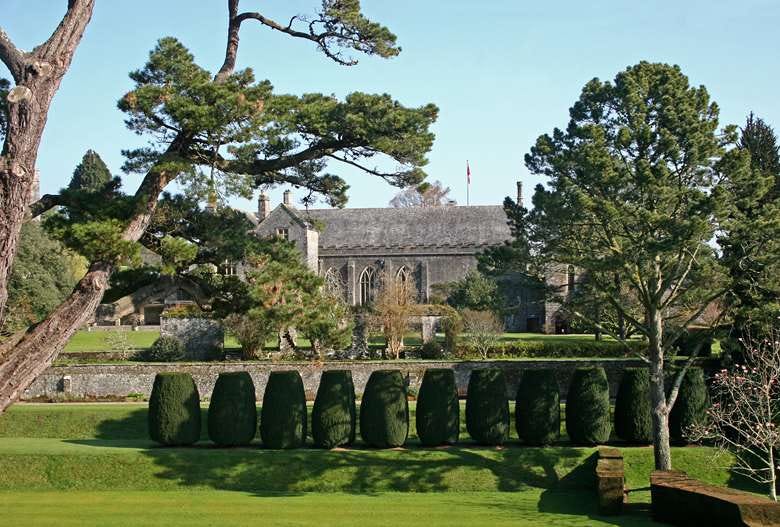
The physical setting itself embodied the educational philosophy. The magnificent medieval Great Hall and surrounding gardens provided an environment where beauty and functionality merged. Learning extended beyond the classroom walls to farms, workshops, forests, and studios—anticipating today's understanding that authentic learning happens everywhere, not just in designated institutional spaces.
Dartington attracted notable educational thinkers like A.S. Neill of Summerhill fame, W.B. Curry, and Bertrand Russell, becoming a node in a global network of progressive education. Yet unlike some experimental schools that operated in isolation, Dartington maintained dialogue with mainstream educational thought while fearlessly pushing boundaries.
The experiment wasn't without tensions and challenges. The school navigated the delicate balance between freedom and structure, between individual development and community responsibility. It weathered financial difficulties, philosophical disagreements, and the scepticism of a broader society often uncomfortable with such a radical departure from educational norms.
When Dartington Hall School closed in 1987 after more than six decades, it represented not a failure but the completion of a magnificent educational inquiry that had fulfilled its purpose. The school had demonstrated conclusively that learning flourishes when liberated from coercion, that community can replace control as an organizing principle, and that education can be joyful without sacrificing intellectual rigour.
The true legacy of Dartington persists not in buildings or curricula but in its fundamental reconceptualization of what education might become. A beacon of light on the hill, it showed that schools can be places of authentic human development rather than mere certification factories. Today's innovations in self-directed learning, democratic education, arts integration, and place-based curriculum all carry DNA from the Dartington experiment, whether acknowledged or not.
As we face unprecedented planetary challenges requiring new ways of thinking, Dartington's vision becomes not just a quaint historical curiosity but urgent, practical wisdom. Its greatest gift was demonstrating that another way is possible—that education can nurture the full spectrum of human capacities needed for cultural regeneration. The experiment continues in the hands of all who believe that learning must be reclaimed as a living, embodied, joyful process of becoming fully human.
What these pioneers understand is that education's deepest purpose has never been the transmission of settled facts but the cultivation of unsettlement—that productive discomfort with simplistic answers that propels us toward deeper and more profound questions. In a world drowning in information yet starving for wisdom, perhaps the most revolutionary educational act is creating spaces where we remember how to wonder again together.