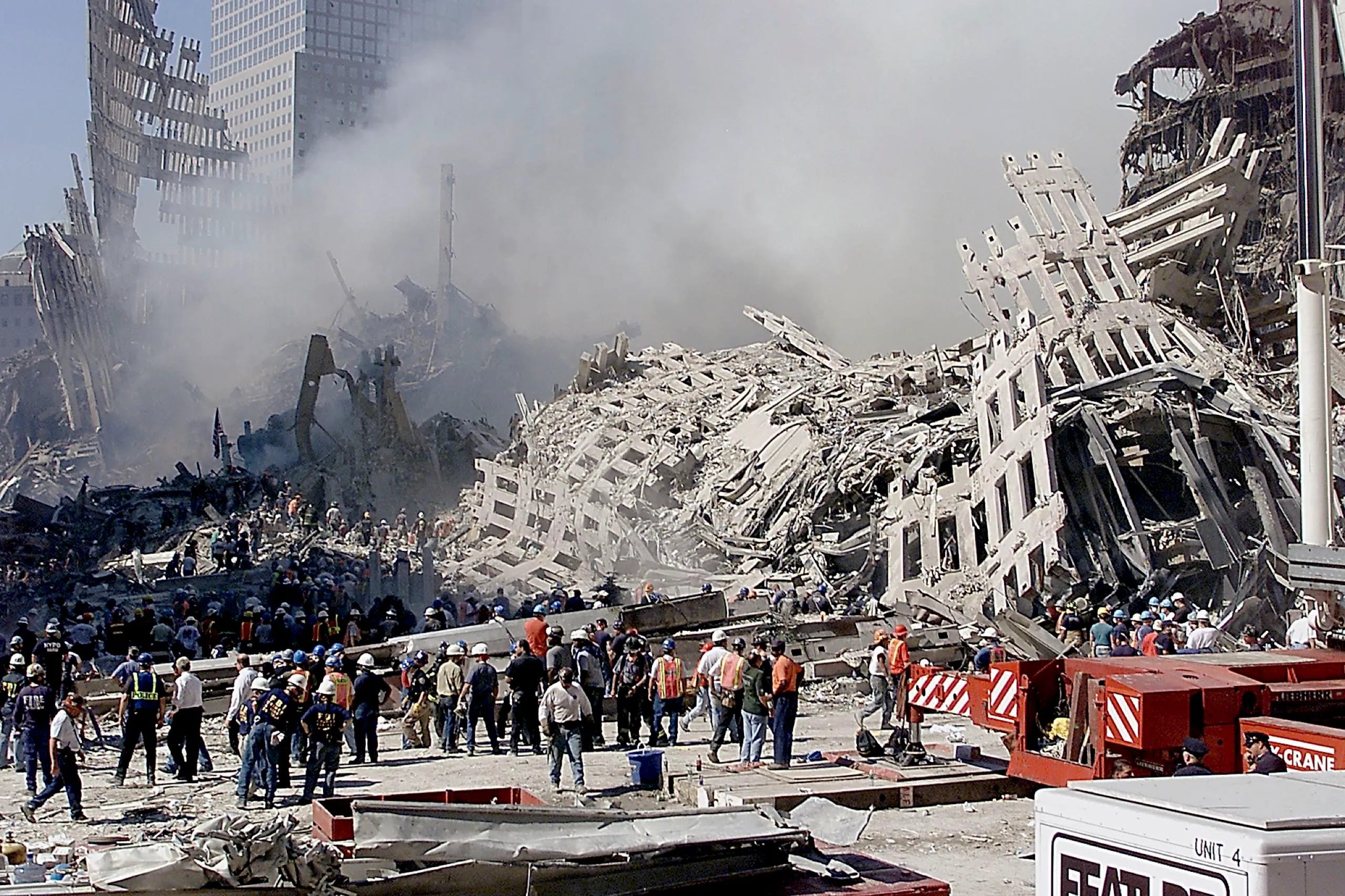
There’s a line many people quietly repeat now: 9/11 was a tragedy; it was also the beginning of American decline. Not decline in raw power—the United States still fields a vast military machine and commands a sprawling financial system—but decline in something harder to measure and almost impossible to restore once broken: belief.
Belief that its privileged were honest.
Belief that its wars were just.
Belief that “American values” meant more than just branding.
On September 10, 2001, the mood in the United States—especially among many who were young then—still carried a residue of late-20th-century optimism. The Cold War was over. The economy, despite its inequalities, seemed to promise a future of technology, markets, and relative stability. Globalisation looked, to some, like a messy but inevitable spread of prosperity and democracy. There was fear, yes, and injustice everywhere, but there was also a widespread, if naïve, assumption: America was basically on the right side of history.
9/11 shattered that illusion. But it was not the attacks themselves that did the deepest damage to America’s moral authority. It was the choices made in the aftermath of responding to them.
When the planes hit the Twin Towers and the Pentagon, they destroyed more than buildings; they shattered a psychological shield. Janet Napolitano, former Secretary of Homeland Security, observed that a presumption of safety—of American immunity from attack on its own soil—“was effectively destroyed by 9/11, and it hasn’t come back”. Fear flowed into that vacuum.
That fear was understandable. Nearly 3,000 people murdered in a morning; images of human beings forced to jump from burning skyscrapers; a smouldering wound on the New York skyline and a crater in rural Pennsylvania. Paranoia became policy. And fear, when driven by paranoia, fused with power, and wrapped in righteousness, is a dangerous fuel.
Within weeks, the United States launched Operation Enduring Freedom, bombing Afghanistan to overthrow the Taliban government that had hosted al‑Qaeda. Many Americans saw this as necessary, even inevitable. The doctrine was simple: we were attacked; we will destroy those who attacked us; we will “rid the world of evil,” as George W. Bush put it in the language of crusade.
From that moment, any semblance of humility was abandoned. What followed was not a narrowly targeted pursuit of al‑Qaeda but a sprawling “War on evil”—a global campaign of invasions, occupations, drone strikes, detention without trial, and covert operations that stretched across four presidencies. Afghanistan and Iraq became the central theatres, but the logic extended everywhere: the world itself was now the battlefield.
The promise, explicit or implied, was that through force, America could reshape foreign societies in its own image—produce democracy by pressure, stability by shock, and safety at home by violence abroad. Historians would later call this hubris. Millions would live and die inside that experiment.
Twenty Years to Return to the Beginning
If you want to understand the collapse of American moral authority after 9/11, you can’t avoid looking at Afghanistan.
The United States didn’t simply topple the Taliban and leave. It stayed for twenty years, attempting to build a new Afghan state: centralised institutions in Kabul, a Western-trained army, hollowed‑out “democratic” processes tied to the international army, and others rather than Afghan society. It poured vast amounts of money into this overtly well-intentioned project, much of it channelled through corrupt networks that hollowed out legitimacy from the inside.
The human and financial costs are staggering. Nearly 2,400 US troops were killed, and tens of thousands were wounded. Over 46,000 Afghan civilians were officially recorded killed, with actual figures likely far more. A war and occupation costing more than $2.3 trillion. To say this cannot simply be “regained” is an understatement; it’s gone. The Afghan government, designed by Washington and drenched in foreign money, ultimately rested not on its own people, but on the presence of Western troops and aid. When those withdrew, the structure collapsed with shocking speed.
On August 15, 2021, the Taliban walked into Kabul, weeks before the planned US withdrawal date. Afghan soldiers surrendered or disappeared. Elite units disintegrated. The state that Washington had held up as a fragile but hopeful “partner” dissolved in days. One former Special Forces officer put it bluntly: in the end, “we could replace the Taliban with… the Taliban. So, this is a total failure.”
Inside Afghanistan, nearly four in five people surveyed later described the US war as a “complete failure”. In the United States, majorities came to believe the country had mostly failed in achieving its goals. Military strategists now write sober papers with titles like “Military Power Is Insufficient: Learning from Failure in Afghanistan”, dissecting how an occupation turned into a perpetual war that “acquired a momentum of its own”. But for many Afghans and veterans, this is not just a strategic failure; it’s a moral betrayal.
The rhetoric about defending freedom and building democracy ended with the same movement that had overthrown in 2001 back in power, women’s rights crushed, and those who believed in the promises of the republic left at the airport gates. What does “moral authority” mean when you can expend such blood and treasure, assert such grand ideals, and leave like that?
Iraq, Torture, and the Erosion of Credibility
Afghanistan alone would have raised serious questions. Iraq removed all doubt. In 2003, the United States invaded Iraq under the banner of preventing weapons of mass destruction and liberating the country from Saddam Hussein. No WMD stockpiles were found. It was fabricated. The war destabilised the region, fuelled new extremist groups, and became, in the eyes of many around the world, a textbook example of aggressive war dressed up as a humanitarian crusade.
Alongside Iraq and Afghanistan came darker practices: Guantánamo Bay, where detainees were held without trial; “extraorfuelled rendition”, in which suspects were kidnapped in one country and shipped to another for interrogation; and Abu Ghraib, where imaas of US personnel torturing and humiliating prisoners shattered any illusion that abuses were rare accidents.
These were not the acts of fringe actors but policies and systems that emerged from the epicentre of the “War on Terror”. The United States, which had positioned itself as a champion of human rights and the rule of law, now openly relied on detention without trial, secret prisons, and torture. Scholars who studied the period concluded that in pursuing this war, America “undermined the image of democracy abroad” and infringed civil liberties at home, notably through the Patriot Act, which expanded surveillance and curtailed privacy.
In the Muslim world and beyond, the invasion of Iraq “completely torpedoed and collapsed US standing”, as one analyst put it. The “power of persuasion”—the ability to convince rather than coerce—was diminished. American global primacy, if it ever truly existed, ended in practice, exposed as fragile and deeply dependent on narratives that no longer matched reality.
The War on Terror Comes Home
The loss after 9/11 was not only international. It was domestic, woven into the fabric of American society.
In the immediate aftermath of the attacks, the United States was awash in patriotic fervour: flags unfurled from porches, slogans declared unity, and first responders were rightly honoured. But beneath that wave ran another current—one that continues to flow today.
Fear and anger coalesced into anti‑Muslim bias, harassment, and violence. Hate crimes against Muslims, and those perceived to be Muslim, soared. The idea that “outsiders” were a mortal threat hardened. Researchers and religious leaders described how humans’ ever-present tendency to fear outsiders was weaponised by the moment.
Politically, the shock of 9/11 triggered what one study calls long‑lasting conservative shifts among those closest to the victims. Families and neighbours of those who died became more politically active, more partisan, and more aligned with the Republican Party, with the effect visible more than a decade after the attacks. Across the country, trauma fed not only patriotism but also a greater tolerance for security measures, surveillance, and military action.
At first, trust in government rose, as people rallied around leaders in crisis. But as wars dragged on, as the Iraq WMD claims were exposed as false, as Afghanistan turned into a “forever war”, and as the 2007–08 financial crisis rewarded banks but ignored ordinary people, that trust curdled into scepticism and anger.
Polls a decade after 9/11 found six in ten Americans believed the United States had weakened its economy by overspending in its post‑9/11 wars, especially Iraq. Two thirds believed US power and influence had declined over that decade, closely tied to the belief that the country had overspent on Iraq and Afghanistan.
Add the failure to hold anyone truly accountable for the decision to go to war or for the way those wars were mismanaged. Add the media’s failure to seriously challenge policy in the urgent years after the attacks. Add the sense that elite competence was an illusion. Out of this mix came something new: a deeper loss of faith in the legitimacy and competence of elites and the subsequent rise of populism. In other words, 9/11 didn’t just change US foreign policy. It changed the United States itself, and not for the better—making it more nationalistic, less tolerant, and more divided against itself.
Moral Authority and Its Undoing
For decades, the United States claimed a kind of moral leadership in global affairs. It was imperfect and often hypocritical, but it rested on at least some shared belief that America aspired to universal principles—democracy, human rights, and the rule of law—and sometimes defended them. The post‑9/11 era exposed the corollary nature of those principles.
Abroad, Washington asserted the right to invade, occupy, and reshape other societies at will, in the name of security and freedom. It spent trillions on wars that, by many assessments, “produced little of value,” leaving Iraq and Afghanistan mired in corruption and instability, with terrorist organisations proliferating rather than retreating. The misuse of military power accelerated a shift towards a multipolar order, eroding the notion of American global primacy.
At home, it demanded loyalty and silence as civil liberties were narrowed, dissent was stigmatised, and whole communities were treated as suspect. It embraced indefinite detention and torture while insisting it remained a beacon of democracy.
The result, as Berkeley scholars bluntly put it, was that “through strategic failures and compromised values, the United States suffered deep, long-term damage to its political and moral authority.” The power that mattered most—the power of persuasion, the ability to convince others that America stood for something beyond naked self‑interest—was diminished, perhaps permanently.
Afghanistan’s collapse in 2021 made this visible in a single, devastating sequence: helicopters over Kabul, crowds at the airport, allies abandoned, and the Taliban returning to the presidential palace. A war fought in the name of freedom ended with its supposed beneficiaries back under the rule of those originally removed.
Mark Wales, a former special forces officer, described the war as “very long, very tragic” and its outcome as “a total failure”. Military analyses now treat the experience as a cautionary tale in the limits of power. For Afghans, it was confirmation of a grim lesson: powerful nations can claim noble motives, but when interests shift, they leave.
What Remains, and What We Must Remember
It’s tempting to tell this story as a simple morality play: America was innocent; 9/11 happened; America turned evil. Reality is messier.
There were and are Americans who fought, served, organised, and spoke out with genuine commitment to justice and peace. There were acts of solidarity after 9/11 that crossed religious lines and tried to push back on the tide of fear. There were communities who refused to accept the demonisation of Muslims, who protested the wars, who challenged surveillance and torture. There were small, stubborn efforts to build a different moral universe in the shadow of a state that chose war.
But personal goodness does not erase systemic harm. The question is not whether individuals did right. It is whether the country, as a political and military organism, used its power wisely, honestly, and justly. Since 9/11, the answer has often been no.
America lost more than lives and money in Afghanistan and Iraq. It lost credibility—with others and with itself. It lost the ability to convincingly claim that it fights for freedom rather than convenience. It lost what remained of a broad social consensus that its leaders knew what they were doing. It lost the presumption of good faith.
And yet, that loss is also an opening. If moral authority built on illusion has collapsed, then any future moral authority must be built differently. On accountability rather than impunity. On humility rather than hubris. On economic and political integration rather than military intervention as the default tool for change On listening to those who live with the consequences of war, not just those who design it.
The lesson of the post‑9/11 era is clear: never mistake power for wisdom, rhetoric for values, or military action for justice. The United States showed, in full view of the world, how quickly a country can compromise its stated ideals when fear, pride, and vengeance are allowed to steer grand strategy.
What America lost after 9/11 can’t simply be restored by slogans, ceremonies, or yet another “mission accomplished” banner. It will require a different political imagination—one that recognises that the world cannot be remade at gunpoint and that security built on occupation, surveillance, and suspicion is brittle and false.
To lament what has been lost is not to indulge nostalgia; it is to insist that any future worth fighting for must reckon honestly with the ruins left behind. Only then, if at all, can moral authority be rebuilt—not as a claim to rule, but as a commitment to renewal.