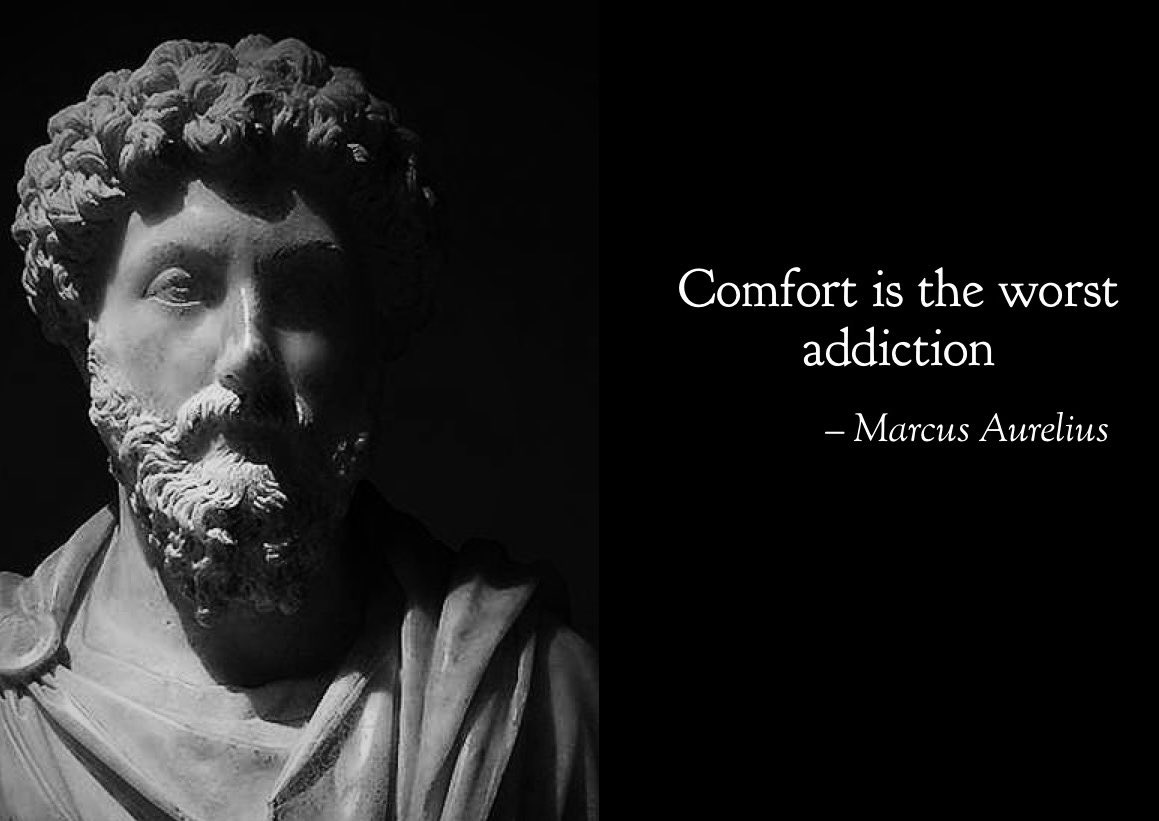
We have managed, with breathtaking ingenuity, to construct a civilisation in which friction is treated universally as a design flaw. From the moment we wake, an unseen mesh of platforms, protocols and predictive systems smooths away delay, doubt and difficulty. The promise is seductively simple: less effort, more contentment. Yet as the rough edges of existence are planed down, something essential to the human spirit appears to be thinning. The texture of life is becoming so soft that we no longer have anything solid to lean our weight against; deprived of resistance, the human psyche starts to slide. I am inclined to believe there is more than mere romanticism in the old adage that artists often produce their deepest work when life is not arranged for their comfort.
This is not a nostalgic plea for a return to some pre-industrial idyll that never existed. It’s an inquiry into whether our global obsession with the removal of hardship has become structurally misaligned with what human beings actually require in order to remain sane, grounded and alive to their own presence. Viktor Frankl, writing from the inferno of the twentieth century, pointed towards a counter-intuitive insight: that meaning is not the absence of suffering but the capacity to respond to it. What happens when we gradually remove every visible pretext for struggle, yet fail to replace it with any coherent invitation to matter?
Across continents, we have declared comfort the highest credential of progress. Social policy, technological innovation and economic growth are all assessed through their capacity to shield citizens from inconvenience, uncertainty and risk. But if we look – carefully, and without ideological filters – at the relationship between comprehensive welfare, algorithmically curated lifestyles and escalating rates of loneliness, depression, suicide and numbing addiction, a disquieting pattern begins to surface. Why do we find such acute despair flourishing in environments where physical survival is almost guaranteed? Why does history so often record a ferocious will to live in circumstances of radical deprivation and danger?
If verifiable data show that psychological distress continues to rise in societies that have already met – and in many cases surpassed – the basic material thresholds once seen as the precondition for a “good life”, then we might be dealing not with a failure of distribution, but with a deeper architectural flaw in the way we now imagine the human being.
The contemporary tragedy is not that individuals are labouring under insupportable burdens. It’s that millions are discovering, silently and often shamefully, that they are no longer needed by anyone in a way that feels real. We have engineered world-systems that measure people primarily as consumers, targets, data points and liabilities to be managed. Their role as co-creators of shared futures has been quietly downgraded. In this shift, the older intuition of sufficiency – enough security to live with dignity, enough demand to live with purpose – has been lost between the abstractions of growth and the fantasies of limitless luxury.
This is no accident; it’s the predictable outcome of a worldview that treats efficiency as an unquestioned good and human beings as optimisable units within that calculus. Once economic and technological architectures are tuned to maximise throughput and minimise human variability, it’s inevitable that vast numbers of people will find themselves surplus to requirements beyond the marketplace of distraction. While their attention is sought; their labour, presence and responsibility are increasingly optional. A politics of “more” has displaced a politics of “enough”, and with it the fragile equilibrium in which material sufficiency and existential demand sustain each other.
In such a climate, young people are raised in a paradoxical vacuum. On the one hand, they’re surrounded by exhortations to express their uniqueness and follow their passions. On the other, the surrounding systems make almost no genuine claim on that uniqueness. They are not required to carry water for the village, repair the nets, tend the elders, rebuild the house after a storm, or safeguard the commons from predatory interests. Their existence is rarely a condition for anyone else’s survival or flourishing. They can be “liked” by thousands and needed by nobody.
The result is a subtle but corrosive deprivation. Without tangible, embodied opportunities to be of use – not as an occasional lifestyle choice, but as a non-negotiable condition of membership – identity becomes a purely narrative project. One can endlessly rearrange self-descriptions, brands and online personae, yet never encounter the visceral affirmation that comes when another life quite literally depends upon one’s competence, reliability or generosity. If anxiety is rising fastest among cohorts that are most cocooned from concrete responsibility, might this not be less a mysterious pathology of the individual and more a rational response to a world that wants their data but not their devotion?
Once life has been reduced to the exchange of attention and information, purpose is outsourced to algorithms and slogans. Individuals are urged to “find themselves” in systems that scarcely require them to show up as more than a passing preference. This is as true in hyper-connected African cities as in European welfare states or affluent Asian hubs: the underlying malaise transcends geography and income. Where digital interfaces replace reciprocal obligation, the space once occupied by shared necessity is colonised by curated distraction. We secure, at best, economic sufficiency for some, while systematically undercutting existential sufficiency for almost everyone.
In that sense, the epidemic of anxiety I have already noted might be less a mental health anomaly and more an existential diagnostic: a signal that our world-system is under-demanding of the human spirit at precisely the moment when its technical capacity to extract value from us seems unprecedented.
Beyond the Tyranny of Cheerfulness
During the past half-century, an industrial complex has grown around the idea that happiness is both the supreme objective and a measurable commodity. Governments track “wellbeing indicators”; employers roll out wellness initiatives; the media celebrates positivity as though it were a civic obligation. The nation of Bhutan, with its celebrated Gross National Happiness index, is often held up as a benign alternative to GDP fetishism, yet even there happiness has been codified into a technocratic instrument, complete with thresholds and domains, as if the deepest textures of a life well lived can be captured and managed by survey design. The underlying message is clear enough: a healthy society is one in which tension is progressively eliminated.
But is tension always a defect? Any structure that spans a gap – an arch, a tendon, a sail – relies on carefully calibrated tension to hold. Remove that force and the structure collapses. Are we certain that the same is not true of the psyche? When every uncomfortable emotion is medicated away, every inconvenience smoothed out and every ambiguity resolved by automated prompts, what inner musculature remains?
Civilisational belief systems that locate the individual within an ongoing web of obligation seem to sense this. Philosophies like Ubuntu in parts of Africa, or the Japanese articulation of life-purpose often rendered as ikigai, carry an implicit recognition that a person is most fully themselves where their gifts intersect with the needs of others. In such framings, emotional sufficiency does not mean an endless ascent into cheerfulness, but just enough joy, security and recognition to sustain people through the serious work of carrying responsibilities and facing struggle.
By contrast, our globally dominant economic grammar privileges what might be called the will to gratification. Desire becomes both starting point and endgame. Markets are designed to saturate, stimulate and re-stimulate that desire in ever-shorter cycles. The self is treated as an instrument for the production and consumption of transient satisfactions. Within such a framework, the idea of voluntarily embracing discomfort for the sake of an invisible, long-term or collective objective begins to look irrational, even deviant.
The corporeal consequences are increasingly visible in every region. Those who have internalised the notion that they “deserve” the fruits of a functioning society without any corresponding duty to cultivate its roots find themselves oscillating between entitlement and resentment. Those who baptise their own outrage as moral purity, confusing performative indignation with genuine responsibility, generate ideological heat without productive light. Both positions are symptoms of the same condition: a chronic disconnection from any enduring demand that could anchor identity in something more solid than mood and opinion.
If we persist in interpreting human beings as fragile entities whose primary need is to be shielded from the weight of actuality, we will go on manufacturing a civilisation populated by adults whose psychological gait is that of infants. A species that refuses to encounter the gravity of life should not be surprised when it forgets how to stand. Emotional sufficiency requires precisely the opposite: not the eradication of sorrow, uncertainty or strain, but a reliable sense that one’s struggles feed into a pattern of significance larger than the self.
The Erosion of “Enough”
Every civilisation rests upon a tacit story about what a human life is for. That story – the worldview – is neither abstract nor benign. It precipitates into political institutions, economic rules, technologies and rituals. These, in turn, loop back, shaping what people feel, fear and aspire to. The relationship between grand narratives and everyday acts is recursive. The invisible logic of “what counts” becomes incarnate in concrete systems, which then educate the next generation in what is thinkable.
A worldview that idealises the autonomous, self-maximising individual will generate a very different world-system from one that sees persons as nodal points in a living fabric. Legal frameworks, educational models, urban design, financial instruments and digital architectures all carry this imprint. Over time, their biases become invisible, mistaken for “how things are”.
Modern industrial civilisation, now globalised in every region, has progressively embedded a set of assumptions that prioritise scale, speed, competition and measurable output. Within that configuration, humans are valuable mostly to the extent that they can be substituted and optimised. The promise has been that, once material scarcity is conquered by these methods, everything else – dignity, meaning, social cohesion – will naturally follow.
Yet experience from multiple high-income and rapidly developing societies suggests something else is unfolding. As automation, financialisation and remote platforms detach livelihoods from embodied contribution, and as social safety nets step in to prevent collapse, people find themselves materially supported but existentially unanchored. Where the systems that deliver food, power, health care and entertainment are opaque, centralised and run by distant entities, the individual’s sense of efficacy contracts. The lived experience has morphed into one of radical dependency coupled with radical impotence.
In more traditional settings – a coastal village in Southeast Asia perhaps, a neighbourhood in a sprawling African city held together by mutual aid, a rural community in Latin America – survival and dignity still depend on dense forms of interdependence. People know who grows the food, repairs the tools, watches the children or negotiates with external authorities. The loops between effort, contribution and communal thriving are visible. Even where poverty is harsh, individuals may know, without needing a psychological vocabulary, why they matter.
The question is whether we can retrieve that visibility of mutual reliance without romanticising deprivation or freezing cultures in place. Can complex, technologically advanced societies be reconfigured such that everyone experiences themselves as essential to the flourishing of the whole? If so, sufficiency – economic, social and existential – becomes the organising principle: enough shared security to prevent fear from dominating, enough shared responsibility to prevent apathy from spreading.
A civilisation that honoured sufficiency would not measure success primarily through GDP curves or the depth of its automation. It would ask whether its architectures make it easy for people to disappear into passive consumption, or easy for them to grow into active custodianship. It would treat economic sufficiency as the floor – a universal right to the means of a decent life – and existential sufficiency as the ceiling beyond which further insulation begins to erode the will to matter.
The Corporeal Consequences of Purpose
The shift from a mindset of insulation to one of engagement demands more than a few policy tweaks. It requires a reimagining of the educational, technological and social grammars through which we choreograph daily life. For decades, we have assumed that technology’s primary purpose is to make life easier. What if that assumption is precisely what needs to be retired? What if the more catalytic role of technology is to secure sufficiency – of food, shelter, health, knowledge – while deliberately preserving, even amplifying, the domains in which human courage, care and creativity are non-substitutable?
A successful society might then be defined not by the volume of goods it can deliver, nor by the number of tasks it has automated away, but by the degree to which every person can plausibly say: without me, something that matters would be missing. We already catch glimpses of this in movements where “living well” is decoupled from endless growth, or in communities – urban and rural, digital and face-to-face – where interdependence is treated as a practical necessity rather than a sentimental slogan. In such settings, sufficiency isn’t an austerity programme. It’s a shared understanding of limits that allows meaning to crystallise.
Meaning, in that sense, is found in the “assignment” life presents to us, often through the lens of hardship we didn’t choose but are compelled to address. Some of those assignments are intimate – raising a child, tending a sick relative, mastering a craft. Others are systemic – restoring a degraded watershed, healing the fractures of a divided society, redesigning institutions that no longer serve. When our world-system is framed to demand more of us – more imagination, more accountability, more genuine presence – the so-called “existential vacuum” begins to fill of its own accord. Economic sufficiency frees us from the tyranny of survival; existential sufficiency confronts us with the unsettling privilege of being necessary.
For society as a whole, the challenge is not merely to provide for people, but to provoke them into their own greatness. That word is not about fame or status. It refers to the latent capacity, present in each and every one of us, to become a reliable carrier of value for others. Systems that only protect us atrophy that capacity. Systems that ignore fundamental sufficiency brutalise it. The space in between, where enough security meets enough demand, is where character, culture and civilisation are quietly shaped.
We can go on asking what the world owes us, and design for maximum insulation, or we can start deciphering what the world is asking of us, designing for sufficiency of means and abundance of meaning. The former route promises comfort but delivers emptiness. The latter is more exacting and less predictable. It requires resistance, friction, the weight we no longer carry.
One might hear, in this reframing, a distant cousin of John F. Kennedy’s injunction to ask what we can do. But the “country” in question is no longer a bordered nation; it’s the living mesh of relationships that makes any future possible. If there’s any real antidote to the quiet despair that haunts so many lives in an age of apparent plenty, it is surely to be found there – at the point where “enough” is finally understood, not as a ceiling on desire, but as the ground from which the human will to matter can rise.