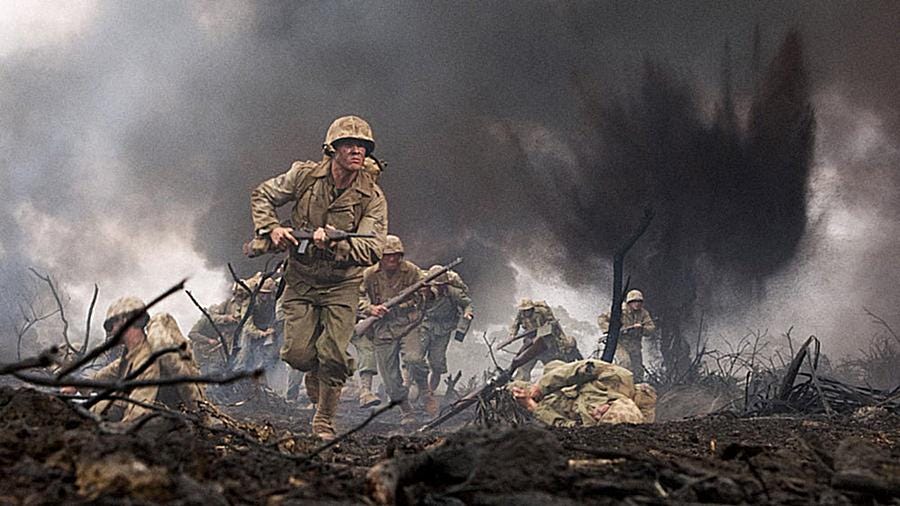
Hate is a pitiful spectacle, and it’s back on centre stage. How can protagonists orchestrating the misery in Ukraine, Gaza, and Sudan still call themselves human without flinching? We dress barbarism in flags and call it noble, wrap cowardice in righteousness and mistake it for strength; after millennia of stacking bodies like cordwood, we pretend war and hate are anything but our most predictable, most spectacular failure.
Strip away the lyricism and excuses and take a long hard look at memorials for the dead: war begins where imagination dies and bloated egos metastasise—the refuge of the intellectually bankrupt, the morally stunted, the spiritually numb. Every butcher believes himself to be the hero, which is proof enough of how exhaustively war corrodes judgement. And hatred is more pathetic still—a self‑administered poison taken in the hope that an enemy will perish—lazy, incurious, a hollow pantomime of force by people too frightened to face their own inadequacy.
We bomb hospitals and call it strategy, starve and cage children and call it security, try to erase every sign of a culture and call it destiny; the vocabulary swings but the sickness endures. The true obscenity is that we know better—religions, philosophies and grandmothers have told us forever that hate destroys the hater, violence breeds violence, and cruelty diminishes us all. What do we do? Shrug nonchalantly and bankroll another weapons system. War isn’t heroic; it makes us stupid. Hate doesn’t make us impassioned; it makes us mind-numbingly predictable, replaying the same exhausted, dehumanising script we’ve known since Cain and Abel. We’re capable of being better, which makes our choice of being worse intolerable.
If we intend stopping this spectacle, we must name the charlatans we keep calling “leaders” and redesign the machinery so that cruelty pays the price. Let’s stop misnaming things. A politician who markets bombing as destiny and files civilian corpses under the contention of “regrettable but necessary” is not a leader; he is not entitled to hold such a title. He is a low-ranking clerk for the arms trade, a procurement manager in a suit, a follower of money and myth. Leadership is the opposite. It’s the refusal to kill for applause, the obligation to prevent force being applied, even at the cost of one’s own career, and the strength of mind to expend political capital, not waste human lives. Leadership bankrupts antagonism—absorbing any fury that ensues from those addicted to hate and cruelty. Warmongering is the abdication of that burden. It is blind allegiance to contracts, ideology, and a military‑industrial narrative promising fame and impunity in exchange for other people’s lives. If your campaign promise is annihilation, you are not leading; you are peddling madness.
In today’s anxious world the theatre of madness is a sell-out show again. We drape brutality in flags, rebadge cowardice as resolve, and congratulate ourselves on strategic flair while hospitals are cratered, children are starved and caged in the name of security, and entire families become ash in Gaza, Sudan, Ukraine and further conflicts that never trend. This is a massive failure of imagination engineered by systems that reward moral anaesthesia. War is what happens when we allow narratives to do our thinking and institutions wash consequences from the hands signing the commands. Hate is the counterfeit courage that follows: a cheap high that downgrades a person to a label and mistakes that for clarity.
We need honesty about the kit we carry. We’re double‑edged: tenderness and savagery, coalition and predation—both are conveniently available on demand. Evolution bounds us tightly to “us” but tunes us to scan obsessively for “them”. We crave worth, status and dignity; humiliation makes us look silly. Offer a story promising honour, safety or redemption and it can swamp empathy in an instant. We copy what our group prizes; if violence is ritualised and praised, it spreads. Yet nothing in our biology makes massacre inevitable. Killing at scale is organised, mythologised and logistically upheld. Many of us balk at harming others; it takes political systems to normalise hatred, make brutality feel justified. Biology sets ranges; values set defaults. Change the scaffolding and behaviour dutifully follows.
We’re not suddenly a more violent species. Our genes didn’t darken in a decade. But the incentives, tools and media around us now reward faster, harsher, more insulated forms of harm. It’s not genes—it’s the game. The same primate hardware now flies drones, floods feeds and coordinates mobs at light speed. Our cultural evolution rewards spectacle, venerates speed, and shields perpetrators from the aftermath of their decisions. Brutality is easier to start, to scale and to politically survive. Atrocity anywhere becomes everywhere instantly; lethality is cheap; attention markets monetise outrage; legitimacy frays and impunity blooms; sacred values harden into absolutes; shame and dispossession entrench zero‑sum mindsets; youth bulges meet thin labour markets in brittle states; arms and money sluice through brokers, private military firms and shell companies. Meanwhile, climate stress amplifies the triggers for conflict, “great-power” rivalry returns and peace processes become instrumentalised. Against that backdrop, calling for “more force” is not leadership; it is intellectual bankruptcy dressed up as decisiveness.
If we widen the frame, the indictment becomes clearer. Much of today’s bloodshed is staged on foundations laid long ago: borders drawn in distant chancelleries that casually sliced through languages and trade routes; financial systems designed to pump raw materials outward to distant markets and debt repayments upward to foreign creditors. Before the first shot, people are already living inside structures that ration self-worth—through loan conditions that gut public services, sanctions that bite civilians harsher than elites, and resource concessions that displace communities while enriching intermediaries. Let’s call this what it is: structural violence. It doesn’t always make headlines, but it makes armed conflict thinkable, recruitable and, all too often, bankable.
The much vaunted “rules‑based order” sits in this landscape with a crooked posture. Where interests align, rules are enforced with zeal; where they do not, the rules are elastic or ignored altogether. That selectivity is not an academic complaint—it’s a recruitment pamphlet for cynics and hardliners, proof that justice is for some and immunity for others. If we want norms to constrain war, they must bind the strong most of all, or they will bind no one for long.
War is gendered from the first drumbeat to the last funeral. The scripts handed to men—honour, brothers in arms, and dominance—make escalation feel like redemption. Sexual violence is used as a weapon; unpaid care work multiplies for women as systems collapse; displacement fractures networks that hold communities together; while the instincts and experience of women who build peace at the local level are sidelined when deals are done. This isn’t a sermon about inclusion; it’s an empirical point about efficacy. Where women are central to negotiations and to policing, the odds of peace holding improve. Not because women are inherently gentler, but because the design finally reflects the whole society that must live with it.
Those under occupation and siege, exiles and refugees, are not only victims in need of relief; they are political actors with agency. In many places diasporas wire home far more money than aid budgets. They also describe conflicts to the world and to themselves, sometimes moderating, sometimes hardening positions. Treat them as mere bystanders and we forfeit a lever for de‑escalation. Engage them and we can align remittances, advocacy and investment with peace rather than with maximalist fantasy.
And heed soldiers and ex‑combatants without romance or contempt. Most don’t want to kill. They want to be living a fulfilling life at home with family and friends. Permission structures, training and peer pressure do the heavy lifting that twists reluctance into obedience. And when the guns fall silent, what happens next determines whether violence goes underground. If disarmament, demobilisation and reintegration are theatrical—no livelihoods, no status, no care—then men with combat habits and social debts migrate into organised crime, paramilitarism, or political nihilism. If mental health is ignored, trauma will be repaid with interest. Reintegration that offers work, identity and a way back into civic life is not an afterthought; it’s the hinge on which recurrence turns.
Law without power is theatre, but so is power without law. International humanitarian law works when belligerents see compliance as useful. If we want compliance, then we must embed it materially by tracking civilian harm, opening investigations, compensating victims, and prosecuting breaches. And we must face up to the political economy of war. Non‑state armed groups govern, tax, smuggle and extract; gold, oil, timber, and people become revenue streams. Diplomacy that ignores these markets is cosplay. Choke the economies of violence or negotiations will be conducted on a balance sheet where blood is a line item.
Now to blame, accurately not cathartically. “Human nature” is not on trial. Entire populations are not guilty by birth. And “global powers” are not weather systems. Responsibility is layered and specific. Primary culpability sits with the people who choose aggression and command atrocities: heads of state, war cabinets, defence and interior ministers, intelligence chiefs, army commanders. Around them orbit the enablers: foreign patrons and proxies; arms exporters and brokers; private military firms; banks and shell networks; insurers and shippers that move money, fuel, weapons and stolen resources; propagandists and platforms that incite and dehumanise. Add to this the institutional veto players—governments that shield wrongdoers, regulators that wave through exports, legislators and courts that block scrutiny.
Publics share moral responsibility in proportion to freedom and knowledge: the citizen under censorship is not the minister chasing votes by stoking fear, nor the executive pocketing bonuses from conflict‑linked contracts. Ask four questions—who controlled events, who foresaw or should have foreseen the consequences, who benefited, who had the capacity to prevent or stop the harm and failed to act—and culpability clusters around names, offices and ledgers. “World leaders” make choices; “great powers”—states, alliances, markets and platforms—fabricate incentives, logistics and impunity. The warmonger masquerading as a “leader” is, in reality, a creature of those incentives: a tool of the war economy, not a steward of the public good. We should withdraw such an honourific until true leadership is evident—towards de‑escalation, restraint and human survival.
Community anger is not enough. Outrage is cheap fuel; it burns hot and leaves ash. If we’re serious about dismantling the machinery of war that makes cruelty profitable, we must redesign the motivations, consents and culpability and accountability structures that currently reward speed, spectacle and insulation from consequence. This is not a plea for more honourable intentions. It’s a call for a totally different architecture:
1. Start with the weapons that collapse the time for human judgement. Autonomous systems, cyber operations and long‑range missiles are being deployed at a pace that outstrips our ability to pause and think, let alone to restrain. We regulate aviation and nuclear energy with safety cases—independent, revocable certifications that a technology can be used without catastrophic harm. Why not apply the same discipline to weapons of war? Before any autonomous system is fielded, require a peace safety case: evidence of proportionality controls, meaningful human override, de‑escalation defaults, and red‑team testing under adversarial conditions. Make certification independent of the manufacturer and revocable the moment civilian‑harm thresholds are breached. Ground the kit, pull the licence, fine the manufacturer and hold executives personally liable. When the people who profit from lethality face handcuffs rather than bonuses, compliance will stop being theatre.
2. Civilian harm must become visible in real time and totally impossible to ignore. Imagine a live civilian‑harm ledger—a tamper‑evident database fed by independent monitors, satellite imagery, hospitals and affected communities, mirrored on government dashboards and transparent billboards where the public can see it. Now imagine securing automatic consequences to that ledger: export suspensions when harm crosses agreed thresholds, insurance penalties that choke capital to violators, exclusion from logistics networks and international financing. No ministerial discretion, no vetos, no convenient delays. Data triggers the response. Outrage becomes a rule, not a mood. Impunity becomes exorbitantly expensive, not inevitable.
3. Platforms are not neutral. They are attention markets, and in conflict zones they become recruitment engines and incitement infrastructure. Treat virality as a public‑safety problem. In declared emergencies, mandate friction: slower share buttons, contextual overlays that surface counter‑narratives, cross‑cutting content injection on posts related to violence. Require transparency in amplification so investigators can trace who profited from dehumanisation—not just the original poster, but the intermediaries, the bots, the coordination networks. Licence the largest platforms as utilities with enforceable duties of care specific to atrocity prevention, and give regulators the power to penalise failure in real money and real access. If a platform becomes a vector for mass harm, it should lose the license to operate, not simply face a fine it can record as an operating expense.
4. Corporate executives currently face little personal risk when their firms enable atrocities. That must end. Extend duty‑of‑vigilance laws so that boards and senior executives of arms manufacturers, commodity traders, banks, insurers and shippers carry personal civil and criminal exposure for the reckless enabling of war crimes. Prohibit firms that fail independent due diligence from public contracts. Seize bonuses tied to deals later found to have fuelled prohibited violence. When the people signing off on export licences and financing arrangements know they may face prosecution, not just reputational damage, behaviour changes fast.
5. Money is the bloodstream of war, so thicken it. Establish a global war‑harm reinsurance pool that prices premiums to conflict actors and their suppliers based on a published, transparent harm index. Deny coverage to units and companies named for violations, and watch capital dry up. Add a sovereign war‑risk surcharge to borrowing for aggressor states, automatically reduced only as verified compliance improves. In banking regulation, raise capital requirements for exposure to atrocity‑linked clients and make “peace risk” a formal pillar in prudential oversight. Making war expensive to insure, expensive to finance and expensive to sustain, will shift the calculus for those weighing whether to pull the trigger.
6. The revolving door between defence ministries and arms companies, between legislative committees and lobby shops, is a conveyor belt for conflicts of interest. Close it. Ban defence‑sector donations outright and bar officials from crossing into industry roles for a meaningful cooling‑off period. Publish all defence procurement in real time: contract texts, beneficial ownership, profit margins. And before any use of force beyond thirty days, require a citizens assembly—randomly selected, briefed by independent experts—to pre‑authorise it with a supermajority, having reviewed a vetted impact assessment that includes civilian harm, ecological damage and displacement. When sunlight and deliberation precede the launch codes, performative machismo finds fewer takers, and the theatrics of toughness lose their audience.
7. End‑use controls have been a polite fiction for too long. Weapons are sold with assurances, then diverted, misused or turned on civilians while exporters shrug and invoke sovereignty. No more. Embed cryptographic escrow keys and telemetry beacons into sensitive systems so that misuse can be detected in real time and exports suspended remotely when violations are verified. Couple this with mandatory third‑party inspections and a clean‑hands list: only jurisdictions and units that maintain transparent, independently audited civilian‑protection programmes remain eligible for supply. Make diversion technologically detectable and contractually catastrophic—not simply a diplomatic embarrassment but grounds for automatic prosecution, asset seizure and permanent exclusion from future deals. If a weapon can be tracked like a shipping container, it should be.
8. Humiliation is not an abstraction; it’s a measurable condition and a reliable predictor of violence. Build a humiliation index that tracks corruption, abusive policing, inequitable service delivery, land dispossession and the denial of political voices. Earmark security budgets to reduce scores on that index with the same urgency currently reserved for counter- terrorism. Audit reductions quarterly and publish them. Treat dignity as infrastructure, not as a luxury to be addressed after order is restored. When people can see that power is working to reduce the daily indignities that make extremism plausible, recruitment to violence falls. This isn’t idealism; it’s epidemiology.
9. Some conflicts cannot be solved by splitting the difference because the issues at stake are not fungible—they are identities, holy sites, founding myths, non‑negotiables. Pretending otherwise wastes time and lives. Institutionalise sacred‑value diplomacy by creating small, standing teams trained to negotiate around identity and honour, using face‑saving rituals, symbolic recognition and, if necessary, side‑payments rather than crude bargaining. Embed these teams inside foreign and defence ministries as gatekeepers for escalation, not as consultants brought in when talks have already collapsed. When someone who understands that an apology can be worth more than territory is in the room before the shooting starts, settlements become possible that look like fantasy to economists but feel like justice to those who must live with them.
10. War does not only kill people; it kills the future by poisoning the land. Recognise ecocide in domestic law so that commanders and officials can be prosecuted for deliberate environmental destruction. Require environmental restoration funds in every ceasefire and settlement, with money held in escrow and released as verified milestones are met. Appoint ecological trustees—independent, science‑led, working with local communities as stewards and beneficiaries—to oversee the recovery of soils, aquifers and biodiversity. Conflicts that repair landscapes as they repair politics are less likely to relapse because scarcity, the oxygen of extremism, is being addressed rather than ignored. A peace that restores water and wheat has a material constituency; a peace that only redraws maps does not.
11. Conscription as it exists is a lottery of violence: young men are drafted, trained to kill, then returned to civilian life with trauma, skills mismatched to labour markets, and a status system that valorizes what they did in uniform. Rewire it. Replace or complement military service with paid, universal civic programmes that mix identities across lines of conflict and put people to work on infrastructure, elder care, early‑childhood education and climate resilience. Go further: establish cross‑border twin service so that former adversaries rebuild together, in pairs and teams, on projects that require cooperation and produce visible, shared benefit. Shared labour builds the only security that lasts—not deterrence, but mutual dependence and the memory of having built something rather than destroyed it.
12. We fund militaries with treasuries, training academies and logistical depth. Nonviolent resistance, by contrast, is funded by garage sales and exile networks, if at all. Yet the empirical record is clear: disciplined, organised nonviolent movements succeed more often than armed insurrections, and the societies they produce are more stable and more democratic. Match that evidence with resources. Establish a permanent, independent endowment for civil resistance: strike funds, legal defence, secure communications, training in strategy and tactics, logistics for mass mobilisation. Professionalise it the way we professionalise war, and make nonviolent power a credible, well‑resourced alternative so that people facing oppression do not default to guns simply because guns come with manuals, supply chains and international patrons.
13. What gets inspected gets respected, and peace is currently uninspected. Set up an Occupational Safety and Health Administration for Peace—an independent inspectorate with the authority to enter conflict zones, audit civilian‑harm mitigation measures, certify compliance with protection standards and refer credible cases of violations to prosecutors. Staff it with forensic investigators, trauma specialists, human rights lawyers and technologists who can analyse targeting data, reconstruct strikes and verify claims. Shield the inspectorate with treaty‑level privileges and immunities so that it can’t be intimidated, bribed or expelled when it finds what governments would rather hide. Give it the authority to issue public grades, revoke certifications and trigger automatic consequences in export licensing, insurance eligibility and international financing. If aviation safety inspectors can ground airlines, peace inspectors should be able to ground military operations that systematically endanger civilians. Compliance will follow capability and consequence, not appeals to conscience.
14. When wars end, the men and women who fought them face an unavoidably harsh question: what now? If the answer is unemployment, stigma and a pension that doesn’t cover rent, many will return to what they know. Integrate disarmament, demobilisation and reintegration with large‑scale “green” and virtuous job creation. Tie the surrender of weapons to guaranteed training and employment in renewable energy installation, land remediation, water infrastructure and resilient agriculture. Fund it by redirecting fossil fuel subsidies and a fraction of the defence budget. Make the opportunity cost of returning to violence obvious at the household level: a regular wage, recognised skills, a future that does not require a gun. Pay people to rebuild what war destroyed, and make that labour visible, respected and materially sufficient. This is not charity; it’s the cheapest form of counter‑insurgency available, and the only one that does not produce the next round of recruits.
15. Diasporas are too often treated as either cash machines or security threats—useful for remittances, suspect for politics. That is a wasted opportunity and a recurring error. Seat elected diaspora councils in peace processes with formal representation rights and a vote on key provisions that affect return, property and citizenship. At the same time, recognise that unconditional flows of money can entrench maximalist positions and fund spoilers. Escrow diaspora remittances into peace bonds during periods of active escalation, releasing tranches as verified compliance milestones—ceasefires observed, civilian protections implemented, power‑sharing commitments met—are achieved. This aligns diasporic passion and resources with de‑escalation rather than with fantasies of total victory that are only affordable because the diaspora doesn’t bury the dead. Give exiles both voice and responsibility, and you convert a source of instability into a constituency for compromise.
16. Build constitutional firebreaks against the dramatic warmongering that political systems currently reward. Mandate a cooling‑off period—say, seventy‑two hours—and an independent review between any authorisation of force and the first strike, with a requirement that the evidence, the legal basis and anticipated costs be laid out in a public, adversarial hearing. Require instigators to participate in televised briefings where they must answer questions from opposition figures, independent experts and affected communities, and where casualty forecasts, displacement estimates and long‑term fiscal impacts are presented without spin. If hostilities continue beyond a fixed horizon—say, ninety days—without a fresh UN mandate or verified regional consent, trigger an automatic snap election so that the public that will pay in blood and treasure has the chance to withdraw its consent. The prospect of losing office concentrates the mind. If you want a war, face the country that will fight it, fund it and bury its young. That alone will not prevent all wars, but it will end the ones begun for polls, for posturing, or for the profit of others.
None of this is utopian or comprehensive. It is administrative mettle married to institutional design. Each measure makes barbarism harder to excuse, harder to fund and harder to survive politically. Taken together, they invert the profit equation. When safety cases are expensive and revocable; when harm is visible in real time and triggers automatic penalties; when platforms lose revenue for amplifying hate; when executives face prison for reckless complicity; when sovereign debt costs rise with aggression and fall with compliance; when political money is banned and procurement is transparent; when weapons are traceable and misuse is contractually ruinous; when dignity is budgeted and humiliation is tracked; when sacred values are negotiated with respect rather than bludgeoned; when land is healed as part of peace; when service is civic and cross‑border; when nonviolence is as well‑resourced as war; when independent inspectors can shut down non‑compliant operations; when ex‑combatants are guaranteed work that rebuilds; when diasporas are partners with both voice and accountability; and when leaders must publicly justify war before an informed electorate that can sack them—then investment in peace becomes the rational move, and investment in the arms trade becomes an unhedgeable risk.
Capital will migrate accordingly. It always does. Money follows the path of least regulatory friction and highest return. If that path currently runs through conflict, it’s because we paved it, licenced it and called it strategy. Repave it. Make peace profitable not through subsidy or sentiment, but through the hard arithmetic of risk, compliance cost and market access. When insurers will not cover you, banks will not lend to you, suppliers will not equip you, platforms will not carry your propaganda, inspectors will not certify you, and electorates will not re‑elect you, war stops being an attractive proposition. It doesn’t require that every politician in power suddenly become wise or compassionate. It requires only that the incentives stop rewarding savagery.
This is not a fantasy of global government or enlightened despots. It’s a checklist of reforms, most of which can be implemented by coalitions of cooperative states, regional bodies, professional associations, insurers and institutional investors without waiting for unanimity at the UN. Some can be done by legislative majorities in individual capitals. Others can be pioneered by cities, universities and pension funds that choose to divest from harm and invest in repair. The technology exists. The legal frameworks exist. The evidence exists. What has been missing is not capability but will, and will is a function of organised demand.
So let’s organise it. Make these demands loud, specific and relentless. Don’t accept vague promises of “working towards peace” or “exploring all options”. Demand the civilian‑harm ledger by name. Demand the peace safety case. Demand director liability and end‑use transparency. Demand the humiliation index and the diaspora peace bonds. Demand the constitutional firebreaks. Demand the platform duties of care and the war‑harm reinsurance pool. Cry out loud the mechanisms, track the implementation, publish the compliance scores, and vote, invest and procure accordingly.
We have seen violence decline before, not by accident or by the moral arc bending on its own, but because people built guardrails: laws that bound the strong, courts that enforced them, norms that carried cost, and markets that stopped funding what publics would no longer tolerate. Those gains were never permanent and they were never equally distributed, but they were real. Some of those guardrails are rusting now. Pretenders to leadership are kicking them aside and calling it strength. That is not strength. It’s the oldest, most exhausted trick in the book: the bully mistaking the absence of restraint for power, and the crowd mistaking the performance for leadership.
Real leadership is the refusal to let cruelty become normal. It’s the choice to absorb political cost in the service of preventing harm. It’s the capacity to say no to the defence contractors, the pollsters, the mythmakers and the mobs baying for blood, and to say yes to the slower, harder work of building systems in which care is strategic, restraint is rewarded and dignity is non‑negotiable. Everything else is merchandising.
We are not worse animals than our ancestors. We are the same animals with faster tools, thinner institutions and a cultural selection environment that currently favours the worst in us. If violence now feels inevitable, it’s only because we have made it easy, profitable and often politically popular. That was a choice. It can be reversed. The same ingenuity that built precision‑guided munitions can build precision‑guided accountability. The same markets that finance war can be restructured to finance repair an d renewal. The same platforms that spread hate can be re‑engineered to apply the brakes. The same electorates that cheer for strongmen can be organised to demand something better.
So stop calling the salesmen of carnage leaders. Call them what they are: clerks of the war economy, followers of a script written by people who will never bury their own children. Then build institutions worthy of the word leadership—institutions that make knowing better the path of least resistance, that make care more profitable than killing, and that make the choice of peace not a pious hope but the most rational, most accessible, most rewarded option in the room.
Of course, the more astute reader will already have seen the flaw in my case. For there remains a deeper question we have barely begun to ask: why do we still organise young people into hierarchies of obedience, train them in the application of lethal force, and then wait for an emergency to decide what to do with all that discipline, skill and public investment? Militaries exist because we assume conflict is the default and cooperation the exception. Reverse that assumption and the institution transforms. Imagine armies reconstituted not as instruments held in reserve for killing, but as standing capacity for large‑scale, disciplined, logistically sophisticated work on the problems that actually threaten our survival: climate adaptation, pandemic preparedness, infrastructure resilience, disaster response, ecological restoration.
Imagine battalions trained not to breach borders but to rebuild coastlines, not to secure supply lines for war but to harden supply lines against flood and famine. Imagine joint exercises conducted not in desert war games but in cross‑border projects—former adversaries working shoulder to shoulder to reforest watersheds, retrofit cities and inoculate populations. The discipline remains. The courage remains. The capacity for sacrifice and coordinated action at scale remains. What changes is the mission: from rehearsing death to preventing it, from perfecting destruction to mastering repair.
Militaries could become the world’s largest graduate schools in resilience, the most trusted responders in crisis, and the proof that nations serious about survival invest not in the next war but in the work that makes war obsolete. That would be leadership. That would be strategy. And it would render the current script—the one where we train the young to kill each other and call it security—not tragic, but simply indefensible. I call it PeaceQuest.