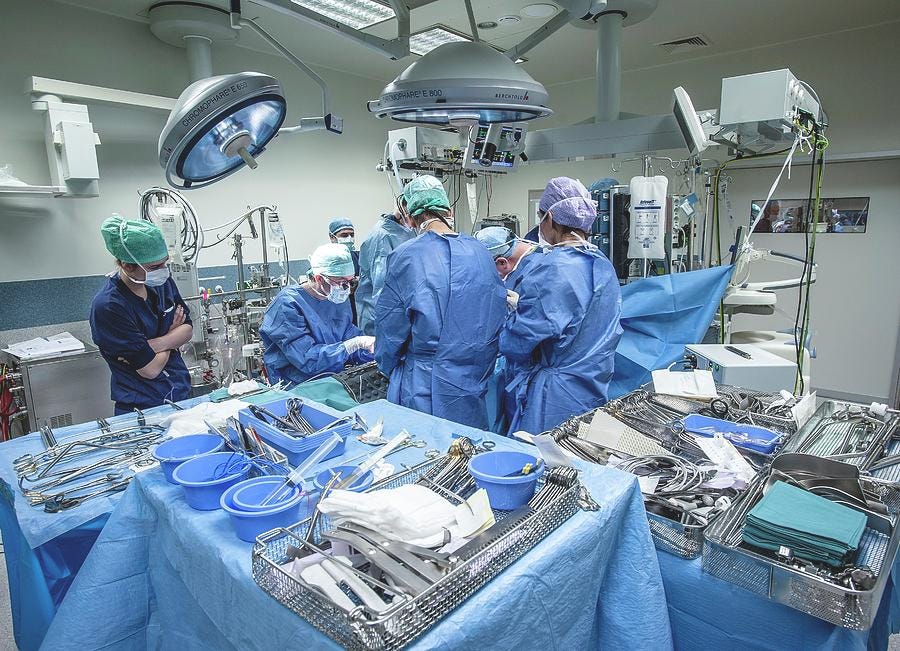
We use the word “professional” carelessly, applying it to almost anyone paid for their labour. But the classical professions—medicine, law, the clergy, later engineering and academia—were something quite specific: occupations granted a social monopoly over a domain of knowledge in exchange for a promise. The promise was fiduciary. The professional would place the client’s interests above their own, submit to a code, police their own ranks, and in return society would grant them autonomy, status, and the exclusive right to practise.
This is the ancient bargain, and it is worth noticing what kind of bargain it is. It is not a contract between equals. It is closer to what anthropologists would recognise as a covenant with a priesthood. The sociologist Eliot Freidson spent a career demonstrating that professions are not simply collections of skilled individuals but institutions of organised dominance—structures that control who may know, who may speak, and who may act within their territory. The code of ethics, so often presented as the profession’s gift to society, is also its licence: the moral justification for the monopoly.
None of this makes professions bad. Complex modern societies can’t function without them. But it should alert us to something rarely said aloud: the authority of a professional is a social construction layered on top of a competence, and the two are not the same thing. Competence is real and can be tested. Authority is performed, ritualised, and—crucially—bestowed by us. What is granted can be calibrated. What is calibrated can be withdrawn or renegotiated. Most of us have forgotten that we hold this power, and nowhere is the forgetting more complete, or more consequential, than in medicine.
Techne Without Phronesis
Aristotle distinguished between several forms of knowing, and the distinction has never been more relevant. Techne is craft knowledge—the surgeon’s hands, the diagnostician’s pattern recognition, the pharmacologist’s grasp of interactions. Episteme is theoretical knowledge—the bedrock of science underneath. But phronesis, practical wisdom, is something else entirely: the capacity to judge what should be done, for this person, in this situation, given everything that matters to them.
Here is the uncomfortable truth at the heart of professionalism: training produces techne and episteme in abundance, but phronesis cannot be credentialed. There’s no examination for wisdom. A physician can be superb at the first two and mediocre at the third, and the system will never detect it, because the system measures only what it can measure.
Worse, the question of what should be done for a particular life is not, in the end, a technical question at all. Whether to endure a third round of chemotherapy for a fifteen percent chance of eight more months; whether the risks of a surgery are worth it to someone who values lucidity over longevity; whether a life spent managing a condition is preferable to a shorter life spent ignoring it—these are questions about meaning, and the professional has no privileged access to the meaning of your life. Their expertise tells them what is likely to happen. It cannot tell them what truly matters to you as ana individual. When we relinquish the decision along with the diagnosis, we are asking techne to perform a task that belongs to phronesis—and specifically to our own phronesis, since we are the only ones who must live inside the outcome.
This is the philosophical core of the matter: expertise is authority about facts and probabilities; it is not authority about values or motives. The conflation of the two is the original sin of professional culture, and patients and professionals commit it together, each for their own reasons.
What We Project Onto Them
Why do we treat doctors as gods? The conventional answer — they know more than we do — is insufficient. Accountants know more than we do about tax law, and we don’t tremble in their offices. Nor is it the stakes alone: a criminal barrister can stand between a client and prison, yet no one confuses the bar with the altar. Something else is happening in the consulting room, and it has less to do with what the doctor knows than that over which the doctor presides.
The deeper answer is that medicine sits at the junction of knowledge and mortality. The physician is the figure our culture has appointed to stand between us and death, and this makes the consultation something other than an exchange of information. Ernest Becker argued that most human institutions are elaborate machinery for denying death; medicine is that machinery at its most explicit. When we surrender agency to a doctor, we are often not making an epistemic judgment (”they know best”) but performing an existential manoeuvre (”if I hand my mortality to someone competent, I do not have to hold it myself”). The surrender is a relief. It is regression, in the psychoanalytic sense—a return to the child’s position before the omniscient parent. Transference does not stay in the therapist’s office; it floods every clinical encounter.
This matters because it means reclaiming agency is not simply a matter of getting better information or asking more questions. It requires tolerating the apprehension that the surrender was designed to alleviate. The patient who insists on genuinely shared decision-making must accept that no one—no one—is certain, that medicine is probabilistic all the way down, and that the responsibility for choosing cannot be outsourced without also outsourcing the self. Many people, when they see this clearly, choose the priesthood anyway. That’s a legitimate choice. But it should be a choice, made once with open eyes, not a default absorbed from the equipment in the clinic.
What They Carry Into the Room
Now turn the lens around, to the territory almost never examined: the inner life of the professional, and how it silently shapes what happens to you.
Consider, first, that the physician across the desk is also a mortal in denial. Studies of how doctors themselves die reveal a striking pattern: they frequently decline the aggressive end-of-life interventions they routinely prescribe and administer to patients. They know too much about what those interventions actually deliver. The treatment you are being offered may be one your doctor would refuse—not out of hypocrisy, but because the system’s momentum, the family’s expectations, and the fear of being seen to “give up” all push toward action. Medicine has an intervention bias built into its very identity: the professional exists to do something, and doing nothing, even when it is wisest, feels like professional failure.
Consider, second, the psychology of the expert. Expertise produces genuine skill, but it also produces overconfidence that scales faster than the skill does. Diagnostic error rates in medicine are estimated at somewhere between ten and fifteen percent, yet physicians’ subjective confidence barely varies between their correct and incorrect diagnoses. The expert’s fluency—the smoothness of their pattern recognition—feels the same from the inside whether the pattern is right or wrong. Anchoring, premature closure, availability bias: these are not character flaws but structural features of expert cognition, and no amount of virtue eliminates them. The professional code says “first, do no harm”; the professional mind cannot always tell when it is about to.
Consider, third, what the profession does to the person inside it. Medical training is, in parts, an institutionalised trauma: sleep deprivation, hierarchical humiliation, serial exposure to death with no ritual for processing it. The detachment that results is praised as “clinical objectivity,” but it is often simply dissociation with a licence. Burnout among physicians is epidemic; so is what researchers now call moral injury—the corrosion that comes from being forced, by systems and incentives, to act against one’s own values, patient after patient, year after year. The doctor who seems cold, rushed, or dismissive may be a person whose capacity for presence has been strip-mined by the institution. You are not meeting a god. You are frequently meeting a wounded, exhausted human being performing composure, whose judgment on a Friday afternoon after eleven hours is measurably different from their judgment on a Tuesday morning—a fact confirmed by research showing prescription and referral patterns shift with time of day and clinician fatigue.
And consider, fourth, the incentives that no code of ethics fully neutralises: fee structures that reward procedures over conversations, defensive medicine driven by litigation fear, pharmaceutical influence so ambient it is no longer noticed, the fifteen-minute appointment that makes genuine deliberation structurally impossible. The individual professional may be honourable; the architecture they work within has values of its own, and those values pass through the professional into your treatment plan like water through a pipe.
The Weight of Knowing
We speak of knowledge as an asset, expertise as an accumulation. We rarely ask what it costs to carry such knowledge.
Begin with the professional. The oncologist reading your scan knows, with reasonable precision, things about your future that you do not—and must decide, in real time, how much of that knowledge to transfer, at what pace, in what words, watching your face for the moment comprehension arrives. This is a burden with no name in the professional codes. The codes govern what must be disclosed; they say nothing about what it does to a person to be, several times a day, the instrument by which someone’s future is broken open. Physicians describe an accumulation of these moments—thousands of them across a career—as a kind of sediment. The detachment we resent in them is often the callus that forms over exactly this wound.
There’s also what might be called tragic knowledge: the expert sees the full landscape of what can go wrong. The anaesthetist knows every rare catastrophe; the obstetrician has personally witnessed the one-in-ten-thousand event. Laypeople live inside a merciful ignorance—we cross bridges without knowing how they fail. The engineer cannot. Expertise strips its holder of the innocence that makes ordinary risk bearable, and then demands they perform calm on top of the stripping. The confident bedside manner we take as arrogance is sometimes the opposite: a container built to hold knowledge that would otherwise leak out as visible dread.
And expertise isolates. The specialist’s knowledge cannot be fully shared with a spouse over dinner; the weight of the day’s three terminal diagnoses is not conversation. Knowledge that can’t be shared must be carried alone, and professions—for all their conferences and colleges—provide remarkably little ritual for setting the load down. The priesthoods of old at least had the confessional.
But the burden runs the other way too, and this is the part almost never said: when we demand full knowledge as patients, we are volunteering to carry weight, and we should count the cost of that before we insist on it. The entire argument for patient agency assumes that more knowledge is always emancipating. It is not. There are good reasons the old paternalism survived so long: it performed a genuine service, however corruptly—it held knowledge on the patient’s behalf. The 78-year-old given her precise median survival, the parents handed the full probability tree for their child’s condition—each has received something they can never give back. We cannot suddenly “un-know” what is known. Knowing is a one-way door. Philosophers from Bernard Williams to L. A. Paul, understood that some knowledge is not acquired but undergone. To learn one’s own prognosis is to become someone else — the self that consented to the test no longer exists to receive the result — and no form yet devised obtains consent from the person you are about to become.
Predictive medicine has now made this ancient dilemma industrial. For most of human history, medical knowledge concerned what was already happening in a body. Genomics delivers something categorically new: knowledge about diseases that don’t exist yet and may never arrive - unless we manufacture them through “gain-of-function” or similar processes. This is a novel species of burden, and we have almost no cultural equipment for carrying it. The natural experiment of Huntington’s disease is instructive. When predictive testing became available for this incurable condition, the expectation was that at-risk individuals would flock to it; in practice, the overwhelming majority—by most studies, more than eighty percent—decline to know. They have looked at the one-way door and chosen not to walk through it. Meanwhile, whole-genome sequencing generates “incidental findings” about conditions nobody asked about, insurers and relatives acquire interests in what you know, and a new class of person has come into being—the “previvor,” the “patient-in-waiting”—someone clinically healthy who nonetheless lives inside a diagnosis-shaped shadow, their identity reorganised around a probability. A woman who learns she carries a BRCA mutation has not become ill, but she has become a permanent resident of medical surveillance, facing decisions about her own healthy tissue that no symptom forced upon her. Expertise created this knowledge; nobody yet knows who should decide when it must be received.
Which is why the most neglected concept in this entire debate deserves rescue from the bioethics journals where it currently lives: the right not to know. This is not a fringe notion. It has explicit standing in European law—Article 10 of the Oviedo Convention declares that a person’s wish not to be informed about their own health data “shall be observed”—and in UNESCO’s Universal Declaration on the Human Genome and Human Rights. Yet public awareness of it is close to zero, and professional culture is actively hostile to it. When the American College of Medical Genetics recommended in 2013 that laboratories report certain secondary genomic findings regardless of patient preference, the profession briefly asserted, in effect, a duty to burden—and had to retreat under protest to an opt-out. Philosophers still argue about whether chosen ignorance can be autonomous at all: does autonomy not require information? But this objection dissolves once you see the choice clearly. “Tell me everything” is a legitimate instruction. So is “tell me what I need in order to decide, and hold the rest.” The second is not surrender; it is a sovereign act of delegation, made once, deliberately, by someone who understands what knowledge weighs and has measured their own carrying capacity. The deepest failure of the fifteen-minute consultation is that this conversation—how much do you want to know, and how?—almost never happens at all.
Seen this way, the professional and the patient are joined by something the god-fantasy obscures: both are creatures of finite strength deciding how much truth they can hold. The expert did not escape the human condition by studying; they walked further into it, eyes wide open. Perhaps the beginning of the mature relationship this essay calls for is simply this mutual recognition—that knowledge is not only power but freight, and that the question of who carries what, and for whom, is the real substance of the covenant.
The Standardisation Paradox
Here is an issue almost never raised in public discussion. We say the best professionals—the experts—create the standards for the rest. This is true, and it’s also a trap.
Evidence-based medicine, the great reform of the last four decades, works by aggregating outcomes across populations. Guidelines encode what works on average. But you are not an average; you are a single, unique, unrepeatable configuration of genetics, history, circumstance, and value. The guideline is a statement about a population from which you were drawn, not a statement about you. The clinical trial that validated your medication may have systematically excluded people like you. If you are a woman, this was not oversight but policy: from 1977 to 1993, the FDA formally recommended excluding women of childbearing age from early drug trials, and your prescription may still carry the imprint of a body that was never yours. The elderly and the comorbid — that is, the people who actually take most medications — fare little better even now.
The paradox is this: standards were created to protect patients from idiosyncratic, ego-driven practice, and they succeeded. But they simultaneously created a new danger—the professional who follows the protocol instead of thinking, who treats the guideline as a moral shield (”I did what the standard required”) rather than a starting point for judgment. Standardisation raises the floor and quietly lowers the ceiling. It also transfers authority yet again: not from patient to doctor this time, but from doctor to committee—an anonymous body whose deliberations you will never see, whose conflicts of interest you cannot inspect, and whose conclusions arrive in your consultation wearing the costume of settled fact.
The philosopher Miranda Fricker gave us the term epistemic injustice: the wrong done to someone in their capacity as a knower. Medicine is saturated with it. The patient’s testimony about their own body—”something is wrong,” “this pain is different,” “this drug is changing me”—is systematically discounted when it conflicts with the chart, the scan, the guideline. Women, the elderly, the poor, and the chronically ill experience this most acutely, sometimes for years before a diagnosis vindicates them. Yet the patient possesses a form of knowledge no professional can access: forty, sixty, eighty years of continuous, first-person data about one particular organism. The consultation, properly understood, is a meeting of two experts with different datasets. It is almost never conducted that way.
Reclaiming the Bargain
What follows from all this? Not contempt for professionals—that is the mirror error, and the current epidemic of expertise-denial shows where it can lead. The person who dismisses all medical knowledge in favour of an influencer’s supplement regimen has not reclaimed agency; they have simply transferred their surrender to a less accountable priesthood. Agency is not the rejection of expertise. It is the correct placement of expertise within a decision that remains yours.
The mature position looks something like this. Grant the professional full authority over the facts: the diagnosis, the mechanisms, the probabilities, the options and their likely consequences. Interrogate that authority where it is weak—ask what the confidence interval is, what would change their mind, what they would do in your position and why, what the guideline assumes about you that may not be true. Declare, explicitly and in advance, how much you wish to know and at what depth—exercising the calibration that is yours by right, whether toward full disclosure or deliberate delegation. Then retain, absolutely and without apology, the authority over values: what risks are worth bearing, what a good outcome means, what kind of life—and death—you are willing to have. Informed consent, as currently practised, is largely a liability ritual, a signature on a form. Genuine consent is a deliberation in which the professional contributes probabilities and you contribute purposes.
And extend to the professional the one thing our god-making denies them: their humanity. Recognise that they are tired, biased, constrained, sometimes afraid, occasionally wrong, and carrying a burden of knowledge that has cost them something to hold—all while working inside systems that damage them too. Paradoxically, this recognition improves the medicine. A patient who understands the doctor’s fallibility asks better questions, seeks second opinions without shame, and notices when the fifteen-minute machine is failing them. A doctor treated as a human collaborator rather than an oracle is released from a performance that serves no one—least of all them.
The deepest point is finally this. Professionalism, at its philosophical root, was never meant to be a transfer of sovereignty. The Hippocratic tradition, the fiduciary codes, the very idea of a profession—from profiteri, to declare publicly—was a public vow of service, not a claim of dominion. When we kneel before expertise, we corrupt the bargain from our side as surely as the negligent practitioner corrupts it from theirs. The code binds them to serve your interests. It cannot define what your interests are. That work—the work of knowing what your life is for, what you are willing to trade for more of it, and how much truth you choose to carry along the way—is the one professional duty that can never be delegated, because you are the only member of that profession, and its only client, and the sole author of its code. The knowledge is theirs to offer. The weight is negotiable. The life is yours to decide.