The actor Keanu Charles Reeves was born on September 2nd 1964. I was born on September 2nd 1945. That’s uncanny. There’s obviously a connection somewhere. Some people think Keanu is immortal. Given we both have such a youthful look we probably share more in common than we know or care to admit… Or not!
In an age where information, misinformation, and disinformation all stream incessantly into a potpourri of hoopla and cant, navigating the disorder in order to arrive at the truth (or even a sliver of the truth) can feel like an insuperable challenge.
Social media has given us license to pontificate on everything under the sun. One person's ignorance and passionate convictions often valued as much as an expert's lifetime of tireless research, while the archives of mistrust and skepticism rub shoulders with ambiguity in almost every assertion being put before us.
Who can we now trust? What sources are credible? Does the world actually work in the haphazard way we experience, or in an ordered and rational fashion like we've been taught to believe? Is there a single group in control of human destiny, or are we all equally lost and searching for answers?
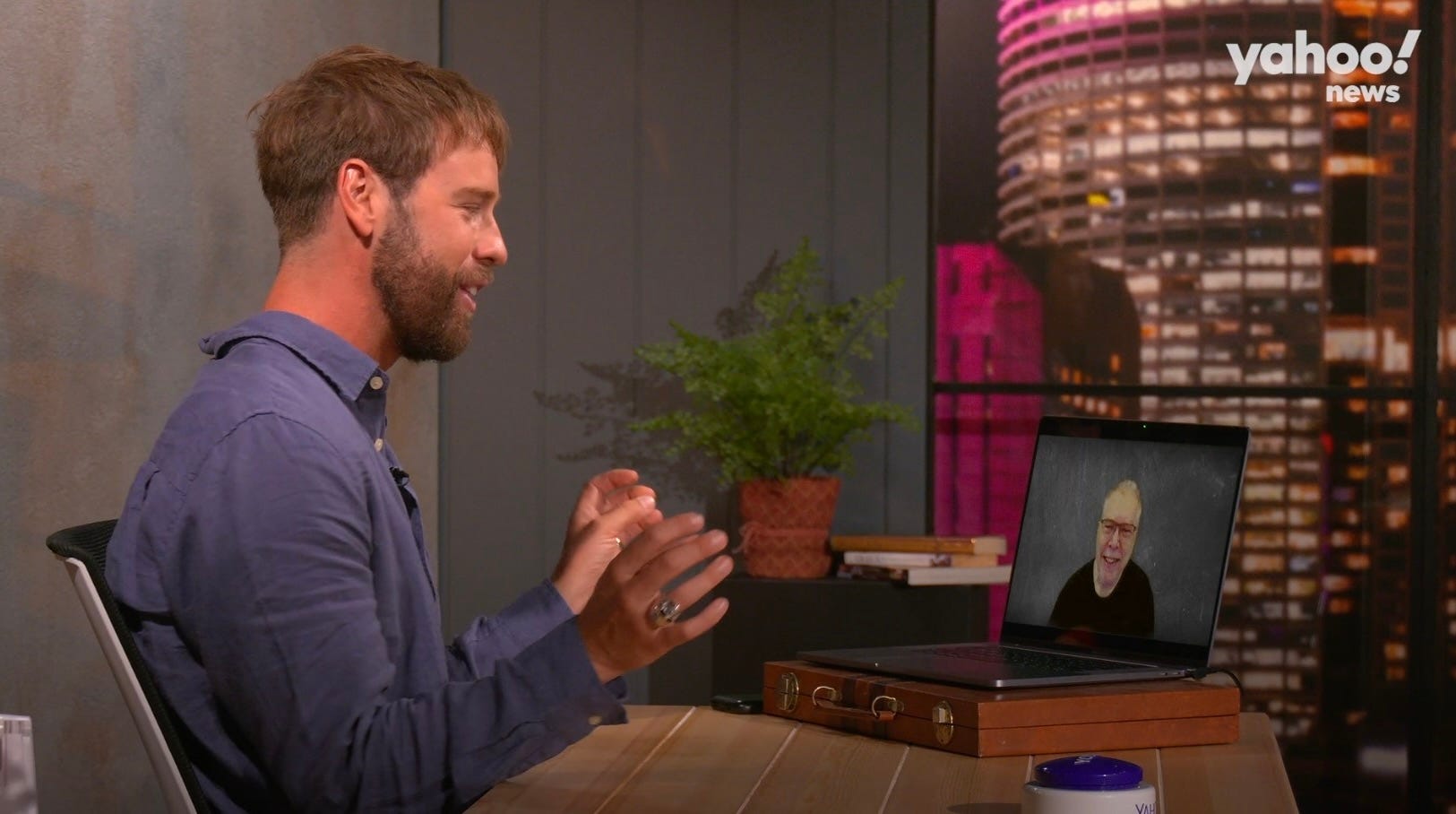
One of the most enjoyable experiences I have had in my career was working on a social media production for Yahoo News with Australian radio and television presenter and self-confessed 'fact explorer' Danny Clayton. Conspiracies Unpacked is a 10-part series that looks into the mysteries surrounding some of the world’s most notorious and oft-debated conspiracy theories. The first episode, for example, examines the events surrounding President Woodrow Wilson’s failing health, and whether his wife Edith unofficially became the first female President of the United States. Other episodes look into the death of Princess Diana, the rumours around COVID-19 being created in a Chinese lab, the intriguing mystery surrounding Denver International Airport, and whether the actor Keanu Reeves is in fact immortal.
Although Conspiracies Unpacked was presented as entertainment, and conclusions as to the veracity of each theory mostly left open for viewers to decide, the research for each episode was very thorough. As Danny said at the time, 'There's something fascinating about a juicy conspiracy theory which captures the imagination and causes even the biggest sceptic to ask more questions about accepted facts'.
Actually, the rise of conspiracy theories, amplified by digital communication and social media, reflects a profound societal shift - a change in the way we search for meaning and worth. Instruction and advice from trusted sources, like teachers, doctors, lawyers, and journalists, has now morphed into an ocean of unsorted data. Each bulletin characterized equally by anxiety or comfort, indecision or certitude, threat or potential, collapse or regeneration, depending on our pet theories about the truth.
These unsettling dynamics demand that we continually seek clarity in what is an untidy and increasingly complex world. To comprehend this phenomenon, we must explore the factors that give conspiracy theories their credibility. This also helps us to understand how they take root and why they have such a capacity to distract and propagate fear.
Whether we're aware of it or not, the digital ocean overwhelms us with data. Tides of information create an environment ripe for confusion and perhaps designed to confuse. Almost all information available to us today is a form of propaganda, much of it benign, but nevertheless part of a managed narrative. In order to 'make sense' of it all, we must simplify the messages. So we make choices about what to believe and what not to believe. These choices are greatly influenced by the decisions we made in the past and the logic we used to come to those conclusions. Quite often, this organizing logic comes down to the way we 'connect the dots' in this ocean of data.
With such a vast amount of content available, discerning credible sources from unreliable ones becomes increasingly difficult. Anecdotal evidence is often used as a proxy for facts. So we fall back on our instincts, what resonates, and what 'feels right' in the circumstances. This cognitive overload leads us to gravitate towards simpler narratives, often found in conspiracy theories, that promise clarity and certainty amid all the confusion. For example, during the COVID-19 pandemic, misinformation spread rapidly, as individuals became overwhelmed with fear and sought easy explanations for complex phenomena. And this is exactly what we were given by officialdom.
Part of the underlying problem when considering 'big' or profound issues is the degree of confidence we accumulate from our stream of implanted social beliefs. If we deemed our assumptions to be accurate in the past, it's highly likely we will opt for information that best fits those same assumptions today. That boosts our personal confidence, so we continue to identify legitimate challenges or issues, but then invent an outcome which is not in any way substantiated by the evidence, nor is it necessarily connected to the problems we previously identified. Reason is uprooted in that process, but goes unrecognized.
The result is a kind of chauvinistic theatre, in which we casually target a vulnerable group we don’t like by inventing a fantastical conspiracy theory that we can blame them for. Any ambiguity or disjointed logic is an advantage because the conspiracy is often so ridiculous that we assume the connections are just hard to see. That gives us an advantage over those 'poor souls' who don't know any better, or simply cannot see how we're all being manipulated and controlled by a secretive group invariably referred to as 'they'. It's commonly accepted by conspiracy theorists that 'they' are the ones doing the scheming and the stage-managing. 'They' can range from the 'deep state' to the organisers of the World Economic Forum, to David Icke's shape-shifting reptilian aliens, depending upon one's ability to blend reality with fantasy.
An historical backdrop of mistrust in government, media, and scientific institutions fuels the acceptance of alternative narratives which justify our mistrust. Scandals, corruption, mishandling of crises, and perceived elitism all contribute to a pervasive skepticism in society. If institutions fail to communicate transparently, they inadvertently create a vacuum that conspiracy theories rush to fill. The rising skepticism surrounding mRNA vaccines, for instance, is rooted in a broader mistrust of pharmaceutical companies and regulatory oversight, leading to potentially harmful consequences for public health. In this case, tales of a deliberate conspiracy may actually turn out to be partially true. In a bizarre turn of events, evidence of a conspiracy can often lag the theory by a few months or even years. We have yet to understand the full truth behind JFK's assassination, for example, and inconsistent evidence given to the Warren Commission still bothers some people.
I am not in the group that decries conspiracy theorists and their stories as invariably destructive. Belief in conspiracy theories often provides a sense of community and belonging among like-minded individuals. These theories create in-group dynamics, where believers feel they possess special knowledge that others lack. This social reinforcement can make it tricky to abandon these beliefs. The appeal of belonging can be especially potent in times of societal upheaval, as individuals seek connection and identity in a world that feels increasingly fragmented.
In that context at least, conspiracy theories can serve as coping mechanisms for anxiety and uncertainty. They provide frameworks that make sense of chaotic events, granting individuals a semblance of control over their lives. For example, during crises like natural disasters or political turmoil, people may gravitate towards conspiracy narratives that offer explanations for their fears, allowing them to process complex emotions in a much more manageable and satisfactory way. Obviously, we must try to distinguish between theories that might be harmful, psychologically or physically, like the stories that still swirl around 9/11, and those that are relatively inoffensive. More often than not, however, conspiracy theories ultimately breed discontent.
The algorithms driving social media platforms, for example, often foster echo chambers, where users primarily encounter information that reinforces their existing beliefs. This creates a cycle of confirmation bias, encouraging individuals to seek out and trust information that aligns with their worldview while dismissing contradictory evidence out of hand. The resulting feedback loop not only solidifies misinformation but also deepens societal divisions.
Cultural backgrounds, including social conditioning and historical experiences, further shape perceptions of authority and truth. In societies with a legacy of oppression or authoritarianism, people may be more inclined to accept conspiracy theories, viewing them as a way to reclaim agency. Additionally, storytelling traditions play a crucial role; sensational narratives tend to be more compelling than dry facts, making them easier to share and remember. The cultural context significantly influences how conspiracy theories are embraced and propagated.
Global crises—such as pandemics, economic downturns, and political instability—create fertile ground for conspiracy theories. During times of existential threat, we often seek explanations for our fears, which can lead us to adopt conspiratorial thinking as a way to understand and respond to perceived dangers. The COVID-19 pandemic, for example, saw a surge of conspiracy theories surrounding the virus's origins and the motivations behind vaccination campaigns, reflecting deeper societal anxieties.
It's difficult to see how we can combat the rise of conspiracy theories, even the more wacky ones, or even if we should try, when almost all of the conditions needed for them to take root and 'go viral' are booming in today's propagandised world. It seems like a hopeless goal, doomed to fail from the start. Their appeal might be weakened a little if we insisted that institutions must be absolutely truthful about their activities; reports of events do not obfuscate, or leave out vital pieces of information; while jargon and euphemisms are not used to camouflage or trample the facts underfoot, but tell only the unadorned truth.
Integrity of this kind, including recording openly any problems for which an explanation has yet to be found, might help nudge society to manufacture conditions that suck the oxygen out of conspiracy theories before they have a chance to develop. But almost any strategy one can imagine, aimed at eradicating such narratives from public discourse, is not only bound to fail but would itself run the risk of being painted a conspiracy by those who are suspicious of authority and like to dress up that fear in sensationalism.
The appeal of conspiracy theories can be appreciated through a number of different lenses. At their core, these narratives provide simple explanations for complex events, offering people clarity in a world that can feel chaotic, out of control, or running on autopilot. Simplification vectors help us make sense of our surroundings and restore a sense of agency. In moments of upheaval, these narratives allow people to frame themselves as members of a knowledgeable group that understands truths which remain hidden from the rest of us. This can be particularly appealing (and empowering) when external circumstances seem overwhelming and life is threatening.
Moreover, conspiracy theories foster a sense of belonging among like-minded individuals. They create in-group dynamics where believers feel part of an exclusive community that shares insights and perspectives often dismissed or ridiculed by the mainstream. This social identity reinforces the beliefs of the group but also enhances their commitment to the theories.
A deep-seated mistrust of authority plays a significant role in the attraction of conspiracy theories. Many people harbor skepticism toward government, media, and other institutions, particularly if they feel marginalized or oppressed. These theories validate their distrust and provide alternative narratives that challenge conventional wisdom.
The storytelling aspect of conspiracy theories adds to their appeal. These narratives are often sensational and melodramatic, making them engaging and easier to remember. Their compelling nature boosts shareability, especially on social media platforms, where exaggerated hype and content thrive.
Confirmation bias further amplifies the allure of conspiracy theories. People naturally seek information that aligns with their preexisting beliefs, and conspiracy theories often resonate with their worldviews. This reinforcement makes them more attractive and entrenched.
In times of social or political turmoil, fear and anxiety can drive individuals toward conspiracy theories as a coping mechanism. These theories provide scapegoats or explanations that help people process their emotions and navigate their fears.
Additionally, a psychological need for uniqueness can motivate individuals to embrace conspiracy theories. Holding beliefs that are outside the mainstream allows them to feel special or enlightened, fostering a sense of superiority over those who too readily accept conventional explanations.
The rise of misinformation and the creation of echo chambers on social media contribute to the spread of conspiracy theories. Algorithms often amplify these ideas, exposing individuals to repeated messages within their social networks, which can further entrench their beliefs.
The appeal of conspiracy theories reveals much about human psychology and social dynamics. While they can provide comfort, community, and a sense of understanding, they also pose real challenges to critical thinking and informed discourse. Addressing the underlying factors that draw people to these stories is essential for promoting media literacy and fostering healthier public dialogue. But even that's a huge challenge.
Navigating the labyrinth of conspiracy theories 'out there' requires an understanding of the contextual factors that allow these narratives to flourish. Some conspiracy theories eventually prove to be true; others are sensational distractions. It's critical to know the difference. By recognizing the psychological, social, and informational landscapes at play, we can tailor our understanding and analysis. Ultimately, if our goal is to promote a more informed and resilient society capable of discerning truth from falsehood in an increasingly complex world, we must chip away at all fantasies, including conspiracy theories that are simply not credible.
Getting to the Truth
For those people who are concerned to tackle the potency of conspiracy theories by reducing their impact in situations where they are clearly being weaponised or used maliciously to confuse, the following notes might be useful.
Based on applying the Socratic method within the Hames & Oka 'Transformational Narrative' experience to encourage radically innovative thinking - particularly in strategic settings - it proceeds by asking open-ended questions, prompting individuals to reflect on their own beliefs without directly confronting them. Gently exploring inconsistencies in their views can often lead to self-discovery.
As usual when dealing with highly sensitive cultural issues, it's important not to attack individuals and only to challenge their beliefs. Even this must be done cautiously and with great respect, given that our beliefs shape our identity and that these may change, sometimes imperceptibly, throughout life.
When addressing specific conspiracy claims, it’s important to provide clear, evidence-based information. Utilizing reliable sources and accessible language can help demystify complex topics, while analogies and relatable stories make factual information more engaging and memorable. Highlighting the real-world consequences of misinformation, such as vaccine hesitancy leading to the resurgence of preventable diseases, can illuminate the dangers of total surrender to conspiratorial thinking. Personalizing these impacts through stories fosters empathy and encourages a reconsideration of beliefs.
Creating a supportive environment where individuals feel safe to express their views is desirable. Safe spaces allow for the exploration of difficult topics without fear of judgment. Encouraging self-reflection about the emotional drivers behind conspiracy beliefs - such as fear and mistrust - can illuminate underlying issues.
Patience from facilitators is essential, as changing deeply held beliefs often takes time. Celebrating small victories in shifting perspectives can help maintain momentum in these discussions. Leading by example is another powerful strategy. By modeling critical thinking in our own discussions, we inspire others to do the same. Obviously, staying informed about current events, and demonstrating a willingness to change our views based on new evidence, fosters the culture of open inquiry we want people to experience.
Here are some examples from the 'Integral Questionning' practice in the work of Hames & Oka. This can encourage radically innovative thinking and self-reflection when discussing beliefs, including those related to conspiracy theories, and in situation where it is widely believed that truth is being concealed and that what is presented by official sources is either misleading or false:
1. Clarification Questions
Can you explain that further?
How did you come to that conclusion?
Who are you talking about when you refer to 'they'?
Can you tell us more about how you came to that belief?
What specific events or information led you to this conclusion?
How would you define the conspiracy you’re referring to?
2. Probing Assumptions
What general assumptions are you making?
Do you feel these assumptions are justified?
What if those assumptions were not true?
What specific assumptions underlie your belief in this theory?
Do you think there are any biases influencing your perspective?
If these assumptions were challenged, how would that affect your belief?
3. Investigating Evidence and Reasons
What evidence do you have to support that claim?
How reliable is the source of your information? Why do you trust this source?
Are there alternative explanations for what you’re describing?
What alternative sources have you consulted to support this theory?
Are there any credible experts who disagree with this perspective?
Can you think of any counter-evidence that might challenge this claim?
4. Studying Implications and Consequences
If that were true, what would be the implications?
How would that affect your view of the world?
What might happen if more people believed this theory?
What would be the broader implications if this theory were proven to be true?
How does believing in this conspiracy affect your view of society?
What are the potential consequences of spreading this theory?
5. Questioning Perspectives
How might someone with a different viewpoint interpret this?
What would you say to someone who disagrees with you?
Is there a possibility that you might be wrong?
How might someone from a different background interpret the same events?
What do you think a critical thinker would say about this theory?
Are there other explanations for the events that could be equally valid?
6. Encouraging Self-Reflection
Why do you think you feel so strongly about this?
How does this belief align with your other values?
What experiences have shaped your perspective on this issue?
Why does this theory resonate with you personally?
How does this belief align with your values and experiences?
What emotions does this theory evoke for you, and why do you think that is?
7. Challenging Consistency
Are there any contradictions in your reasoning?
How does this belief fit with your other beliefs?
Have you ever changed your mind about something similar? What prompted that change?
How does this theory fit with other beliefs you hold?
Have you ever changed your mind about this conspiracy theory? What prompted that change?
Are there inconsistencies in your reasoning that might need addressing?
8. Inviting Exploration
What further questions does this raise for you?
How would you approach this topic differently if you had to explain it to your children?
What would it take for you to reconsider this belief?
What questions does this theory raise for you that you haven’t yet considered?
If you were to research this topic further, what would you want to learn?
How would you approach this issue differently if you were tasked with debunking it?
By using these types of questions, you can foster a dialogue that encourages critical thinking and deeper understanding, helping individuals reflect on their beliefs and potentially reconsider their stance on conspiracy theories.