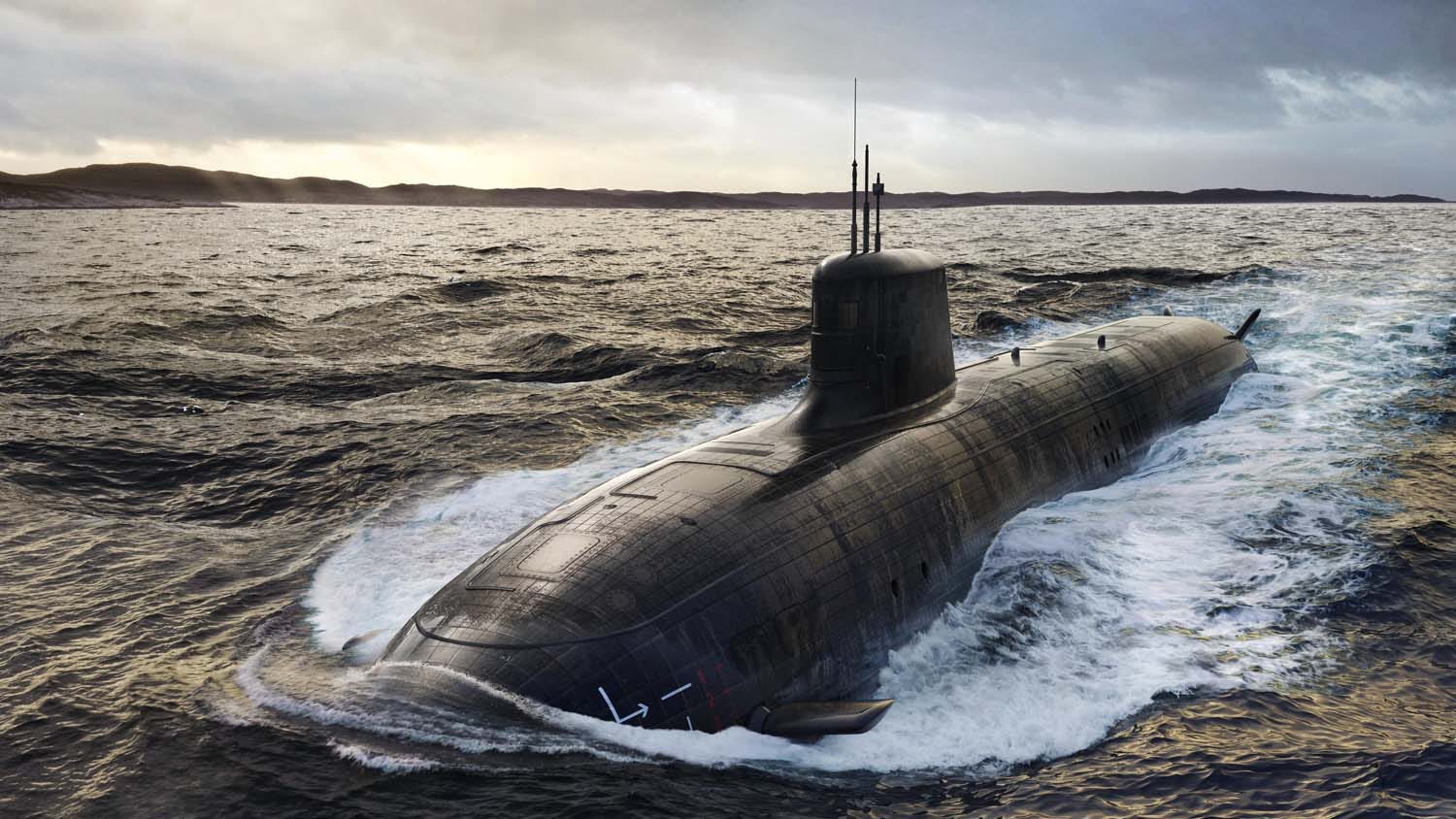
A public inquiry into AUKUS has just opened in Australia, and the most telling fact about it is the one least likely to be reported. This inquiry has not been convened by the government. The state that committed AU$368 billion to nuclear‑powered submarines, the largest defence undertaking in the nation’s history, has held no parliamentary scrutiny of the decision worthy of the name.
So citizens have convened the inquiry the parliament declined to hold. Launched in Canberra at the beginning of June, coordinated by the Australian Peace and Security Forum and directed by a panel of volunteers — Peter Garrett, Carmen Lawrence, the former defence chief Chris Barrie, Leanne Minshull and Karina Lester — it is crowd‑funded, independent, and entirely without official standing. That a question of this magnitude should fall to private hands is not a curiosity at the margin of the story. It is the story of democracy refusing to be hijacked by politics.
I write in opposition to Australia’s participation in AUKUS and to the acquisition of nuclear‑powered submarines in particular. But I don’t write as a defence specialist, and what follows doesn’t turn on the technical merits of one platform against another. My concern runs beneath that argument, to the question AUKUS never asks of itself – what kind of future does it assume, and what kind of country does it require us to become in order to inhabit such a future?
Most of the case against AUKUS has already been made, ably and often, by people who know the procurement detail far better than I do. The cost is ruinous. The timelines are heroic. The strategic logic binds us to another superpower’s wars. All of this is true, and I will return to it. Yet the deeper trouble with AUKUS is not that it’s a bad bargain. It’s that it is a faithful expression of a way of thinking that no longer fits the world it claims to defend. We might just as well go back to using bows and arrows.
I have spent the better part of fifty years advising governments and institutions across this region on how to read the future they are walking into. What I have learned is that the gravest errors are rarely errors of calculation. They are errors of imagination — failures to notice that the ground has shifted, that the old map now describes a country that no longer exists. AUKUS is such an error. It’s the right answer to a question the twentieth century was asking, pressed into service against a century that has moved on.
A weapon for the last war, not the next one
Security purchased as hardware. The thinking behind AUKUS belongs to a worldview I have elsewhere called industrial economism — the near-global operating system that treats every problem as a problem of production, every threat as a shortfall in firepower, and security itself as a commodity. Within that frame, a submarine is not a strange purchase. It is the obvious one. You feel unsafe, so you acquire the most concentrated expression of force the market offers, and you call the acquisition prudence.
And yet the threats that will actually shape the lives of Australians over the coming half‑century answer to none of this. A heating planet cannot be deterred. A pandemic does not respect a hull. The slow fraying of social trust, the hollowing of institutions, and the erosion of the shared story that lets a people act as a “we” — these are the real solvents of national security, and no fleet, however silent, can patrol against them. We are buying a magnificent answer to a question the future has largely stopped asking, while the questions it presses on us go unfunded and unaddressed.
This is the pattern of a civilisation that has confused its instruments for its purposes. It knows how to build. It has forgotten how to ask whether what it builds is what it needs. AUKUS is that forgetting, rendered in steel and reactor-grade uranium and a fifty-year treaty.
Sovereignty is the capacity to say no.
The first and most consequential cost of AUKUS is the surrender of our own judgement. The submarine pillar binds us, for decades, to American and British propulsion technology, supply chains, maintenance regimes and operational doctrine. We don’t gain a sovereign capability. We rent a dependency, and we pay to build the landlord’s house. Australia has already transferred billions of dollars to expand American shipyards — money that buys no vessel, only the enlargement of another nation’s industrial base, against the promise that some of its output might one day be sold to us.
Sovereignty has never been a matter of legal title. It is the practical, daily capacity to say no – to decline a war we judge unwise, to chart a course our partners dislike, and to act on our own reading of our own interests. By that measure AUKUS does not strengthen our sovereignty. It quietly spends it. The recently concluded fifty‑year treaty with the United Kingdom and the side arrangements that accompany the American pillar weave us so tightly into the strategic planning of two distant powers that the moment of independent judgement — the moment of saying no — becomes politically unthinkable long before it becomes operationally impossible.
The point was made plain this year. Washington subjected the entire pact to a five‑month review against its own “America First” criterion, holding Australia’s largest‑ever investment hostage to the question of whether the arrangement still suited American interests. The Pentagon eventually endorsed it. But notice what the episode revealed. The decision was never ours to make. We had bound our future to a calculation performed in another capital, with another interest, and we waited to learn our fate. A country that must wait to be told whether its own defence programme will continue has already answered the question of whose sovereignty AUKUS serves.
The future AUKUS forecloses
The figure most often quoted is AU$368 billion by 2055 — around AU$244 billion in projected cost, with a further AU$123 billion set aside against the near‑certainty that the projection is wrong. That contingency alone, the margin reserved against the budget going awry, exceeds the entire annual budget of many of the social goods on which Australian wellbeing actually rests.
I do not invoke this number to win an argument about arithmetic. Every dollar is a choice about the kind of country we intend to be. A nation that can find AU$368 billion for a fleet whose strategic relevance in 2055 is frankly unknown, while pleading poverty on housing, on the care of the old and the disabled, on the schools and clinics and climate defences that determine whether ordinary lives go well or badly — that nation has not made a hard fiscal trade‑off. It has made a confession. It has told us what it values and what it’s prepared to let decay.
The opportunity cost is not an abstraction to be tucked into a footnote. It is the housing not built, the coastline not defended against the sea, and the generation not educated to the level the century will demand. These are the materials from which real security is made. We are proposing to spend the price of that security on a hedge against a war we should be labouring, with every other instrument we possess, to prevent.
Building a cathedral to a vanishing god
There is a particular folly in committing, on a thirty‑year horizon, to a single, enormously expensive, slow‑to‑build platform at the precise moment when the character of undersea warfare is morphing. Autonomous systems, ubiquitous satellite surveillance, cheap and numberless sensors, and the steady transparency creeping over the oceans – every current points away from the crewed nuclear submarine as the apex predator and toward the distributed, the disposable, and the swarmed.
The first of the British‑designed AUKUS boats has not yet been designed, let alone proven. We are being asked to commit early and heavily, underwriting another nation’s design risk, locking ourselves to a legacy architecture whose relevance two and three decades hence cannot honestly be affirmed by anyone. A wiser posture would prize adaptability over magnitude — capabilities that can be reshaped as the terrain shifts, rather than a single monumental wager on a future that the trend lines are already abandoning. We are proposing to build a cathedral to a god the age is quietly ceasing to worship.
The arithmetic of paranoia
China is our largest trading partner and the central undeniable economic fact of our region. There are real grounds for concern about particular policies of the Chinese state, and I don’t wish them away. But there’s a difference between clear‑eyed wariness and the manufacture of an enemy, and AUKUS sits firmly on the wrong side of that line.
A security dilemma is the cruellest mechanism in international affairs, because it punishes prudence. Each side arms in the name of defence; each reads the other’s defence as preparation for attack; and the spiral tightens with every reasonable, paranoid step. By aligning ourselves visibly with military strategies that openly contemplate war with China, and by acquiring boats whose natural employment is in China’s near waters, we don’t make ourselves harder to attack. We make ourselves easier to fear, and a country that’s easier to fear is easier to fight.
We had the option of being something far rarer and more useful — a bridge, an honest broker, a middle power that kept channels open when the great powers were busy closing them. AUKUS trades that stewardship for the role of forward asset in a contest that’s not even ours, in a war we should be straining every nerve to avert. If our stated end is peace and prosperity in the Indo‑Pacific, then diplomacy, regional cooperation and the patient work of confidence‑building become the substance of security rather than its soft alternative.
The naivety beneath the hardware
Beneath every line of this commitment lies a touching and dangerous faith — the belief that more force and tighter alignment with a distant great power will make us safer, in defiance of the whole weight of the historical record. Arms races do not buy security; they purchase the conditions of insecurity at a premium. Wars of choice by major powers do not protect their smaller allies; they conscript them and leave them to carry costs out of all proportion to any say they had in the matter.
There’s a further naivety, quieter and more corrosive. It’s the assumption that democratic oversight will survive intact once a commitment this large, this binding, and this technically opaque has been locked in place. Decisions of this scale, made on these horizons, migrate steadily out of public reach. They become facts that governments inherit rather than choices that citizens make. That the scrutiny is now being attempted by a panel of volunteers passing the hat, rather than by the parliament that bears the responsibility, tells us how far out of reach this particular decision has already drifted. A free people should be deeply reluctant to bind its own grandchildren to a war they cannot foresee, fought for reasons they did not choose, with money that might have built them a more habitable country instead.
I am in my eighties, and I will not live to see how this story ends. That is precisely why I feel free to say it plainly. The fleet will arrive, if it arrives at all, in a world I will not inhabit, to defend a country my grandchildren will. We owe them better than a magnificent answer to the wrong question.
What ought to follow
If this inquiry has no power to compel, it has something the government has so far lacked the courage to seek: a public reckoning. Four conclusions seem to me unavoidable and worth pressing on whoever will listen.
1. The nuclear submarine commitment should be paused and subjected to a genuinely independent cost‑benefit analysis — one that names, in plain figures, the social, educational and climate goods being forgone and weighs the capability against them honestly.
2. No binding, long‑horizon defence commitment of this magnitude should be entered into again without the approval of Parliament by a supermajority, following full public and expert deliberation. A choice that binds three decades should not be made on the strength of a single electoral cycle.
3. Future defence planning should prize sovereign decision‑making, adaptability to rapid technological change, and freedom from structural entanglement in wars initiated by others — in place of monumental, inflexible platforms whose relevance cannot be vouched for.
4. Australian foreign and defence policy should be rebalanced toward regional diplomacy and the prevention of conflict, including a constructive and unsentimental engagement with China, rather than the presumption of permanent enmity that AUKUS quietly encodes.
The deeper charge
In the context of past Australian defence procurement errors, AUKUS is not an anomaly. It is, however, a profound and costly reorientation of this country’s strategic posture. It erodes our sovereignty, it misdirects scarce public wealth, it gambles on a technology the future is already overtaking, and it deepens the very enmity it claims to guard against. But the most serious charge is the one that underlies all the others. AUKUS is the work of a civilisation that has forgotten how to ask what it’s for — a civilisation that still knows how to build, but no longer knows how to think.
And so a handful of citizens have taken up, without budget or mandate, the work a government was elected to do. They deserve our attention, and the matter deserves the significance they are bringing to it. Not because the submarines are too expensive, though they are. But because the future they are meant to defend is not the future we’re actually heading towards, and a country that can’t tell the difference has already surrendered the very capacity it most needs to keep.