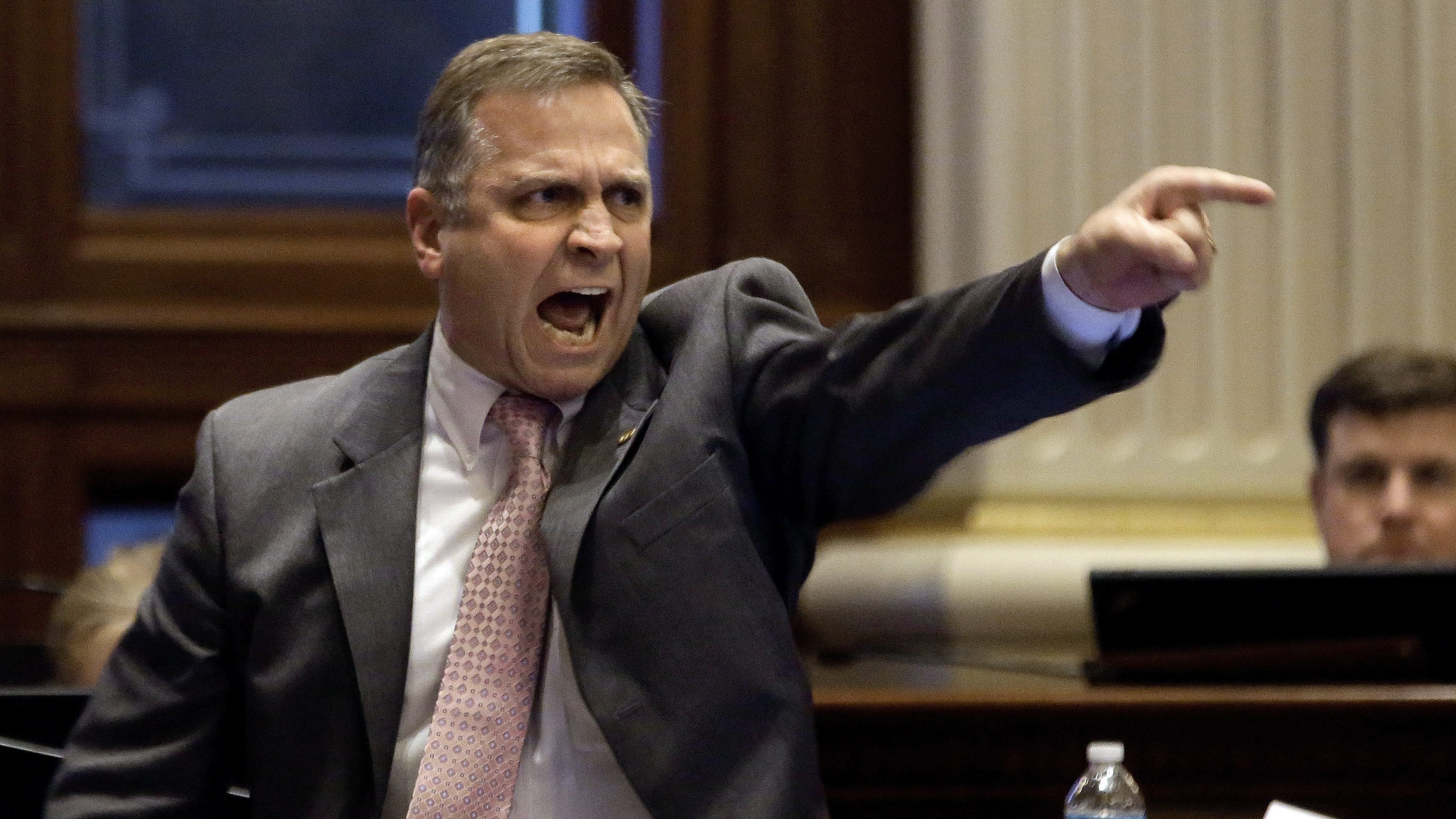
I am writing this from my village home in the northeast of Thailand, far away from the studios, parliaments, and media platforms where much of the world’s public language is fashioned. Distance actually helps. Not distance as withdrawal, but distance as calibration. When one steps outside the constant feedback loop of outrage and affirmation, a familiar pattern emerges: almost nothing of any consequence is spoken quietly any more. This is possibly more noticeable to someone like myself who was born into a relatively quiet and empty world after the commotion of World War 2.
From social media commentary to geopolitical analysis, and from parenting advice to climate discourse, language now arrives steel-clad. Anyone who has watched a prime‑time talk host or a breakfast shock‑jock bulldoze their way through an interview, barely pausing for breath, has seen this style of soft violence in action. I listen carefully, intrigued by the fact that they hardly pause for breath in a sprint toward testimony. Statements are deployed rather than explored. Each utterance carries an implicit ultimatum: declare yourself or forfeit your right to speak at all. Loudness has become the entry fee for relevance. It seems to me that this is a profound shift in how power is exercised and how reality is organised rather than a mild decline in civility.
Once upon a time, in a different societal mood, language functioned as a bridge between experience, expertise, and understanding. It allowed ambiguity to be held long enough for insight to emerge. Today, it behaves more like an artillary platform. Public speech is increasingly adversarial by default. Not because the world has suddenly become simpler or more polarised, but because simplified polarities travel faster. They are efficient, compressing complexity into moral theatre and rewarding those willing to present certainty at speed.
Tentativeness is punished. Curiosity is treated as unwarranted delay. Correction is framed as humiliation. Revision is recast as betrayal. The result is a strange exhaustion. People are talking constantly, yet understanding feels rarer than ever. Volume substitutes for meaning. Repetition replaces reasoning. Speech no longer mediates reality – it competes with it. Meanwhile our ability to make sense of what’s being said has flatlined.
At what point does language itself become unreliable as a sense-making tool? Certainty now circulates largely independent of evidence. It travels as temperament, as identity, as entertainment. Across entire domains once treated with clear-headed deference – medicine, law, education, economics, ecology, science – conviction is celebrated and rewarded whether or not it is anchored to discernment. Social media platforms are unable to distinguish judgement from performance, and audiences trained on velocity rather than depth learn not to care.
Older norms of knowing are being inverted. In most functioning knowledge traditions – from monastic scholarship to Indigenous lore – authority emerged from restraint: from the capacity to suspend judgement, test assumptions, and revise positions; to “change one’s mind” without discredit. Today, such practices are misread as evasion, snobbery, or flimsiness. Doubt is framed as moral failure. What is winning is not truth. It is public posture.
There is a temptation to see all this simply as rudeness, brashness, a regrettable coarsening of public manners. That is far too small a frame. When the raised voice becomes incentivised, rewarded, and amplified it morphs into a subtle form of violence. Not violence in the familiar cinematic sense of fists and guns, but violence in its more insidious guise: the deliberate constriction of another’s capacity to think, to speak, to belong. You can see it in the habits of many public broadcasters who no longer regard themselves as hosts but as protagonists – interviewers who interrupt, hector, and perform outrage in order to become the star of the segment, crowding out the very perspectives they pretend to elicit.
The function of much contemporary noise is not to share meaning but to occupy space. To pre-empt reflection. To make disagreement feel dangerous and hesitation feel shameful. In that sense, the raised voice is closer to a blockade than to an argument. A blockade of attention. A blockade of imagination. Once that is understood, public language begins to look less like a marketplace of ideas and more like a very busy checkpoint. You may pass quickly if you wear the right slogans, repeat the approved phrases, express the sanctioned resentments at the correct decibel level. Speak gently, or admit uncertainty, and you are pulled aside for interrogation.
A politics of enforcement hides inside this theatre of spontaneity. Many of the loudest proclamations of individual freedom now operate as rituals of group submission. Each tribe has its authorised vocabulary, its sanctioned targets, its acceptable tonal range. Speak too softly and you are suspect. Speak out of rhythm and you are corrected. Raise your voice at the wrong moment and you are exiled. Raise it at the right moment and you are applauded. This is not freedom of expression. It is vocal conformity.
When shouting becomes both a tactic and a technique rather than a momentary loss of temper, it crosses a line. It stops being merely unpleasant and becomes a form of assault.
A deliberately raised voice does at least three things at once. It invades another person’s attentional field, making it physically difficult to hold their own line of thought. It crowds out interpretive freedom, demanding instant submission to a pre-packaged script. And it installs a layer of trepidation – not necessarily fear of physical injury, but of humiliation, exclusion, retaliation, or even reputational ruin. That is intimidation. It’s engineered to shrink the other’s sense of what can safely be said or even thought. The external noise becomes an internal censor. Long before any body is touched, the self is pressured to cower, to retreat, to fold.
We recognise this pattern in intimate spaces: the parent who bellows a child into silence; the teacher who uses sarcasm and declaration to crush a question; the boss whose shouting leaves colleagues colluding rather than challenging. None of these leave visible bruises. They do, however, leave a residue of anxiety and self-erasure that can shape a life.
Scale that up to parliaments, pulpits, television studios, stadiums, timelines. Now the raised voice becomes an instrument of power. Crowds are rallied not only by what is said, but by the force with which the message is hurled. Targets are fashioned at full volume. Those deemed enemies are rehearsed in chants until they no longer appear fully human. Before violence erupts in streets, prisons, or camps, it’s rehearsed in language: rehearsed loudly, repetitively, theatrically, until some ears no longer register the shouted words as dangerous at all.
In that sense, our current raucous regime is not simply background static. It’s continuous low-grade warfare on three vital human faculties: attention, discernment, and self-authorship. Where those are weakened by intimidation, the work of more overt violence has already been half accomplished. To understand why this pattern has become so pervasive, we need to stand back from individual actors and examine the machinery within which they’re trapped.
The same worldview that taught us to strip-mine landscapes, commodify relationships, and reduce ecosystems to extraction targets has now turned inward. What was done to forests is now done to attention. What was done to rivers is now done to emotion. Anger is no longer simply an impulse. It’s a resource. It can be stoked, tracked, packaged, and sold.
If we map the main strands in today’s dominant world‑system – industrial economism in plain language – a single pattern keeps resurfacing. Anything alive, subtle, or relational is first broken down into units that can be counted, then pushed to move faster for profit. In the nineteenth century that logic fed on coal. In the twenty‑first it feeds on attention. Platforms harvest it. Brands compete for it. Politicians trade in it. Algorithms are tuned to squeeze and redirect it.
Within the attention economy, the raised voice is no accident. It is adaptive. Loudness becomes a survival strategy against which subtlety of any kind becomes inefficient. The more fast and furious the environment, the greater the premium on instant allegiance. The person who pauses to weigh their words is quickly outrun by those who shout first and correct never.
What is being consumed, however, is not only time. It is interpretive capacity. As feeds, channels, and timelines swell with engineered agitation, people begin to experience the world through pre-fabricated moral templates. Ambivalence becomes intolerable. Identity congeals around opinion. Is violence now arriving, first and foremost, as a narrowing of the mind rather than as a blow to the body?
We are accustomed to associating censorship with enforced quiet – with bans, erasures, and threats that keep people from speaking. But there’s a second, more contemporary and aggressive style of censorship: not the removal of speech, but its flooding. Not the muzzle, but the megaphone. If every topic is immediately drenched in declaration, if every event seized by competing armies of commentators who insist you must choose a side before you have gathered your wits, then conversation is disabled even as decibels increase. By the time consideration has given rise to a careful thought or insight, the mob has moved on to the next flashpoint, dragging your nervous system with it.
This is precisely how noise functions as a weapon. It doesn’t inhibit the spoken word. It makes words irrelevant. It generates an environment in which unhurried reflection is constantly outbid by spectacle. In such settings, it’s almost impossible to cultivate the very faculties that keep societies from losing their minds: tolerance, doubt, proportion, memory.
We flatter ourselves with the belief that injustice persists because too many people remain silent. We talk about the “silent majority” in the same breath. There are certainly some circumstances where silence is cowardice or compliance and speaking out becomes essential. But history is also stuffed with catastrophes that unfolded amidst overwhelming noise: parades, rallies, broadcasts, anthems, headlines, hashtags – all delivered with absolute moral certainty. Our problem has never been a simple shortfall of words. It has been a deficit of interpretive discipline.
Silence interrupts scripts. It produces unscripted minds. And that is precisely why it is being pathologised. Here’s a proposition that unsettles many: in contemporary public life, choosing to be quiet has become more threatening than opposition. Not forced silence – that old authoritarian instrument remains brutally effective in far too many places – but the refusal to perform outrage; the deliberate slowing down of pace; the decision to refrain from instant judgement; the insistence on taking time before responding.
These behaviours now provoke more suspicion or impatience than open aggression. An explosive statement, even when delivered stridently as if verging on hysteria, is taken as proof of authenticity. A reflective pause, on the other hand, is treated as doubt or evidence of bad faith. Silence is relabelled as apathy, privilege, or complicity. There are cases where that accusation holds of course; one can indeed hide in silence while others take the risks of speaking out. But to universalise that suspicion is reckless. Voluntary silence is also where complexity survives. It’s where internal arguments are allowed to run their course instead of being arrested at the first slogan. It is where listening has a chance.
A person who does not immediately declare allegiance cannot be easily categorised. They resist algorithmic capture. They slow conversations down. They notice contradictions. For economic and political systems that treat attention as fuel, such people are both inefficient and menacing. They don’t click enough. They don’t share enough. They don’t chant on time or in rhythm. So the culture must instruct them that their quiet is shameful. That their failure to join the choir on cue marks them as suspect.
This is not just a misunderstanding. It’s a civilisational error. Because once we banish contemplative silence from public life, we also banish the possibility of deep correction. Without spaces where people can step back from the din and let reality rearrange their thinking, societies lose the means to repair themselves. Course changes then become cosmetic: new slogans painted onto the same collapsing structures. When reflection is treated as betrayal and composure as a weakness, feedback from the real world can no longer penetrate. We go on repeating the same tired patterns with greater intensity, mistaking escalation for progress, while the capacity for genuine self‑revision quietly withers.
Much of today’s public shouting masquerades as rebellion. In fact, it’s obedience dressed up as defiance. We have built a planetary communication infrastructure that can channel anger around the world in seconds, but struggles to hold a thoughtful disagreement for more than a day. Within that infrastructure, the raised voice typically follows grooves laid down by others: scripted talking points, recycled memes, recognisable outrage cycles that repeat with minor variations.
Seen from a slight distance, many ‘spontaneous uprisings’ of opinion begin to resemble crowd‑sourced compliance. Everyone is furious, yet remarkably few are thinking beyond the templates on offer. New resentments are plugged into old circuits. Existing hierarchies quietly adapt and carry on. We saw a mirror image of this during the pandemic, when governments across very different cultures reached for almost identical vocabulary and phrases to justify lockdowns and mask mandates, as if reading from a shared autocue. Whether that uniformity arose from coordination, imitation, or simple dependence on the same narrow band of advisers, the felt effect was the same: a single, insulated storyline repeated at scale, leaving little room for unscripted questions.
This may be one reason why so many protest movements burn bright and then vanish, leaving structures almost intact. When noise is framed as the sole legitimate form of engagement, incumbent power need only learn how to regulate the decibels. It can outsource its own policing to opposing camps who exhaust themselves shouting at one another, while the underlying operating system remains undisturbed.
Noise stabilises authority by exhausting attention. It keeps discourse circulating within pre-defined lanes. It leaves little energy for unhurried questions about structure, incentive, or inquiries concerning long-term consequence. Silence, by contrast, withdraws energy from the machinery. It refuses predictable reaction. That is why it can feel transgressive.
As a father and mentor, I watch younger generations internalise this tempo. They are not fragile. Many are astonishingly perceptive and ethically alert. But they are being trained, through constant immersion, to perform certainty before they have had time to earn judgement. When every platform rewards speed, when classrooms are under constant pressure to demonstrate instant engagement, when every friendship group is just one ill-judged screenshot away from social excommunication, it takes exceptional courage for a young person to say: I do not know yet. I need to think. I might be wrong.
We proclaim the virtues of critical thinking while building environments that actively penalise it. To think critically is to tolerate internal friction, to test one’s own assumptions, to risk changing one’s mind. Shouting cultures allow very little of that. They prefer recital. They confuse volume with conviction and agitation with substance.
Having advised governments, corporations, and civil society organisations over several decades, I have seen, repeatedly, how poor decisions emerge not from insufficient intelligence but from the pressure to project confidence. Politicians who cannot admit uncertainty or communicate ambiguity. Executives who cannot say: we don’t understand this yet, but we’re working on it. Activists who cannot acknowledge collateral harms without losing standing in their own networks.
The loudest voice in the room is rarely the one doing the thinking. Yet that voice, amplified by a media that prizes spectacle over insight, gets to define what is “obvious”. In this way shallow certainty becomes a kind of soft tyranny.
As I have pointed out so many times, civilisations don’t fall because they run out of ingenuity. They fall because they lose the ability to listen – to their own ecological context, to disconfirming evidence, to contradictory voices from within and beyond their borders. Listening is not the same as waiting to speak. It’s the willingness to allow reality to rearrange our reasoning. That is slow, and often uncomfortable. It’s also incompatible with a culture that treats speed as virtue and ambiguity as threat.
The raised voice, when normalised, corrodes listening on at least three fronts. First, it colonises the shared space where dialogue might otherwise occur, leaving only room for signalling. Second, it teaches us to experience disagreement as a personal attack, rather than an opportunity to refine our understanding. Third, it encourages a style of inner life that mirrors outer noise – a constant rehearsal of arguments, replies, and imagined confrontations.
The most dangerous consequence is not simply polarisation. It’s a kind of civic and epistemic blindness: the gradual disconnection of language from the world it’s supposed to describe. When we mistake the sound of our own certainty for the voice of truth, we cease to adjust to reality. Reality then takes its revenge in the form of crises we didn’t anticipate, feedback loops we ignored, and thresholds we crossed without noticing.
There’s no doubt silence has acquired a bad reputation. Since The Tremeloes sang the hit version of “Silence Is Golden” it’s been accused of indifference, privilege, evasion, collusion, and much, much more. Some of those charges can be justified in certain circumstances. Yet across most serious traditions of inquiry – scientific, spiritual, artistic, indigenous – choosing to remain silent has always been a precondition for serious thought.
Silence introduces delay into systems addicted to immediacy. It restores proportion. It allows grief, doubt, and awe to be experienced without immediately being turned into slogans for immediate consumption. Earlier civilisations, across continents, often understood various forms of restraint as strength: the elder who holds their tongue until everyone else has spoken; the healer who listens longer than they prescribe; the negotiator who leaves room for the other side to change their mind without the loss of face. Today, such restraint is treated as an aesthetic flaw. The truly heretical act is no longer dissent, but composure. In an era that monetises agitation, the calm voice is radical. Not the voice that retreats from conflict, but the one that refuses to let conflict dictate its tempo.
Whether such practices can survive within current infrastructures of communication remains an open question. It may be that meaningful discourse is already migrating elsewhere – into slower media, private correspondence, physical gatherings away from devices, deliberate communities who are learning to recalibrate their own speech habits. Mass discourse, optimised for maximum reach and minimum friction, may simply be too blunt an instrument for the kind of collective reflection now required of us as a species on a finite, destabilised planet.
The raised voice, then, carries a civilisational cost that is rarely acknowledged. It’s not merely that people are rude, or that debates are polarised. The cost is measured in possibilities strangled prior to birth. Every time a complex question is flattened into a loyalty test, a potential breakthrough dies. Every time someone is rediculed for changing their mind, we lose a tiny piece of our adaptive capacity. Every time a learner is trained to speak in borrowed certainties, a future innovator is quietly tamed.
Industrial economism has always been prepared to sacrifice long-term resilience for short-term gain. We see that in eroded soils, collapsing fisheries, disappearing insect populations, and chaotic climate incidents. The same pattern is now playing out in our cultural and cognitive ecosystems. We are strip-mining meaning, burning through attention, and destabilising the delicate ecologies of thought that allow societies to remain sane.
A civilisation that cannot listen cannot learn. A civilisation that cannot learn cannot course-correct. It can only accelerate towards whatever wall lies ahead, shouting louder all the way, insisting that speed is proof of wisdom.
If the raised voice has become our default posture, then the danger is not only fragmentation. It’s the gradual loss of our collective hearing alongside the shrinking of our audible range. We will continue to speak loudly and confidently while understanding less and less. The most disturbing possibility is this: by the time we realise how much we have mistaken the sound of our own certainty for reality itself, we may no longer remember how to speak – or hear – quietly enough to recover the difference.
Whether we decide to re-learn that quietness – in families, in classrooms, in boardrooms, in parliaments, in the streets and online – will determine far more than the civility of our conversations. It will determine whether we remain capable of genuine conversation at all, or whether intimidation and noise complete their corrosive work of turning public life into a permanent, and ultimately self-destructive, shouting match.