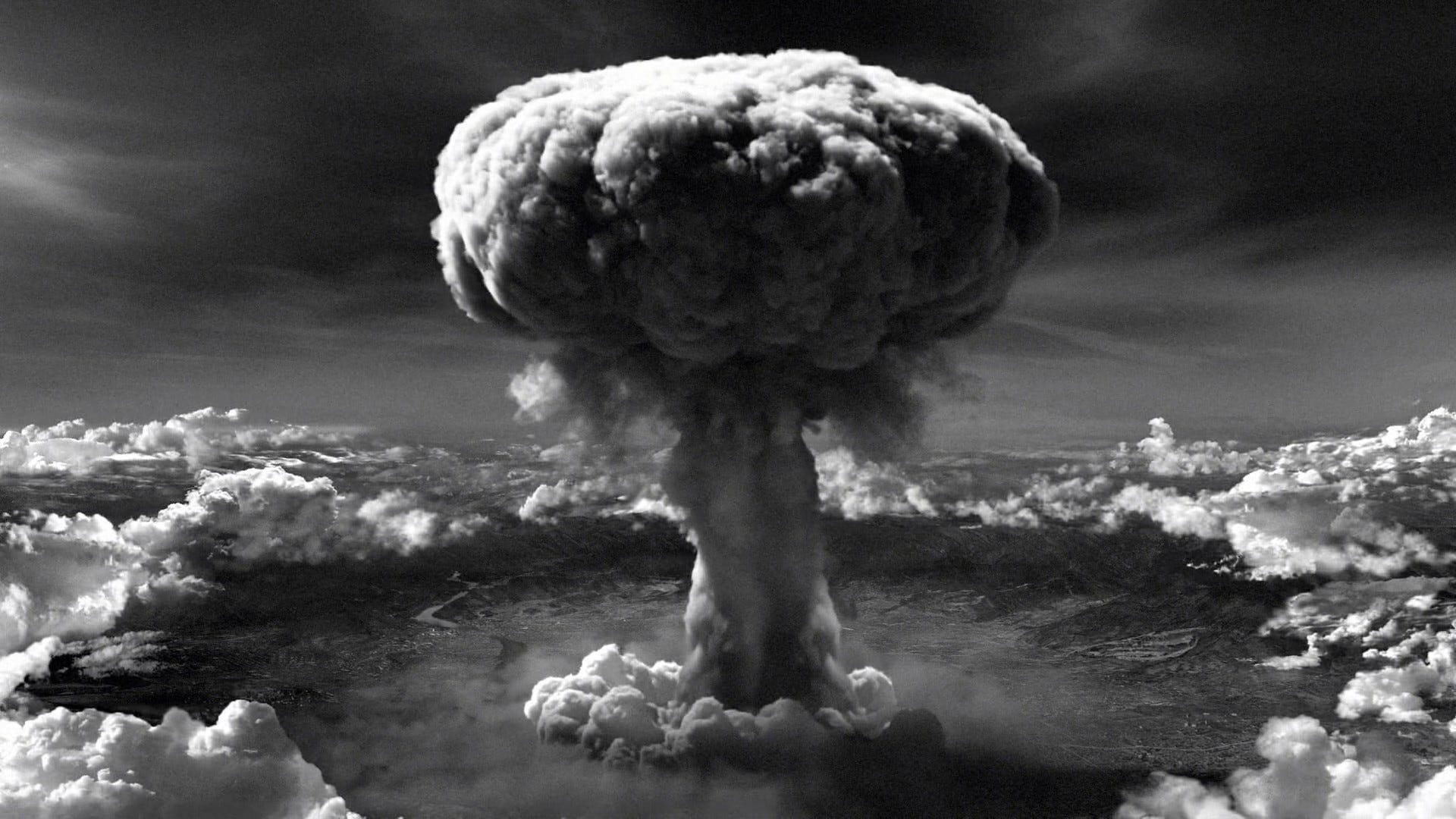
I belong to the first generation raised in the aftermath of atomic revelation. The shadows cast by Hiroshima and Nagasaki stretched across my childhood, defining the contours of possibility and impossibility that would shape decades of human consciousness. In my youth, I walked from London to Aldermaston, joining voices raised against the bomb. Six decades have passed, yet the existential paradox remains unresolved, now amplified by complexities our younger selves could scarcely imagine.
We inhabit a world where the capacity for total self-annihilation has become institutionalised, normalised, and embedded within the deepest structures of international relations. This represents perhaps the most profound cognitive dissonance in human history: the simultaneous pursuit of civilisation's advancement and the meticulous maintenance of its potential termination. The question is no longer whether these weapons might be used but rather which confluence of circumstances will trigger their deployment.
The architecture of nuclear abolition has been steadily constructed through decades of legal scholarship, diplomatic innovation, and moral reasoning. Treaties banning landmines, cluster munitions, and chemical weapons demonstrate humanity's capacity to recognise certain technologies as fundamentally incompatible with civilised conduct. Yet nuclear weapons persist in a category of their own, shielded by strategic doctrines that have calcified into articles of faith rather than instruments of analysis.
Nuclear deterrence theory emerged from the specific conditions of bipolar superpower competition, where rational actors operating within clearly defined parameters could theoretically maintain stability through mutual vulnerability. Today's reality bears little resemblance to those foundational assumptions. Multiple nuclear actors, asymmetric threats, technological acceleration, and the erosion of institutional frameworks have transformed deterrence from a strategic calculation into a form of collective delusion.
The phenomenon of extended deterrence reveals the true scope of nuclear entanglement. Nations that have renounced nuclear weapons domestically nevertheless structure their security around the atomic arsenals of distant allies. This arrangement creates what might be called "nuclear symbiosis" – a relationship where non-nuclear states become complicit in targeting decisions they cannot control while simultaneously becoming targets themselves. The ethical contradictions embedded within such arrangements expose the fundamental inadequacy of current security paradigms.
International law operates through a curious inversion when applied to nuclear matters. Those possessing the greatest destructive capacity claim the authority to prevent others from acquiring similar capabilities, creating a hierarchy of sovereign rights based purely on the timing of weapons acquisition. The Nuclear Non-Proliferation Treaty represents both humanity's recognition of nuclear danger and its unwillingness to address that danger comprehensively. Article VI's disarmament obligations remain unfulfilled not through oversight but through deliberate policy choices that prioritise short-term strategic advantage over long-term survival.
Verification regimes function as fragile membranes between proliferation and restraint. These systems depend upon technical expertise, political cooperation, and shared commitment to transparency – precisely the elements that deteriorate during periods of international tension. The distinction between peaceful nuclear technology and weapons development, while clear in principle, becomes increasingly problematic as dual-use technologies proliferate and as inspection access becomes subject to political negotiation rather than technical necessity.
Contemporary military doctrine has begun incorporating scenarios that deliberately target nuclear infrastructure, representing a qualitative escalation in the normalisation of radiological warfare. Such thinking reflects a fundamental misunderstanding of nuclear technology's dual nature: facilities designed for peaceful purposes become weapons of mass destruction when attacked, regardless of their original intent. The precedent established by legitimising such targets extends far beyond any immediate tactical advantage.
The medical and environmental consequences of nuclear weapons use remain largely absent from public consciousness, relegated to abstract statistical models rather than visceral human understanding. The integration of artificial intelligence into nuclear command structures introduces variables that exceed human comprehension, creating the possibility of machine-mediated extinction occurring faster than human intervention can prevent. We are constructing systems capable of ending civilisation before we fully understand how they operate.
Political leadership on nuclear matters requires institutional memory, strategic consistency, and temporal perspectives that extend beyond electoral cycles. The increasing volatility of democratic institutions worldwide creates conditions where nuclear policy becomes subject to ideological shifts rather than evidence-based analysis. The gap between public rhetoric supporting disarmament and actual policy decisions reveals a form of institutional schizophrenia that undermines both public trust and international cooperation.
Those committed to nuclear abolition navigate a psychological landscape shaped by the knowledge that failure means species extinction. This burden creates unique forms of professional and personal stress, as individuals dedicate their lives to preventing outcomes too catastrophic for normal human processing. The magnitude of potential consequences simultaneously provides motivation and threatens to overwhelm rational deliberation.
Nuclear policy reflects broader choices about the kind of civilisation we aspire to create. Resources devoted to weapons capable of destroying human society represent opportunity costs measured not merely in economic terms but in terms of alternative futures. The environmental monitoring, early warning systems, and crisis management capabilities developed for nuclear security could be redirected toward climate adaptation, pandemic preparedness, or asteroid defence – threats that require similar technological sophistication but offer constructive rather than destructive applications.
The Doomsday Clock functions as both a measurement tool and a metaphor, translating complex geopolitical dynamics into an accessible temporal framework. Its movement toward midnight reflects not only specific policy failures but the broader degradation of the institutional architecture that has prevented nuclear war since 1945. The factors influencing the clock's position include technical vulnerabilities, diplomatic breakdowns, and the erosion of shared norms that once provided guardrails against catastrophic escalation.
Mathematical probability suggests that continued reliance on nuclear weapons makes their eventual use inevitable. Complex systems fail; human beings make errors; technology malfunctions; communication breaks down. The number of near-miss incidents documented during the nuclear age provides sobering evidence of how frequently we approach the threshold of accidental annihilation. Each additional nuclear-armed state, each new weapons system, and each automated decision-making process increases the probability that statistical inevitability will manifest as historical reality.
The transformation required extends beyond traditional security thinking to encompass fundamental questions about sovereignty, survival, and species continuity. Nuclear weapons cannot provide genuine security because their use would likely destroy the civilisation they purport to protect. Alternative security frameworks must be constructed through unprecedented international cooperation, shared institutional development, and collective recognition that current approaches lead inexorably toward catastrophe.
The choice confronting humanity possesses elegant simplicity despite its implementation complexity. We can continue organising international relations around the threat of mutual annihilation, or we can develop security architectures that do not require species suicide as their ultimate enforcement mechanism. The latter path demands intellectual courage, political innovation, and sustained commitment across multiple generations. Yet it represents the only viable strategy for ensuring that human civilisation survives its own technological capabilities.