From time to time, a phrase surfaces that captures a certain anxiety in the collective psyche. “Pax Judaica” is one such phrase now bubbling up in conspiratorial corners of the internet. It is framed as a coming global order in which Jews, or Israel more specifically, preside over a digital gulag – an omniscient AI surveillance architecture, run from Jerusalem, that subordinates nation states, controls access to basic services, and keeps the world’s population on a tight algorithmic leash.
As an author, my instinct is to listen to such stories carefully. Conspiracy theories, however deranged their content, usually latch onto a fragment of reality. They are symptoms, not accidents. They reveal the myths, fears, and unspoken assumptions animating our world-system. But they also do something more corrosive: they divert attention away from the underlying civilisation‑logic we urgently need to expose and outgrow.
The “Pax Judaica” narrative does both. It exploits real developments – Israel’s aggressive deployment of AI and surveillance technology, especially in Gaza and the West Bank; the steady normalisation of digital tracking and control across the planet; the hollowing out of democratic oversight in favour of automated decision-making – and shamelessly folds them back into one of the oldest and most poisonous stories humans have told about themselves: that a secret cabal of Jews is orchestrating world events behind the scenes.
I want to pull these threads apart. Not to provide comfort. Not to defend any state. But to expose how an archaic antisemitic fiction is being dressed up in the language of AI and digital IDs, and how that fiction is getting in the way of clear seeing at a time when clarity is in short supply.
The storyline is relatively consistent, even when the rhetoric varies. It goes something like this.
The era of US-led “Pax Americana” is ending. America is being weakened from within – socially, economically, morally. While that empire fractures, a new centre of gravity emerges in Israel. From Jerusalem, so the claim runs, a centralised world authority will govern through an integrated AI surveillance grid. Every communication, financial transaction, movement, and biometric trace is hoovered into this system. Algorithms assign people risk scores, compliance ratings, and social permissions. Access to banking, travel, health care, work – in some versions even access to food – becomes contingent on digital obedience to this hidden authority.
In this fiction, Palestinians are portrayed as experimental subjects: the test case for a planetary control system. The intensification of surveillance and targeting in Gaza and the West Bank is taken as proof of a prototype – the beta version of a digital prison to be rolled out globally once perfected. Where prisons used to have walls and bars, the new detention centre is a mesh of code, devices, and bureaucratic dependencies. All of this, we are told, is “Pax Judaica”.
There is just enough that is recognisable in this outline to feel disturbingly plausible. And that is exactly the problem. Let’s start with what is actually happening on the ground, in Israel-Palestine and elsewhere, that gives these fantasies their charge.
Firstly, Israel’s integration of advanced technologies into its security and military apparatus is well documented by human rights organisations, investigative journalists, and even by participants in its own tech sector. AI-assisted target selection in Gaza, large-scale data mining, facial recognition systems in Hebron and East Jerusalem, integrated command-and-control platforms, and highly automated drone operations are not science fiction. They are real systems, built by real companies, deployed in real conflicts.
Secondly, Palestinians have been subjected for decades to forms of control, surveillance, and collective punishment that would be intolerable to most populations. Checkpoints, population registries, permit systems, settler violence, confiscation of land, and severe restrictions on movement and trade are not rumours but lived experiences. The addition of machine learning and ubiquitous sensors into this infrastructure does nothing to soften its impact. It hardens it.
Thirdly, the trend towards what might be called “digital enclosure” is not confined to one geography or one people. States and corporations across the world are building systems that harvest behavioural data, assign risk scores, and shape access to resources. Biometric IDs in India, social credit experiments in China, expanded surveillance powers in so-called liberal democracies, the commodification of personal data by global technology firms, and the growing interest of central banks in programmable digital currencies all point to a direction of travel in which the ability to live outside digital networks, or to escape their scrutiny, becomes increasingly fragile.
None of this is speculative. It’s happening in plain sight. There’s no doubt that a digitally mediated control society is possible. Key to any truthful understanding is how far we have already ventured into that territory, and whether we have the political imagination, institutional capabilities, and ethical courage to alter course.
What is not supported by evidence, however, is the leap from these developments to a coherent, Jewish-led planetary regime – a “Pax Judaica” – run from Jerusalem. That is where serious analysis ends and recycled mythology begins.
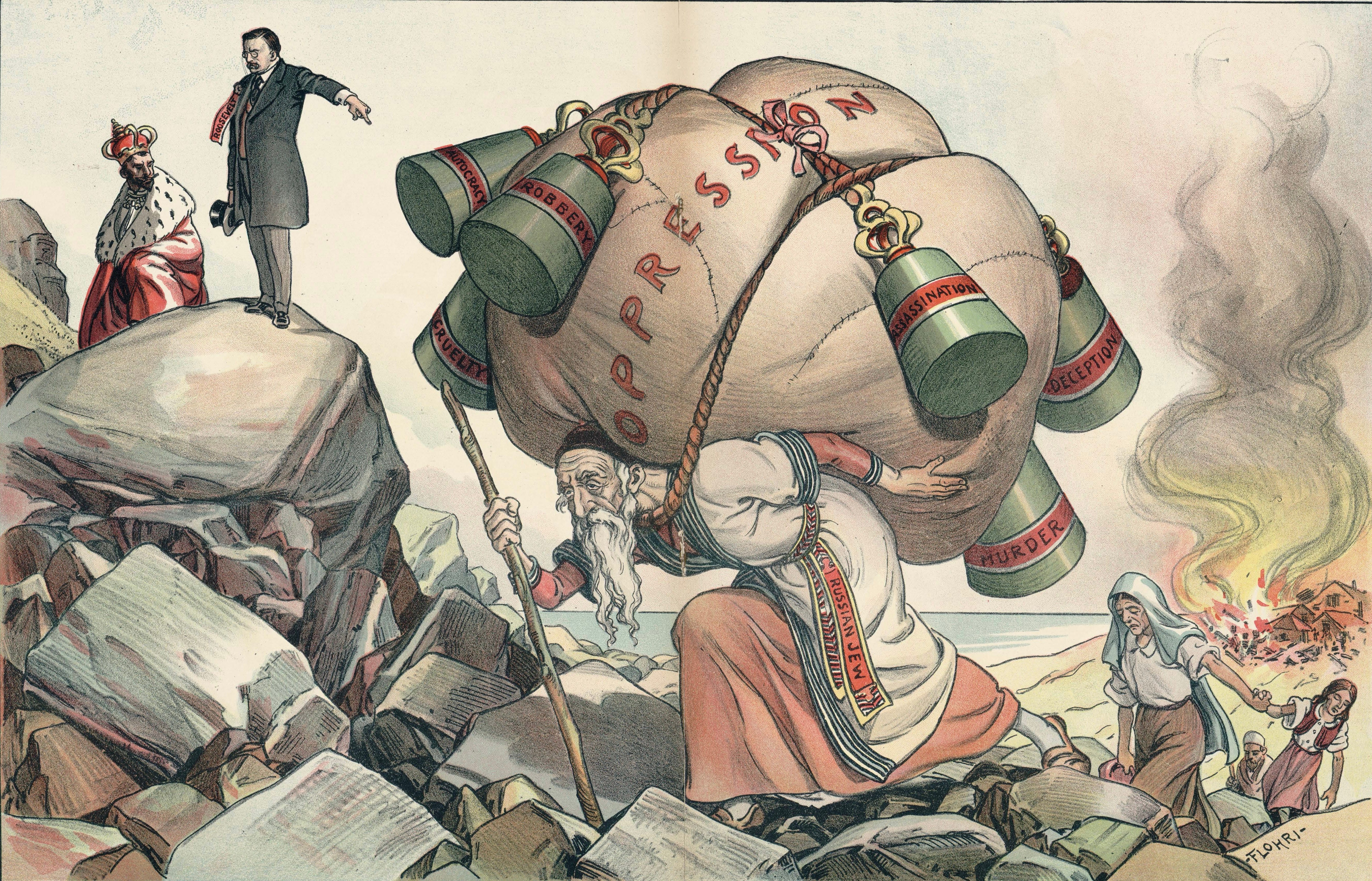
If we strip away the jargon about AI, digital IDs, and global grids, the “Pax Judaica” tale looks suspiciously familiar. It reproduces, almost line for line, the architecture of earlier antisemitic fantasies: the forged “Protocols” purporting to reveal a Jewish plan for world domination; the notion of a hidden “Zionist occupation government” directing national policies from behind the scenes; the unshakeable belief that Jewish people, as a collective, form an omnipotent cabal bent on controlling humanity.
What changes over time is not the skeleton of this story, but its costume. Where an older generation spoke of bankers, newspapers, and revolutionary movements supposedly infiltrated by Jews, the current iteration swaps in AI systems, digital currencies, and global surveillance platforms. The villain remains structurally identical. Only the props have been updated.
There are several characteristics that mark this as an inheritance from that darker lineage.
One is the insistence on a single hidden centre of control. The contemporary world is anarchic, fractured, and multipolar. Power is distributed across states, corporations, military alliances, intelligence agencies, religious movements, criminal networks, and transnational capital. These forces compete, collide, and occasionally cooperate, but they don’t converge neatly into a unified command. To reduce this messy system to one nerve centre in Jerusalem is to replace complexity with a comforting fable: someone is in charge, and we know who they are.
A second is the ethnic and religious coding. By labelling this supposed world order “Judaica”, the narrative implies that there is something inherently Jewish about total surveillance and algorithmic despotism. This conflates the actions of specific state institutions, companies, and leaders with an entire people – including those Jews who oppose Israeli policy, who campaign for Palestinian rights, or who themselves are on the receiving end of discrimination and violence.
A third is the portrayal of Palestinians not simply as victims of occupation and war – which is already intolerable – but as experimental subjects in a rehearsal for global enslavement. This formulation does something subtle and insidious. It turns a concrete, documentable injustice into a stage for a grandiose morality play in which Jews, once again, embody an eternal malevolence. Palestinian suffering is absorbed into an older myth whose protagonist is not the Palestinian child under rubble, but the imagined Jewish mastermind pulling strings in the shadows.
Do these patterns emerge by accident? Or are they a signal that older resentments, never fully confronted, are mutating and reappearing under new guises?
Words and images do matter. They shape what we see and what we are prepared to tolerate. When a story like “Pax Judaica” gains circulation, even in marginal spaces, it does more than entertain the already converted. It creates an interpretive lens through which ordinary people – confused, angry, searching for explanation amid cascading crises – start to read the world.
Jewish communities, already subject to centuries of scapegoating and persecution, become once more the repository for inchoate rage. Vandalism of synagogues, harassment of Jewish individuals online and in workplaces, conspiracy-laden graffiti on public buildings are the consequences. They follow, with grim predictability, when a population is repeatedly invited to link its distress to an imagined Jewish “project”.
In parallel, antisemitism is increasingly laundered through the language of “just asking questions” about Israel, Zionism, or global finance. Genuine critique of Israeli policy, which is both necessary and widespread, gets entangled with insinuations that behind Israeli actions lies a timeless Jewish urge for domination. People who would never dream of joining an explicitly fascist movement find themselves sharing material that, dressed in the arcana of AI and geopolitics, reanimates ideas once propagated in the pamphlets and salons of Europe’s far right.
This is not an argument for shielding any state or ideology from scrutiny. But it is a call to disentangle the legitimate from the lethal. One can be fiercely critical of Israel’s siege of Gaza, its settlement policies, and its militarised surveillance exports without lapsing into talk of a Jewishly branded planetary gulag. Indeed, avoiding that slide is essential if criticism is to retain its moral and analytical integrity.
There’s another casualty of the “Pax Judaica” obsession, less visible but no less serious: it sabotages our capacity to understand and intervene in the systems that are actually degrading human freedom and dignity. When every development in digital governance is interpreted as another brick in a specifically “Jewish” prison, several things happen at once:
· Responsibility is narrowed to a single alleged architect, and with that narrowing comes a strange absolution of everyone else. Security agencies in Asia, technology giants headquartered in North America, surveillance vendors in Europe, authoritarian regimes in Africa or Latin America – all of these actors, each building their own instruments of control, recede into the background. The complex circuitry of industrial economism, in which surveillance, data extraction, and militarisation are embedded, disappears behind a caricature of Jewish cunning.
· The sheer intricacy of the digital systems now enveloping daily life is flattened into a morality tale. The political economy of data – who collects it, who processes it, who profits from it, and how it is weaponised – cannot be grasped if we insist on reading it as the emanation of a single, ethnically marked will to power. We end up shouting at phantoms while the actual code, the legal frameworks, the contractual arrangements, and the institutional cultures that give this machinery life continue largely unexamined.
· Movements that challenge surveillance capitalism, authoritarian populism, or militarised AI find themselves contaminated by association. Legislators and judges can dismiss concerns about digital IDs, algorithmic bias, or centralised databases as paranoia, because they so often encounter them wrapped in racist insinuations about Jews. The result is that serious questions about technological governance are delegitimised, precisely when they need to be amplified.
In other words, the “Pax Judaica” narrative is not just morally repugnant. It’s strategically self-defeating. It hands an enormous gift to those who wish to expand digital control while discrediting anyone who objects.
So how might we expose and resist the creeping architecture of digital coercion without falling into the gravitational pull of recycled hatreds?
One very positive shift would be to abandon the habit of treating nations, ethnicities, or religions as metaphysical entities that possess fixed essences and unified wills. States act through institutions, laws, budgets, and alliances. Corporations act through boards, investors, executives, and contracts. Technologies are shaped by design decisions, training data, and use cases. This is where agency resides, and where accountability must be sought.
If we’re concerned about how AI is used in warfare, then the focus must fall on the military doctrines that sanction its deployment, the procurement processes that channel public funds into private weapons platforms, and the absence of independent oversight of targeting decisions that can incinerate a family in their home. That analysis will implicate Israel, certainly. It will also implicate other militaries and their suppliers, including those who oppose Israel at the level of rhetoric while eagerly buying and adapting its technologies.
If we are disturbed by the encroachment of digital IDs into every corner of life, we need to trace the incentives that drive governments and corporations towards such systems: efficiency gains, revenue protection, border control, rationing of welfare, counterterrorism, and social management. We must ask whether these motives are confined to any single culture or creed, or whether they are an almost inevitable expression of an industrial civilisation that has learned to treat humans as units of productivity and risk.
Likewise, if we are genuinely appalled by the erosion of privacy, we might explore why so many of us have been seduced into trading intimate data for convenience, entertainment, and status. We might examine the mental habits of a world that equates visibility with worth, and that encourages us to act as unpaid informants on ourselves. At no point in such an inquiry do we need to posit a hidden council in Jerusalem – or Beijing, Washington, Riyadh, or anywhere else for that matter. The system is not steered by a single hand. It is more insidious than that. It runs on largely unquestioned assumptions about growth, security, progress, and human nature that have colonised imaginations from Manhattan to Manila.
This doesn’t mean there are no conspiracies, in the ordinary sense of secret deals, cover-ups, and abuses of power. Of course there are. It does mean that our imaginations have been trained, over centuries, to personalise structural problems by attaching them to demonised groups – Jews, migrants, communists, capitalists, take your pick – rather than interrogating the underlying patterns that keep regenerating crisis in new guises.
There’s a final, uncomfortable point that must be faced. The temptation to elevate Palestinians into sacrificial prototypes in some grand totalising narrative about Jewish power is, in its own way, a refusal to look at them as they are: a people struggling, in specific historical circumstances, against dispossession, occupation, and violence. Their story is already harrowing enough. It doesn’t need to be embellished with talk of world plots. Indeed, to insist that the primary significance of Gaza or Hebron lies in their role as test sites for humanity’s future chains is to reduce Palestinians to bit players in a drama whose central character is the fantasised Jewish conspirator. Their grief becomes raw material for someone else’s obsession.
If we’re serious about solidarity, then the first discipline is to stay grounded in verifiable facts: the destruction of homes, the killing and maiming of civilians, the throttling of economies, the daily indignities of checkpoints and permits, the systematic inequalities built into legal and administrative structures. These realities can– and have – been documented by journalists, human rights monitors, scholars, and eyewitnesses. They can be analysed in terms of power, law, and history.
Only then can we begin to ask the broader questions about how a civilisation premised on extraction, competition, and control manages to reproduce such zones of abandonment and experimentation in many different theatres, from Palestine to other, less visible, frontiers.
We have conjured a world where technologies of unprecedented reach are being fused with an economic doctrine that treats life as an expendable input to production, and with political arrangements that are increasingly brittle. In such a state of affairs, fantasies of hidden masters are both seductive and dangerous. They promise clarity. They offer a villain. They reassure us that if only “they” could be unmasked and removed, the system would correct itself.
But what if the world-system itself is the problem? What if the worldview of industrial economism, with its relentless drive to measure, extract, and dominate, is now turning upon the species who midwifed it into existence? What if the obsession with control that once justified plantations, empires, and factories is now being coded into algorithms and chips, without much, if any, conscious malevolence, by people who believe they are simply optimising processes, protecting citizens, or delivering shareholder value?
In that light, the “Pax Judaica” story looks less like a glimpse behind the curtain and more like a diversion. It recycles a medieval script in a digital costume, encourages old hatreds, and blinds us to the very real, very contemporary ways in which our civilisation is programming its own future.
As my new book, Teaching Silicon How to Feel, reveals, we have no shortage of reasons to interrogate AI and to resist total surveillance. Nor do we need more reasons in order to condemn policies that crush the lives of Palestinians. But we don’t need to resurrect ancient fantasies about Jews to do so. On the contrary, if we are to have any hope of reshaping the conditions under which we live, we will need to abandon those fantasies and cultivate a more demanding form of attention – one that tracks systems rather than scapegoats, and that refuses to outsource its thinking to the comforting banalities of blame.