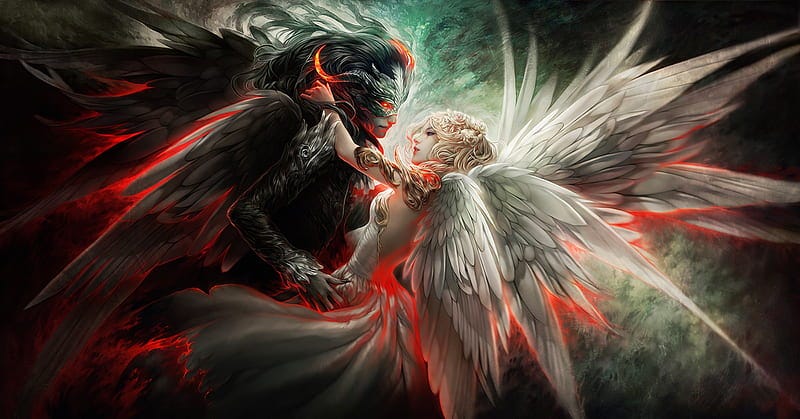
How can it be that humans are capable of being such monsters and such angels? The question might sound vaguely theological, but it is, for me, investigative. It points unerringly to a civilisation that has become expert in evasion. We excuse atrocities as aberrations, smooth over courage as “human interest”, and proceed as if the polarity between cruelty and care is an unfortunate glitch rather than a central and abiding feature of our species.
I’m not convinced that it’s honest. Nor do I find it particularly helpful. If we intend to navigate the next half century without tearing each other apart – physically, psychologically, and ecologically – we must look directly at this double capacity without flinching, and without domesticated narratives reassuring us we are “basically good” or “incurably bad”. Both stories serve the existing order. Neither helps us to redesign it.
However much we might prefer to think otherwise, human beings are not fixed entities. We are apertures – cracks through which our belief systems pour themselves into enthusiastic action. Our prevailing worldview is the invisible operating system of modern society – the clearest expression of our civilisation’s inclinations – and the resulting industrial world-system is simply that operating system rendered as institutions, procedures, rules, and machinery. This worldview shapes what we are able to perceive as real, what we are instructed to value, what we are licensed to ignore, what we are willing to destroy and what we will sacrifice ourselves to protect. Our individual mindsets then provide the interpretive filters by which we make sense of our station within these structures.
Once that is understood, the monstrous and the angelic stop being mysterious anomalies in the human character. They become part of the human condition, predictable outcomes of the frameworks in which we are embedded. A drone pilot can kiss his children goodnight and go back to work. A nurse in an underfunded hospital can spend an entire life treating people with tenderness and skill. Both are participating in a world-system that channels its energy in radically different ways, even if their private motives are not so different.
So perhaps the question is less “Why are humans so contradictory?” and more “Which civilisational stories, institutions and technologies make it possible, even respectable, for ordinary people to behave monstrously, and in which settings is it possible, even expected, for ordinary people to behave with extraordinary grace?”
We are conditioned to personalise evil: the dictator, the terrorist, the paedophile, the corrupt official. These figures are real and damaging. But focusing on them permits a comforting fiction – that if only we removed the “bad apples”, the system itself would be fine. History shows otherwise. The worst harms are rarely the work of isolated evil. They’re enabled by perfectly ordinary people acting within perfectly legal architectures, upheld by perfectly conventional beliefs about progress, security, faith, wealth and national destiny. Hannah Arendt tried to name this as a certain “banality” in the face of evil, but the phrase has been misread as a comment on personality rather than on structure.
In most societies, the individual who commits acts we label monstrous does so with at least one validating meme echoing inside their mind: “I am just following orders”; “I am protecting my people”; “I am doing what success or salvation demands.” These memes are not invented by the individual. They are supplied by culture, policy frameworks, institutional imperatives and media. They are rehearsed in classrooms, pulpits, war rooms and social media feeds. They are stabilised by incentives and punishments.
If this line of reasoning holds, monstrosity is not a deviation from “normalcy”. It’s the consistent by-product of an explicit worldview enacted at scale. The more this worldview treats life as an expendable input toward a larger goal – economic growth, racial purity, imperial control, ideological certainty – the more easy it is to rationalise monstrous acts as necessary or even virtuous. In that sense, the monster is not “out there” in a handful of defective minds. It’s coded into countless taken-for-granted assumptions that show up in policies and professional norms. When those norms are not interrogated, the monstrous can proceed quietly under the banner of “business as usual”.
By the same token, the angel is often hiding in plain sight, unremarked, unremarkable and frequently unpaid. Every culture can point to people who refuse to conform to destructive or toxic scripts. They question orders that others unthinkingly obey. They give shelter to those deemed superfluous. They give more than they take, even when nobody is watching. They treat strangers as kin.
What is striking is how rarely such people are products of any formal system designed to produce them. They might be shaped by family upbringing, spiritual practice, intensely felt experiences of loss or love, or glimpses of some deeper pattern of interconnectedness. We know they are often animated by some intuition that the separation taught by the prevalent worldview – between self and other, human and nature, friend and enemy – is in some sense false, or at least dangerously incomplete.
If that’s the case, what we call “angelic” may simply be what emerges when this intuition becomes embodied. The person recognises the other – human, animal, forest, river – as part of a larger field of life in which their own identity is entangled. Caring then ceases to be charity. It is self-extension and sacred. The boundaries of “me” shift, even if only for a moment. Some may regard that as mawkish. But it can be ferociously practical. People taking grave risks to rescue migrants at sea, for example, are often clear-eyed about their situation. Yet they still act from a sense that allowing another person to drown is equivalent to consenting to a form of slow suicide of the human spirit.
The incident at Bondi on 14th December 2025, in which a Syrian-born Australian intervened physically to disarm a gunman, preventing what police and witnesses widely agree could have become a far greater tragedy, offers more than a fleeting headline about courage. It functions as a fracture in several of our most cherished civilisational stories: who we imagine as a threat, who we recognise as a protector, what we expect of “ordinary” people, and how we think change actually occurs.
Here is a man who, by background alone, might easily have been cast in some media narratives as suspect – a Muslim and a migrant from a country associated in many minds with conflict and extremism. Yet in an instant, he stepped into a role that many citizens assume belongs exclusively to uniformed professionals: placing his own body between lethal force and innocent strangers. Eyewitness accounts and reports from authorities converge on the view that his intervention disrupted the two attackers – father and son – long enough to allow others to escape, and almost certainly saved lives.
This kind of event is quickly absorbed into the familiar script of the lone hero, celebrated for a news cycle and then filed away as an inspiring anecdote. But if we allow it to be digested only in that way, we miss its deeper significance. His act illuminates the multiple levels at which our civilisation is both breaking down yet revealing latent possibilities for a different way of being together. So another question arises: if this capacity is latent in so many, why do our mainstream institutions not treat the cultivation of such expanded identity as their core purpose?
Modern industrial civilisation – in its capitalist, state-socialist and theocratic guises – is underwritten by a shared set of propositions. Among them: that humans are separate from and superior to nature; that fierce competition in every sphere is the primary engine of advancement; that wealth accumulation is the measure of success; that control over others is an appropriate route to security; that complexity can be managed by more data, more surveillance, more force. Through that lens, the world isn’t a living community; its simply a warehouse of resources and threats. Other people become competitors, customers, labour, foes, collateral damage, or “human capital”. Rivers become water rights. Forests become timber. Cultures become markets. Even the self becomes a brand, a concept which I find particularly repugnant.
From within such a framework, cruelty is remarkably easy to rationalise. If a forest is not a living community but an asset, its destruction is progress. If a community is labelled “illegal”, their dispossession becomes law enforcement. If a child worker is an “externality” in a supply chain, their exploitation becomes efficiency. Each act may be accompanied by personal unease, but the overriding logic of the system is crystal clear. Those who go along with that are rewarded. Those who refuse are sanctioned, marginalised, occasionally eliminated.
If three or more independent strands of research linking extractive economic models, militarised states and escalating ecological breakdown are trustworthy – and current scholarship suggests they are – then monstrous outcomes are not at all accidental. They are structurally ingrained.
The difficulty is that this logic has become feral at scale. It has seeped into schooling, where learning is treated as an individual competitive achievement rather than shared inquiry. It has colonised mainstream religion, where doctrines are used to justify hierarchy and exclusion rather than deepening compassion. It has shaped digital platforms, which amplify outrage and fear because they are more profitable than patience and insight. In this sense, to ask why humans are capable of becoming monsters is to ask why we continue to design a world-system that rewards disconnection and penalises compassion.
Mindsets are the switchgear of the world-system – the way a civilisation’s overarching story is translated into moment-by-moment choices. They determine which aspects of our capacity come online in a given context. The same individual can be gentle at home and ruthless at work, devout in a shrine and indifferent in a board meeting, generous in private and predatory in a marketplace. I should point out that this isn’t necessarily hypocrisy. Rather, it is compartmentalisation under pressure from incompatible expectations.
For example, organisations routinely ask people to bracket off moral intuitions in favour of “professionalism” or “objectivity”. The message is clear: feelings of care, guilt or unity are to be managed, not followed. What matters is compliance with targets, rankings, procedures and policies. In these settings, the “monster” is not a sadist. It is the obedient functionary. Here, the paradox becomes acute. To preserve one’s job, one’s status, one’s ability to feed one’s family, the individual is incentivised to switch off the very faculties that make them fully human. Over time this schizophrenia can lead to exhaustion, cynicism, depression or aggression. People then seek meaning in more tightly bounded identities – ethnic, religious, nationalistic – which can, in certain circumstances, sanction violence in the name of belonging.
Mindsets, however, are malleable. The neuroplasticity of the brain means they can be rewired. Practices of reflective inquiry, cross-cultural dialogue, collaborative problem solving and experiential learning in natural settings have all been associated with shifts towards more inclusive, relational ways of thinking. When people experience themselves as part of a meshwork rather than as isolated units, their propensity for cruelty seems to diminish, while their willingness to act for the greater good increases.
If that correlation is sound, the implications are unambiguous: any society that constantly triggers humilation, apprehension, fear, scarcity, and competition is manufacturing monsters in slow motion. Any society that aims to normalise curiosity, care, dignity and reciprocity is nurturing angels in embryo. It’s also true there are some institutional cultures – in disaster response, in certain strands of public health such as paramedical, childcare, and geriatric, in some grassroots movements – deliberately cultivate selfless service. The tragedy is that these remain peripheral to the dominant architecture in our society rather than defining it.
Although digital technologies have not created this duality, they have certainly intensified it. They function as a planetary mirror, reflecting and amplifying both our best and worst impulses. On one hand, social media has enabled mass harassment, disinformation, digital lynch mobs and live-streamed atrocities. Algorithms enable targeted manipulation, predictive policing, surveillance states and the automation of lethal force. Emerging tools in biotechnology and next generation artificial intelligence carry the potential for unprecedented forms of control over bodies, minds and ecologies. On the other hand, the same technological infrastructures have been used to mobilise rapid disaster relief, organise flash mobs of non-violent resistance, expose abuses of power, and connect people across frontiers who would have remained strangers. Most beneficially, online communities can offer life-saving support for those otherwise isolated by stigma, geography or poverty.
Technology is not neutral. It’s configured by the tacit worldview of its designers, investors and regulators. At present, that worldview is still largely anchored in extraction, domination and scale for its own sake. Business models reward addiction, polarisation and surveillance. Under such conditions, the digital mirror will tilt towards monstrosity.
But if the underlying assumptions were different – if dignity, interdependence and ecological regeneration were treated as design constraints rather than public relations – the same technical capacities could reinforce the angelic. They could help coordinate global cooperation, reveal long-term consequences of present actions, and make visible the quiet work of care currently drowned out by noise.
So we’re obliged to pose a crucial question: who is allowed to shape the tools that shape us? And on whose behalf? If human beings comprise both monster and angel, and if our worldview and resulting world-system determine which aspect dominates in practice, then the strategic challenge is not to “fix” human nature. It’s to reshape the conditions under which our better angels become normal rather than exceptional.
Perhaps this seems like idealistic speculation. But there are already tangible experiments, distributed across cultures, that hint at different organising principles: communities managing common resources sustainably over generations; indigenous governance models based on kinship with land and non-human life; educational approaches grounded in cooperation and inquiry rather than rote and ranking; restorative justice initiatives that seek healing instead of retribution; cooperative economic forms that distribute power and surplus more equitably. None of these are perfect. They are contested, fragile, frequently assailed by larger systems that feel threatened by their existence. But they demonstrate that alternative worldviews can be translated into functioning world-systems, and that when they are, people behave very differently.
If multiple disciplines – from developmental psychology to systems ecology – are accurately mapping how cooperation and empathy emerge and stabilise in groups, then we already possess much of the knowledge needed to design for the angelic. What we lack is the political imagination to prioritise such design over short-term gain and entrenched power.
None of this eliminates the individual moral struggle. Even in transformed systems, each person will still face choices where fear and self-interest collide with empathy and courage. The monster and the angel are not abstract archetypes. They are live options in every encounter, every decision, every design brief, every vote, every silence. To pretend otherwise is to infantilise ourselves.
Perhaps the most honest stance is to acknowledge that we are all, at different moments, both perpetrators and healers, both beneficiaries and victims of a machinery we did not choose yet continue to fuel. From that vantage point, guilt becomes less useful than responsibility. We cannot rewind history, but we can interrupt its current flow and future trajectories.
The most insidious element secreted in the industrial worldview is a belief that evil is always elsewhere – in other nations, other religions, other classes, other political factions, other technologies, other generations. That story lets us off the hook. It allows us to enjoy the efficiencies and conveniences delivered by monstrous systems while applauding angelic symbols as entertainment. We can do better than that, but only if we’re prepared to interrogate our own cherished convictions, to notice where they legitimate harm, and to cultivate mindsets that widen our circle of concern beyond habit and tribe.
Every time someone steps between violence and the vulnerable at personal risk – especially when they come from a group we have lazily coded as treacherous – civilisation is given a small preview of a different operating system. Humans are capable of being monsters and angels because we are meaning-making creatures living inside stories that continuously tell us who we are, what is possible, and what is best avoided. Change the stories, and the balance between monstrosity and grace shifts. Change the systems that enforce those stories, and entire generations may discover that what used to be heroic is now simply how things are done.
Whether we are willing to undertake that kind of civilisational redesign – and whether we can do so at the speed required by converging global crises – is yet to be seen. But continuing to pretend that the problem lies in a few isolated “bad eggs” while leaving the underlying operating system intact is no longer intellectually or ethically defensible.