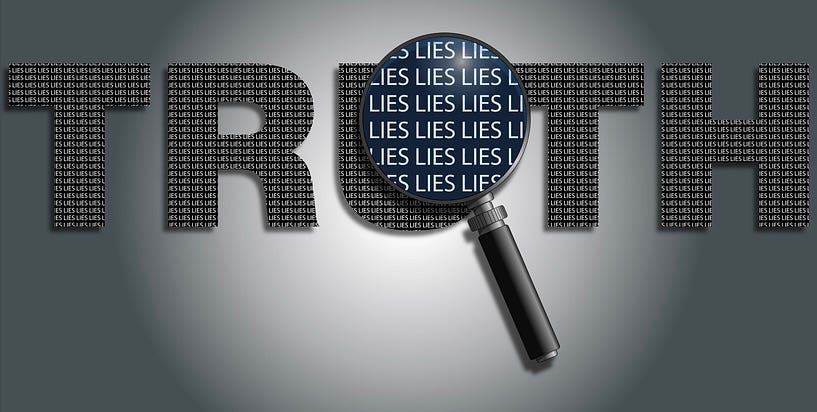
In an era characterized by impulsive advances in technology, and an overwhelming influx of information, our ability to find the truth, the whole truth, and nothing but the truth (not only in the courtroom but in life generally) is increasingly compromised.
The phrase the truth is out there has taken on a new meaning, one that confirms not only the existence of truth but also the challenges inherent in distinguishing it from a myriad of fictions populating our daily lives. The difficulty of separating facts from fictions is not merely a reflection of contemporary society; it’s becoming a crisis that affects personal beliefs, societal cohesion, and the very foundation of democratic discourse – as was so clearly on display during the November 2024 American election.
This essay explores the nature of truth, the factors contributing to the blurring of lines between fact and fiction, and the implications for individuals and society as a whole at a time when critical thinking is rare.
At its core, truth is comprehended in different forms - objective, subjective, and relative. Objective truth refers to facts that remain consistent regardless of individual principles or perceptions. For example, the statement water boils at 100 degrees Celsius at sea level is an objective truth. It can be observed and is rooted in scientific evidence. Subjective truth, on the other hand, is shaped by personal experiences and fleeting feelings, making it inherently fragile - open to doubt and differences of opinion. An individual's experience of joy or pain, for instance, is “true” for them but may not resonate universally. Relative truth encompasses the conception that truth can vary, sometimes considerably so, based on cultural, social, or situational contexts. What is considered true in one culture may not hold the same weight in another.
There is also a fourth category, often ignored, arising from ambient intelligence. These are the widespread theories floating around that are assumed to be authentic due to their apparent validity, the difficulty of contradicting them, or the fact they are repeated so often and with so much conviction, that it’s virtually impossible to refute their legitimacy. An example is the Myers-Briggs Type Indicator [MBTI]. This is a popular assessment tool that categorizes individuals into one of 16 distinct personality types. In spite of damning criticism regarding its scientific validity and reliability, the MBTI continues to be used as a decision tool by executive search firms.
The truth about the truth, then, is that declarations of “facts” are not necessarily indisputable. Nor is “the truth” always the inviolable model it claims to be. Indeed, if that were the case, both state and corporate propaganda would not be as effective as it clearly is. So much depends on context, the dynamics, and the circumstances, specific objectives behind the messaging, and the perceived authority of the voice used to bring credence and respectability to the information in order to convince others of its legitimacy. Trust is also a factor. It is sensible to believe a scientist when they speak about the breakdown of the climate, and your pilot when he advises you to buckle your seatbelt because of turbulence. But the distinct time frames and scale of these two situations suggests that it is prudent not to confuse them.
This complex interplay of factors is further complicated by the proliferation of information in the digital age that ranges across all four domains. Opinions on social media are overwhelmingly subjective, often spiced up with outrage or scorn which befits the business model of the platform. The internet, while democratizing access to knowledge, has also become a breeding ground for incorrect and ambiguous material, in addition to disregarding outright lies.
Misinformation refers to false or misleading information shared innocently and without malicious intent, whereas disinformation is methodically falsified information broadcast with only one goal – and that is to deceive. Social media platforms, news outlets, and most individuals, contribute to this state of affairs, creating a milieu where distinguishing between credible sources conveying objective truths, and dubious claims woven into a pervasive narrative intended to deceive, is increasingly challenging.
The algorithms that power social media platforms often exacerbate this problem. Designed to maximize user engagement, these algorithms prioritize sensational content that elicits strong emotional reactions, regardless of its factual accuracy. As users interact with content that aligns with their pre-existing views—a phenomenon known as confirmation bias—they are often led further down a rabbit hole of half-truths and cant. This creates echo chambers where dissenting views can be marginalized, making it difficult for individuals to encounter diverse perspectives that might challenge their understanding of the truth.
Another significant factor to be taken into account in the erosion of trust in information sources is the rise of fake news. This term, popularized in recent years, refers to fabricated news stories and spin presented as genuine journalism. The consequences of this bending of the truth are substantial, as they can sway public opinion, influence elections, and undermine our confidence in the most venerable of institutions. The challenge lies not only in the creation of fake news but also in its consumption. A study by Stanford University found that a significant number of individuals struggle to distinguish between credible news articles and those that are misleading or false in some form. This disconnect underscores a critical need for media literacy, empowering individuals to critically evaluate the sources and content they encounter, which seems to be a lost art.
The impact of this crisis of truth extends beyond individual beliefs; it infiltrates the very fabric of society. In democracies, to be well-versed in the facts, so as to be able to engage in coherent discussions and the exchange of ideas, is fundamental. It’s the foundation for informed action. When citizens cannot agree on the basic facts, the potential for meaningful dialogue diminishes, leading to polarization and division. This social fragmentation manifests in various ways, from political discord to public health crises, as witnessed during the COVID-19 pandemic. Misinformation regarding the virus and vaccines proliferated, impeding effective public health responses and opening up rifts within the community as draconian policies were introduced and policed by overwrought government officials.
Moreover, the psychological state in which truth operates has changed. A general awareness of bad stuff happening around the world has created an aura of fear and anxiety that seems to hang in the ether like a shroud. The increasing prevalence of emotional appeals in communication - often at the expense of factual accuracy - has further blurred the lines between truth and fiction. Politicians, marketers, and influencers frequently leverage emotional rhetoric to resonate with audiences, prioritizing impact over integrity. This shift has led to a culture where feelings often take precedence over facts, muddling the already intricate process of discerning the truth.
In light of these challenges, it is crucial that we inculcate a spirit of detailed analysis and media literacy in the community. Education systems, families, and communities must prioritize teaching individuals how to evaluate all information dispassionately and with a critical eye. We must urge people to interrogate their sources, triangulate data, seek validation and, wherever feasible, engage with a variety of perspectives. It is also our responsbility to insist on governance integrity, where irrefutable proof of a situation precedes informed action. It should not just be acceptable to present alternative narratives based on facts, but to refuse to defer to officialdom if it’s clear that power is being abused. The need for an informed citizenry capable of navigating the complexities of the modern information landscape, is not a minor issue.
The role of the large technology corporations in mitigating the spread of misinformation should not be understated. Social media platforms should be taking better measures to identify and limit the spread of false information and untruths. They could implement stricter content moderation policies, ensure and promote credible sources, and invest in fact-checking initiatives. But while the large technology firms play a critical role in shaping the information environment, they are not neutral players. Indeed they are often beholden to partisan interests which jeopardises their much-flaunted impartiality. As usual in our material world, the owners of capital, in partnership with the political class, manage and manipulate the narrative as much as the winners of wars write the history of what just happened.
Ultimately, the responsibility for discerning the truth lies with us. We must take personal responsibility for our information consumption. This includes being mindful of the sources we engage with, recognizing our personal biases, remaining sceptical and actively seeking trustworthy information. By cultivating a habit of curiosity, tempered by a tolerance for opposing viewpoints, we can become more discerning consumers of information, better equipped to negotiate the murky waters of truth and fiction.
There is, however, one driver that threatens to hijack and distort the truth whenever it tries to escape the prison of the prevailing paradigm. As Western society is built on industrial economism, we can expect any truth-telling that threatens the political or economic neoliberal order, to be pounced on and condemned. For large multinationals, governments, banks and consulting firms, there is literally far too much at stake, including hundreds of billions of consulting dollars along with universal acclaim for dependable advice, for the fundamentals of our societal model to be seriously challenged. The dogma of continuous growth cannot be contested. Ingrained competition is deemed to be part of human nature. The need to provide society with more and more stuff they don’t really need cannot be stopped. The very fundamentals of capitalism are above question, quarantined from challenge. To do so is to question the whole idea of progress. So its not surprising when we hear about the truth being hidden, and untruths being told, to protect the status quo.
Only now are we beginning to see these dynamics play out following the recent pandemic. COVID-19 has become a focal point for competing narratives, particularly those suggesting the crisis was manufactured or exaggerated to benefit certain corporate interests, especially within the pharmaceutical industry and among autocratic states. Close examination reveals how propaganda surrounding the pandemic has been utilized, as well as the scepticism expressed by various groups regarding the official narrative. Latrogenic mass killing, with government approval and funding, using deadly drugs (including injections falsely called “vaccines”) is of course a story nobody wants to hear. But gradually the facts are beginning to contradict the official narrative, and what once appeared to be wild conspiracy theories are morphing into the truth of a cunningly planned and managed collusion.
Many authoritarian regimes have been accused of exploiting the pandemic as a tool to bolster legitimacy, using the crisis to enhance their global standing. But many democracies, too, did an admirable job of lying to their citizens in an unprecedented grab for power.
Several governments implemented strict controls over information related to COVID-19. This included censoring dissenting voices and restricting independent journalism. Journalists reporting on the pandemic faced threats and violence, raising serious concerns about the suppression of free speech and the manipulation of public perception. In some cases, doctors who broke ranks with officialdom to voice their concerns about the dangers of the new “vaccines” had their medical licenses revoked. Public health measures were weaponized in some contexts, where governments used the crisis to justify an expansion of their authority. For instance, in Poland, the ruling party attempted to push through elections despite health concerns, while in Turkey, opposition mayors faced legal repercussions for their responses to the pandemic.
Unsurprisingly, amidst these dynamics, a significant body of scepticism has emerged regarding the official pandemic narrative. Some experts posit that the crisis was exaggerated or possibly even manufactured by pharmaceutical companies and other vested interests, basing their arguments on a SARS virus patent trail dating from 2003, gain-of-function research moved to Wuhan after it became illegal in the US, and other recorded events. They argue, at the very least, that the pandemic was leveraged to secure financial gains through vaccine sales and government contracts, raising ethical concerns about the motivations behind public health policies. But that might be the tip of the iceberg.
Ultimately, the COVID-19 pandemic has not only been a public health crisis but also a battleground for competing narratives. While some governments used the situation to consolidate power and promote their agendas, scepticism about the motivations of pharmaceutical companies and the authenticity of the pandemic narrative emerged among segments of the population. This intricate interplay of propaganda, public perception, and vested interests continues to shape discussions around the pandemic and its aftermath. Still the whole truth has yet to emerge. And still the pandemic remains cloaked in mysteries that may never see the light of day.
But we must also shift our attention to other fields, for the same operating system or worldview seems to derive from a remarkably similar playbook not just for Big Pharma but for the industrial-military complex, climate change, industrial agriculture, pervasive biometric surveillance, and censorship – at least in the West.
The Occidental worldview (i.e. an implicit credo of shared and undisputed organising principles) gives rise to our corporeal world-system of daily events and experiences. The relationship between these two ideas is where we must look in order to identify any patterns of deception, or lopsided interpretations, that fuel the prevailing narrative in ways we should be concerned about. The most distinct traits of the Occidental worldview are competition, scientific realism, Cartesian logic, egalitarian ideals, and an almost evangelistic impulse to spread the perceived merits of the worldview far and wide.
This latter element encouraged European colonisation and stands in stark contrast to the communitarian, more tolerant philosophical code embedded across much of the East and Global South. It is worth noting that the problems we are now identifying in “truth-telling” seem to have originated from an erosion of the Western worldview from within, but are now infecting people everywhere. It might also partly account for the appeal of the BRICS+ alliance brand of “cooperative economic development and exchange” that could yet bring the US-led warmongering Western empire to its knees.
The broadcast of whole-of-society narratives explicitly illustrating aspects of the prevailing worldview is a relatively recent phenomenon, originally enabled by mass communications technologies like radio and television. Over the past century, as our story-telling competence evolved, it was captured by commercial marketing interests (telling us what to buy) and state propaganda (instructing us how to think). Influential ideas from Edward Bernays, the father of public relations and propaganda, openly encouraged the management and manipulation of such narratives. Social media just adds yet another distorting mirror.
The truth about narrative management in contexts where the state, multinational corporations, and the plutocracy exercise control, inevitably centres around the exploitation of public perceptions. If powerful entities are allowed to craft the storylines that both inform and interpret our shared worldview there is a significant risk that the information disseminated will be biased or incomplete, prioritizing messages that serve their interests. This selective storytelling can profoundly influence how the public perceives reality, often aligning with the agendas of those in power rather than reflecting objective truths.
Narrative management as practiced often leads to the marginalization or silencing of dissenting voices. In environments dominated by state control, censorship and regulatory pressures can stifle independent and investigative journalism and alternative perspectives, creating an echo chamber that reinforces the official narrative. A lack of diverse viewpoints can constrain critical discourse, limit the public's grasp of complex issues, undermine the democratic process, and even lead to mass formation.
Mass formation is a psychological condition where crowds of people unite around a shared narrative. It often leads to group behaviour that weakens individual judgement and critical thinking. Characterized by a strong collective identity and emotional engagement, mass formation fosters a sense of belonging and a submission to group norms, even at the expense of rationality. Charismatic individuals often shape these movements, using charm (and little else) to reinforce the group's shared beliefs. The phenomenon has significant implications in various contexts, including social movements, public health compliance, and political polarisation, as it affects how individuals act and perceive issues collectively.
In extreme cases, mass psychosis, where a complete breakdown in reason and perception of reality, can occur. Scholars like Matthias Desmet hold that this might account for the passivity of ordinary citizens in Hitler’s Germany. It’s the only way I can fathom how the ferociously insane atrocities Israel is committing in Gaza today are allowed to continue unabated, while outrage from the rest of the world is so abundantly clear.
The impact of imprudent narrative management on public trust is significant. When individuals feel that social cohesion is being undermined, and that lies are being told for political or financial gain, optimism recedes while trust in government policies and pharmaceutical products collapses. Any decline in trust poses serious challenges for future public health initiatives. Anger and scepticism continue to fester under the surface regarding the authoritarian measures democratic governments in the West were so quick to install during the pandemic. Ill-considered policies like lockdowns, mask wearing and social distancing that had no basis in science, yet followed advice from the World Health Organisation, an unelected, privately-funded organisation, is now leading to widespread vaccine hesitancy and active resistance to public health measures. Whistle-blowers like Robert Malone, one of the pioneers of the mRNA technology, are adding to the public’s growing anxiety, while public figures like David Martin repeatedly surface compelling data, and evidence of ongoing collusion and fraud, that conflicts with and confounds official stories. I suspect all these factors will continue to undermine any efforts aimed at addressing future health crises as we gradually wake up to the truth.
The moral responsibilities of those in positions of authority become paramount when narratives are being crafted primarily to serve the interests of the rich and powerful – and the ethics of the establishment are constantly to be found wanting. The role of independent media together with informed grassroots action remain crucial if we’re seriously aiming to create a truthful world. A robust media industry, alongside vital social movements like The Truth Contract in the UK and The Ecority Trust in Asia can actively scrutinize sources, follow the money trail used by wealthy individuals and groups to push their self-serving projects, provide diverse perspectives, unite those who are awakening to the realities of abuse, and act as a vital check on power. Notwithstanding this, the media itself can be influenced by advertising in addition to the kickbacks from large corporations and industry bodies, which can complicate its role as an independent watchdog.
But what about our nemesis? Who (or what) are the ubiquitous “they” we routinely accuse of everything from eugenics and population control to climate geoengineering and manufacturing pandemics? Is this the mother of all conspiracies? Wild fantasies conceived from paranoia? A convenient rationalisation for something we cannot adequately explain? Or is “they” just another figment of our imagination?
There are certainly stories from history which are just as mystifying. For example, the proposal that the Egyptian pyramids must have been built by aliens is a popular theory in some fringe circles, but it is not supported by credible archaeological or historical evidence. Will we eventually discover, through well-documented and extensive research, that our fear of “they” is an invention? Or are there powerful elites in the shadows, shaping world events from behind the scenes, actively planning and enacting a global coup to depopulate the world?
Melodrama aside, it’s possible that the narrative managers who should really scare us exist in plain sight. Global institutions like the UN, the World Health Organisation, and the World Economic Forum, with their “Great Reset” and “Pact for the Future” agendas, are impacting international policy. The deep state, too, which alludes to the existence of a network of influential individuals within political, military, and intelligence agencies that operates independently of elected officials, is no laughing matter. We know of their existence. Indeed, there’s evidence that the deep state manipulates government policies and decisions without public knowledge, authorization, or accountability, reflecting a legitimate broader mistrust of government institutions and elites.
Regardless of whether we are actually ruled by a wealthy kakistostracy who want to concentrate financial control in private hands so that those who control the economy also control the systems of governance, elected state governments who try in vain to keep their election promises, or a semi-secret cabal of individuals within political, military, and intelligence circles, the reality of adverse narrative management and the absence of truthfulness in explaining global events to an ingenuous public, are often all too real.
There will always be people who see secret conspiracies in every nook and cranny. To combat this state of affairs we need to find ways of turning conversations that matter into actions that make a difference[1] by connecting truth-tellers with truth-seekers[2].
Both statements imply the desire and need to engage society in third-order change. Significant reforms rarely emerge from top-down initiatives, particularly when the system has been so corrupted by lies and self-interest. This is why revolutions typically begin with frustrations levelled at the decisions taken by the ruling class, gradually morph into uncontrollable outrage, and are then taken forward with unstoppable passion at the grassroots level.
I am not advocating revolution or anarchy. But we do need to return to a society in which truths rather than lies are the default mode of communications and information sharing. The only way we will be able to achieve this is through third-order change, a profound, systemic transformation of society in which an informed and engaged citizenry at the grassroots level play an essential role - mobilizing community engagement, advocating for equity, and ensuring that changes reflect society’s real needs rather than the desires of an elite minority.
Navigating these complexities is vital to ensuring that narratives serve the public good rather than merely advancing the agendas of powerful entities. Ultimately, creating an environment that encourages diverse viewpoints and critical thinking is essential for a healthy democratic society.
As you can see, living with the truth is not at all straightforward. Today’s challenges of distinguishing facts from fictions are also frustrated by the rapid spread of misinformation, the emotional undercurrents of communication, particularly in social media, and the algorithms that govern our information landscape. As we find a way through these challenges, it’s essential that we foster a culture of critical thinking, media literacy, and personal responsibility. By doing so, we can begin to reclaim the truth and create a society where informed dialogue and collective understanding flourish. This quest for truth is not merely an individual endeavour; it’s a shared responsibility that holds the potential to unite us in our pursuit of a more informed and cohesive world.
[1] Originally an expression used by the State of the World Forum to describe its mission, and by the Centre of the Future to help position its projects within six theatres of human activity.
[2] Part of the purpose established by The Truth Contract whose mission relates to revealing the truth behind global events that are repeatedly muddied by confusing official explanations of what’s going on.