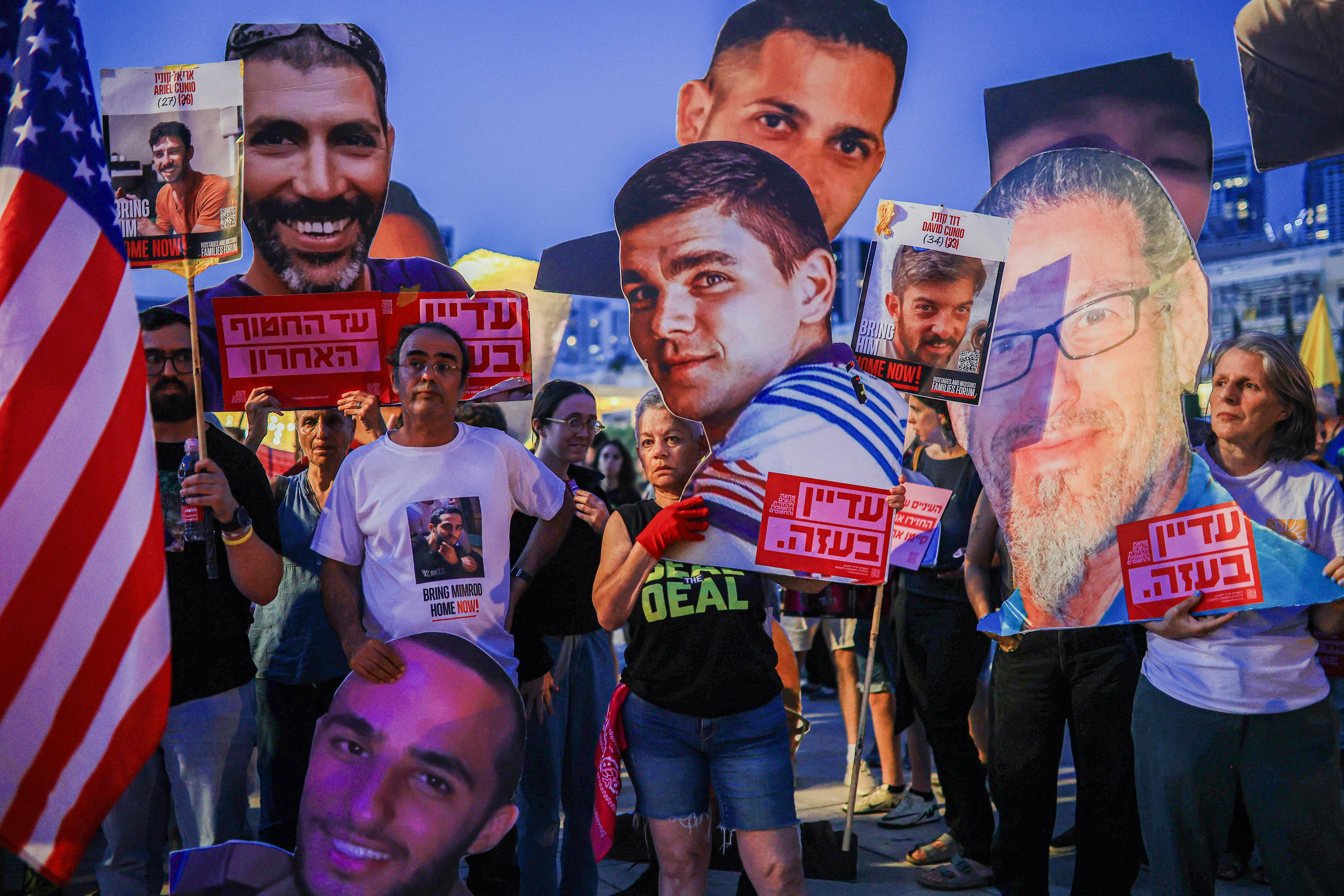
Israel’s recent decision to inject around 2.35 billion shekels into what it calls an expanded public diplomacy campaign is being described domestically as an instrument of national security rather than as an exercise in marketing. In that framing, at least, it’s honest. When a state facing mounting accusations of genocide, with tens of thousands of reported deaths and the near-total displacement of an entire population, channels such resources into information management, it is effectively conceding that its survival no longer depends solely on weapons, territory, and alliances. It depends equally on narrative management.
From one perspective this is hardly surprising. Every modern state has learned that perception is infrastructure. But the sheer scale of the investment, reportedly close to five times previous budgets, signals something more revealing: a dawning realisation within the Israeli establishment that its normative legitimacy – the belief among others that its actions remain broadly justifiable – is under unprecedented strain. This is not simply a reputational problem to be patched up with better messaging. It’s an early warning that the underlying story justifying the current Israeli state is being challenged in real time by millions of people who no longer trust its guardians.
I am less interested in the immediate political calculation – which is obvious enough – than in what this move discloses about the civilisational mythology in which it’s embedded. Why does a state at war feel compelled to wage a second, equally determined war on perception? Why now? And what does that reveal about the fragility of our dominant worldview?
From Public Relations to Psychological Armour
I doubt that Israel’s new “Public Diplomacy Division” within its Ministry of Foreign Affairs is just a cosmetic add-on. It is being treated as an operational arm of security policy, designed to buffer diplomatic partners from their own publics. Officials openly concede that foreign governments, however loyal, are vulnerable to shifts in domestic opinion. A government that must face voters, parliaments, activist networks, independent journalists and increasingly rebellious younger generations cannot simply endorse a war perceived as disproportionate without incurring a cost.
The logic is clear: if public outrage grows in major cities around the world, then parliaments might become reluctant to approve arms sales; intelligence cooperation might become politically radioactive; trade agreements might run into grassroots opposition; and multilateral arenas – from the UN General Assembly to specialised agencies and courts – might gradually align against Israel’s conduct. For a security establishment steeped in the belief that strategic depth lies not only in territory but in the reliability of external patrons, this is experienced as a direct threat.
There’s a deeper layer. Israel is not only defending its current operations in Gaza. It is defending a particular reading of modern history in which its national project is cast as an exceptional and permanent necessity, immune to the moral scrutiny routinely applied to others. To sustain that exceptionality in the face of staggering destruction – whole city blocks flattened, infrastructure pulverised, civilians visibly suffering – demands a sophisticated story that can reconcile the irreconcilable. Hence the elevation of public diplomacy from public relations to psychological armour. But armour and insulation are not the same as legitimacy. They merely reduce the rate at which reality intrudes.
Counting the Dead and the Politics of Erasure
One of the most striking features of this conflict has been the war over numbers. Official casualty figures reported by health authorities in Gaza have circulated widely through humanitarian agencies and global media. These numbers are questioned by Israel yet repeatedly referenced by UN bodies, NGOs and states that have no obvious incentive to inflate them. At the same time, critiques such as the paper “The Odious Politics of Counting Gaza’s Dead” by Dr Richard Hil and Dr Gideon Polya point to the possibility that actual deaths – direct and indirect – could be far higher, suggesting estimates in the hundreds of thousands. Given the scale of destruction, the extreme restrictions on food, fuel and medical supplies, and the collapse of health infrastructure, is it not at least plausible that official counts significantly understate the full toll?
If we cannot verify exact figures, we can still examine the role numbers play. Counting the dead is never a neutral act. It’s a way of assigning value – of deciding which lives are recognisable, which are expendable, and which are erased. When the same rounded casualty numbers circulate for months without visible adjustment, one is entitled to ask whether, somewhere in the system, the dead have ceased to matter as individuals and been absorbed into a statistical fog that is convenient to all parties: for militaries that wish to deflect accusations of mass killing; for diplomats who prefer abstract data to human stories; and for media outlets that can report numbers without engaging the moral indignation of their audiences.
In a world-system built on instrumental rationality, dead bodies become arguments before they are recognised as people. They are formatted as inputs into legal briefs, op-eds, policy debates, budgetary negotiations. Once abstracted in that way, they become available for manipulation. If a higher figure supports a charge of genocide, it will be attacked as propaganda. If a lower figure allows a government to claim “proportionality”, it will be defended as sober and “responsible”. The underlying reality – shattered families, dismembered bodies, permanent trauma – recedes from view.
Here the Israeli propaganda budget is not a side-show but an intervention in the politics of erasure. The aim is not simply to contest the numbers but to dislocate their meaning: to decouple the suffering in Gaza from any implication of Israeli culpability and reconnect it exclusively to Israeli security narratives.
Genocide, Legitimacy and the Weaponisation of Language
Allegations of genocide against Israel, advanced by several states through international legal channels, may take years to be adjudicated. Their legal outcome is uncertain and will be filtered through institutions deeply entangled in the same geopolitical order that has long shielded Israel from meaningful censure. Yet in information terms the effect is immediate. To have the charge of genocide publicly levelled, debated and normalised in global discourse is already to suffer a profound blow to perceived legitimacy.
Israel’s leadership understands this. So do its allies. That is why so much effort is expended not only on contesting specific actions, but on reframing the entire conversation. Is it possible that the term “genocide” will become so fiercely contested, so hedged with technicalities, that it loses its capacity to mobilise moral outrage? If that occurs, it will serve more than Israel’s short-term interests. It will further entrench a wider civilisational trend in which meaning itself is weaponised and hollowed out.
Words that once named humanity’s deepest taboos – genocide, apartheid, ethnic cleansing – are increasingly treated as tactical labels to be applied or resisted according to alliance structures. When one state’s actions are quickly branded genocidal while a favoured ally’s actions are shielded from the same vocabulary, the inconsistency is visible to people everywhere. That inconsistency erodes trust not just in individual governments but in the international system as a whole.
The information campaign Israel is rolling out must therefore be seen as part of a broader struggle over whether language can remain a site of shared ethical reference or becomes purely instrumental. Once meaning is fully privatised in this way, the possibility of a genuinely shared human conversation about justice disappears. In its place we are left with competing propaganda machines, each claiming exclusive access to truth while feeding off the same visual evidence of devastation.
Information as Infrastructure of War
The Gaza conflict did not invent the fusion of military operations, public relations and psychological warfare. But it has intensified it to a level that should concern anyone interested in the future of democratic life. When Israel allocates a massive budget to shape foreign opinion, it’s acknowledging that kinetic force – bombs, ground incursions, siege tactics – must be accompanied by narrative force. The two are now inseparable.
Information becomes a weapon in at least three interlocking ways. First, by framing and reframing events in near real-time, states attempt to pre-empt the public’s ethical response. Civilian deaths become “tragic mistakes”; razed neighbourhoods become “security perimeters”; mass displacement becomes “evacuation for their own safety”. Secondly, by saturating digital and traditional media with preferred storylines, governments aim to overwhelm less resourced actors – grassroots groups, independent journalists, civil society networks – that are documenting the war’s human costs. Finally, by embedding information management within security doctrine, dissent becomes suspect by default. Those who challenge official narratives can be framed as threats, not simply critics.
One might ask: at what point does such an information posture cease to be about external communication and become internal conditioning? If a state invests heavily in persuading foreign audiences that its actions are lawful and necessary, how much effort is simultaneously expended to reassure its own citizens that their moral universe remains intact? The danger here is not just deception of others, but self-deception on a massive scale. When a society convinces itself that any action is justified in the name of security, the threshold for atrocity lowers with each repetition.
Gaza, in this reading, is not only a site of physical destruction but a testing ground for how far an advanced, media-saturated society can go in normalising extreme violence through the careful management of images and language.
The Fracturing of Western Hegemony
The timing of Israel’s propaganda surge is not accidental. It coincides with a more diffuse shift: the relative decline of unchallenged Western dominance in setting global norms. States in the Middle East, Africa, Latin America and Asia are increasingly willing to challenge Western-aligned narratives, including those surrounding Israel-Palestine. This is not simply about “taking sides” in a regional conflict. It reflects a wider disenchantment with a rules-based order seen, in many parts of the world, as selectively imposed and enforced.
As that disenchantment grows, Israel faces an environment in which its usual diplomatic shelter – automatic support or indulgent silence from powerful Western capitals – no longer guarantees immunity from censure in multilateral forums. When states from the Global South bring cases, sponsor resolutions, or openly question the legality of Israel’s actions, they are disrupting what used to be a closed club of decision-makers. Gaza has thus become a focal point for broader contestation over who gets to define international legitimacy.
In this context, Israel’s information offensive is about more than winning over European or North American publics. It’s also about slowing the spread of alternative narratives from the global majority – narratives rooted in experiences of colonialism, occupation and racial hierarchy. These experiences resonate deeply with images coming out of Gaza: mass displacement, enforced dependency, restricted movement, asymmetrical power. The more those images circulate, the harder it becomes to preserve Israel’s preferred storyline as the dominant global reading.
This points to a pivotal transition. The world-system that emerged after 1945, with its Western-centred epistemologies and institutions, is encountering sustained resistance from societies whose memories of being on the receiving end of “civilising” force are still fresh. Information campaigns of the type Israel is now mounting are attempts to defend that older order by managing perception. What they cannot easily manage is the cumulative memory of peoples whose own stories no longer align with the West’s self-image.
Digital Publics and the Limits of State Control
Israel’s preoccupation with social media, digital platforms and the “battle for awareness” stems from a recognition that traditional diplomatic regimes are losing traction. Public opinion does not wait for official communiqués. It is shaped by visual fragments – a child pulled from rubble, a doctor speaking to camera from a collapsing hospital, satellite images of entire neighbourhoods erased. These shards move across borders in seconds, translated, remixed, contextualised by networks of activists and ordinary users who owe no loyalty to any state.
Can a lavishly funded state propaganda campaign meaningfully reverse this dynamic? The answer is uncertain, but my instinct says no. States can certainly amplify their messages, deploy influencer networks, and exert pressure on platforms to suppress or label unfavourable content. But they face structural constraints. Digital publics are not coherent blocs waiting to be persuaded. They are kaleidoscopic assemblages of communities, each with its own history, biases, and patterns of trust. A message that resonates in one context may be totally dismissed as transparent spin in another.
There is also the stubborn problem of visibility. When the scale of destruction reaches a threshold where denial becomes implausible, storytelling has to work much harder. Gaza is a very small, densely populated strip of land. Over two years, Israel has reportedly dropped around 200,000 tonnes of ordnance on it – a figure widely compared to the destructive capacity of multiple Hiroshima-sized devices. Satellite imagery, independent investigations, and field reports converge on the same broad picture: widespread devastation of civilian infrastructure, housing, healthcare, and essential services.
In such a context, can any amount of narrative engineering fully obscure the evidence? Or does it simply buy time – delaying but not preventing the eventual crystallisation of global opinion against the war’s conduct? If the latter, then Israel’s information campaign functions less as a long-term solution and more as a holding strategy: an attempt to sustain international tolerance just long enough to pursue military objectives, whatever the human cost.
Worldviews, World-Systems and the Gaza Laboratory
The Gaza hostilities, and Israel’s attempt to manage its global reception, should also be read as an expression of deeper societal patterns. Modern industrial civilisation, as I have argued elsewhere, rests on a worldview that normalises three interlocking beliefs: that security is achieved through domination; that problems can be solved by applying more force and more technology; and that some lives – usually those at the periphery of power – are essentially expendable in preserving the comfort and illusions of the centre.
These beliefs crystallise into world-systems: global networks of finance, law, trade and military power that privilege some communities over others. Within these systems, narratives serve as the connective tissue between worldview and practice. They explain why one group’s violence is framed as self-defence while another’s is condemned as terrorism; why one state’s civilian casualties are mourned individually while another’s are aggregated into faceless numbers.
Cultural mindsets, in turn, are the living interpretations of these narratives. They’re the spontaneous reactions, assumptions and emotional reflexes that ordinary people carry with them. When many people in affluent societies instinctively identify with Israeli fears but struggle to register Palestinian suffering as equally real, this is not a natural response. It’s a conditioned disposition formed over decades of storytelling, media framing and educational omission.
Gaza is thus not only a battleground in a national conflict. It’s a laboratory in which the dominant civilisational narrative about whose lives count is being tested in full view of the world. If an entire population can be displaced, besieged and bombarded over an extended period, with supportive governments insisting that such actions remain within the bounds of legality and morality, then the implications are global. It signals that any population, anywhere, that finds itself cast as a security threat by a sufficiently powerful state is vulnerable to similar treatment.
This is why people far removed from the Middle East react so strongly to what they see in Gaza. They sense, often intuitively, that the boundaries of what is deemed acceptable are being stretched. They suspect, too, that if this stretching is accepted more broadly, their own communities could be next in line whenever they obstruct the ambitions of powerful actors.
Futures Thinking in an Age of Manufactured Narratives
If information campaigns like Israel’s become the norm, the future of global politics looks increasingly performative: an endless competition between sophisticated propaganda machines, each mobilising its preferred facts, images and legal opinions, while the underlying structures of violence remain largely intact. That’s one possible trajectory.
Another, still fragile, possibility is emerging from the cracks in those same structures. For perhaps the first time in human history, ordinary people across continents are able to witness a war in near real-time, share their responses, critique official stories, and co-ordinate pressure on their governments. This does not guarantee better outcomes. It does, however, break the monopoly of states and corporations over meaning-making.
So can we, as a planetary civilisation, evolve beyond a politics where legitimacy is manufactured through billion-shekel propaganda drives and instead cultivate institutions that derive their authority from transparent accountability to those most affected by their decisions? If that is even partially feasible, what form of shared narrative might sustain it?
We would need, at minimum, to abandon the idea that security can be sustainably built on the disposability of others. We would need to treat civilian life – in Tel Aviv and Tehran, in Rafah and Haifa, in Mumbai and Madrid – as equally inviolable, not because international law demands it, but because our own moral imagination refuses anything less. We would need to accept that the stories we tell about threats and enemies are never neutral, and that those who fund and craft such stories bear direct responsibility for their material consequences.
Israel’s new information offensive, viewed through this lens, is not an anomaly but an intensification of an old pattern: the attempt of a threatened system to defend itself by manipulating perceptions rather than transforming conduct. Whether it succeeds in the short term matters. But what may matter more is whether people around the world recognise, in this moment, a chance to reassess the deeper worldview that makes such campaigns necessary.
If a small strip of land, roughly a third the size of Hiroshima, can become the stage on which an entire civilisation rehearses the justification of mass destruction before a global audience, what does that say about us? And if we continue to accept stories that turn annihilation into security and propaganda into policy, how long before the same logic is turned against communities we now imagine to be safe?
Those are questions no amount of public diplomacy can easily neutralise. They point beyond Israel and Gaza to the heart of our shared future.