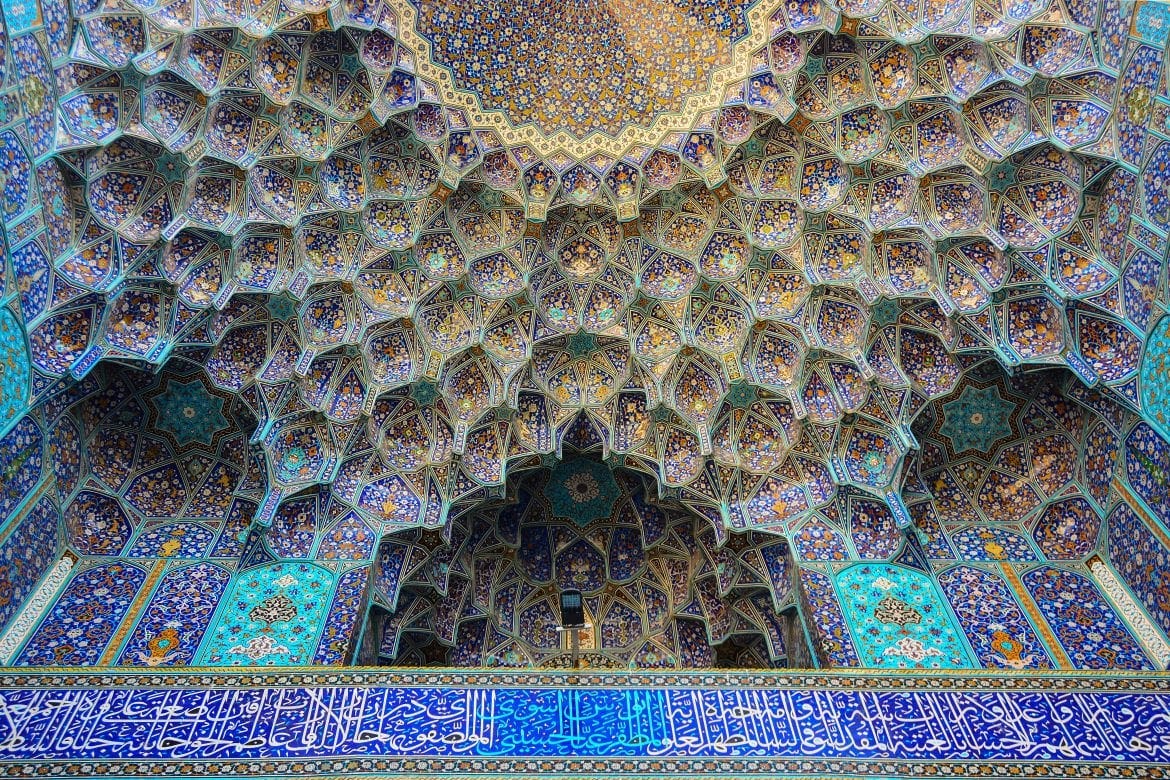
Iran doesn’t sit in the Middle East so much as it haunts it. Long before Europe discovered itself as “the West”, imperial polities from Persepolis to Isfahan were shaping the cultural climate of a vast region stretching from the Mediterranean to the Indus. That memory is not antiquarian; it still pulses through Iran’s political bloodstream. A state that knows itself as inheritor of Cyrus and Hafez will always read contemporary threats, bargains and humiliations against a very long timeline.
This is the first clue to Iran’s posture. For most modern capitals, security is a matter of borders, budgets, alliances, and fleeting media cycles. In Tehran’s strategic imagination, security is also the latest stanza in a poem that began millennia ago. You do not negotiate away the last few lines of such a poem lightly.
From Monarchy to Revolution
If we narrow the lens to the past century, two fractures stand out.
The first is the foreign-assisted coup of 1953, when a government that had dared to reclaim Iran’s oil was removed and the Pahlavi monarchy was shored up. Sources across the political spectrum now acknowledge external intelligence services played a decisive role in that operation. For many Iranians, this was not an abstract lesson in “geopolitics”; it was a lived demonstration that domestic sovereignty could be revoked from abroad whenever economic interests dictated.
The second fracture is 1979. The overthrow of the Shah and the birth of the Islamic Republic were not an ideological spasm floating in a vacuum. They were a response to a monarchy perceived as opulent, authoritarian and externally anchored; a reaction to decades in which development had worn the mask of dependency. The new order wrapped itself in religious symbolism but its central promise was brutally pragmatic: never again would Iran be a client court to distant emperors.
The eight-year war with Iraq that followed, prosecuted with extensive outside backing for Baghdad, seared that promise into institutional memory. Iran fought largely alone, under sanctions, against chemical weapons, while great powers deliberated. Any Iranian security doctrine written since the late 1980s breathes that experience. It’s not surprising that Tehran’s planners came to the conclusion that relying on foreign arsenals, foreign guarantees, or the good faith of transient foreign leaders was a form of strategic suicide.
Living Under Permanent Sanction
From the US embassy crisis onwards, Iran has effectively lived within a system of rolling containment. Sanctions have come in waves: bilateral, United Nations–mandated, and then again predominantly unilateral once the brief JCPOA interlude was cut short in Washington. Their aggregate effect is not a matter of conjecture. Economic data, humanitarian reports, and on-the-ground testimony converge: growth has been hit hard, inflation has repeatedly surged, the national currency has been battered, and access to certain medicines and technologies has been disrupted despite formal exemptions.
Sanctions are often advertised as a civilised alternative to war. Yet empirical studies across dozens of cases show a bleaker pattern. They hurt populations far more swiftly than entrenched elites. They can even consolidate ruling coalitions, who wrap themselves in the flag and accuse all critics of being the West’s fifth column. Iran fits that pattern with uncomfortable precision.
The “maximum pressure” campaign that followed US withdrawal from the JCPOA is a particularly stark example. International inspectors attested that Iran was, for a time, keeping its end of the bargain. The deal delivered constrained nuclear activity and unprecedented access for monitors. Its abrogation demonstrated to Iran’s leadership that even deep concessions could be reversed by a change of mood in another capital. Under those conditions, why would any prudent strategist in Tehran assume future guarantees are reliable?
This is not to elevate Tehran’s choices to sainthood. It is to note something far simpler: when a state is punished even while complying with an agreed framework, the argument for seeking alternative forms of security—especially those less visible or harder to reverse—will sound more persuasive in its corridors of power.
Asymmetric Teeth
Iran’s conventional forces, even when modernised, cannot match the aggregate power of the US or a coalition of hostile neighbours. But power in the 21st century is not a simple contest of tanks, ships and fighter jets. It’s more like a root system: what matters is how deeply and in how many directions you can spread, and how hard it is to uproot you without destroying the soil itself. Two capabilities define Iran’s current posture.
The first is its missile and drone arsenal. Over several decades, Iran has invested in ballistic and cruise missiles of increasing range and accuracy, as well as an array of unmanned systems. Independent defence analysts, including some in states hardly sympathetic to Tehran, acknowledge that these weapons can threaten US bases across the Gulf, energy infrastructure, and Israeli territory. Missile defence systems in the region are sophisticated and frequently upgraded, but each interceptor is costly and finite, while most offensive rockets are relatively cheap and can be launched in large salvos. That asymmetry matters. It doesn’t make Iran invincible; it does make any large-scale strike against it a far more expensive gamble than in earlier eras.
The second capability is relational rather than technological: networks of allied or aligned groups in Lebanon, Iraq, Syria, Yemen, and beyond. Their loyalties are complex and their autonomy real; they are not remote-controlled puppets. But their existence gives Iran a form of strategic depth. Pressure on Iran can be answered indirectly. A confrontation in the Gulf can echo along the Levant. This is the regional fabric within which any discussion of Iran’s role must now be located.
Together, these capabilities form a deterrent ecology. Iran cannot prevent every blow. It can credibly signal that any serious attack will trigger a cascade of consequences, often far from Iranian territory. That prospect has to be weighed in every war game run in Washington, Tel Aviv, Riyadh or Brussels.
Hybrid Confrontation
The response from the US and several of its allies has been to deepen a hybrid strategy that sits somewhere roughly between open warfare and polite diplomacy. Economic sanctions, cyber operations, targeted killings, covert support to adversarial actors, information campaigns, and occasional missile or air strikes are mixed and matched. Iran, for its part, responds with its own repertoire: proxy operations, cyber intrusions, harassment of shipping, calibrated escalations in its nuclear programme.
What is striking is how little strategic movement this has actually produced. After decades of such exchanges, Iran still has its political system, its basic foreign policy orientation, and now a more diversified set of partnerships with other major powers, particularly in Asia. The US and its partners continue to view Iran as a central problem in the region. Ordinary people inside Iran live with the double burden of internal misrule and external pressure, while populations across the wider region inhabit a security environment in which a miscalculation in any direction could trigger a regional blaze.
From a systems perspective, this resembles a negative-return loop. Each side adds new instruments to its arsenal of pressure. Each side adapts to the other’s moves. The overall level of risk escalates. Trust decays further. The structural position of Iran, as a resentful but resilient node in the region’s security architecture, remains remarkably stable.
At that point, the question so often posed in strategic salons – who could “destroy” whom if everything were unleashed at once – begins to look like a symptom of our deeper pathology. Iran and Israel already inhabit a theatre in which ultimate victory has been quietly retired as a serious option while ultimate catastrophe remains entirely feasible. Each new layer of missiles, sanctions, defences and proxies tightens the ligature binding them together. The industrial habit of mind equates safety with the capacity to terrify; it cannot easily imagine security as a shared quality. So we persist with doctrines that render mutual ruin imaginable yet make genuine accommodation almost unthinkable. That, I would suggest, is the real obscenity in this confrontation: not merely the suffering already inflicted, but the banal, technocratic way in which we have normalised a relationship where annihilation is off the table only because it would be mutual.
The Financial Front
One under-examined dimension of this struggle is monetary. The extensive use of financial sanctions against Iran—freezing assets, excluding banks, penalising third parties that trade with it—has been mirrored in actions against other states deemed troublesome. The pattern is now unmistakable enough for central banks and finance ministries across the global South, and increasingly the Eurasian landmass, to begin hedging.
Reserve compositions are evolving. Cross-border settlements in non-dollar currencies are slowly expanding. New payment arrangements, some clumsy and partial, have been created specifically to bypass sanctions. Iran is not the cause of these shifts, but it has been a catalyst and a partner in many of them.
If the dollar-centred financial architecture remains dominant today, might its perceived neutrality be eroding over time? And if so, will the weaponisation of finance ultimately undercut the very leverage it once magnified? These are questions that matter far beyond Tehran.
Leadership, Fear, and the Industrial Mind
Behind the technicalities of missiles and sanctions a more uncomfortable observation prowls. Iran’s confrontation with the West is one of the more dramatic sites where an ageing industrial paradigm collides with an obstinate civilisation determined not to be folded neatly into the global production line.
On one side stand states and institutions still committed to a model of security woven tightly into a fabric of extraction, competition and financialised control. On the other stands a polity that, for all its internal flaws and injustices, insists on calibrating its choices through a dense weave of historical memory, religious symbolism, and national pride. Neither side is innocent. Both are, in different ways, ensnared in a worldview that equates safety with dominance.
Genuine leadership—as I use that term—is conspicuously absent. In any meaningful sense, this would require communities within and beyond Iran to organise around improving the situation, not defending the prestige of bureaucracies or the profitability of weapons systems. It would also require an honesty that has been in short supply: admitting that sanctions which immiserate millions are a form of blatant violence; that governance which crushes dissent in the name of purity is a betrayal of justice; and that the habit of treating ancient cultures as recalcitrant provinces within a globalised industrial estate is a category error of the highest order.
Is it still possible to imagine a different script—one in which Iran is engaged as an ancient civilisation with legitimate security concerns, rather than a permanent outlaw; and in which Iranian leaders regard openness and accountability not as Trojan horses for regime change but as conditions for their society to flourish? That question remains open. Today’s trajectory offers few hints of such a transformation, yet history, if it teaches anything, is that civilisations rarely move in straight lines.
For now, Iran stands as both warning and mirror. Warning, in that the attempt to crush a proud society into acquiescence through economic siege and episodic violence will entrench exactly the behaviours it’s meant to change. Mirror, because Iran’s stubborn resilience forces the industrial world-system to confront its own addiction to coercion dressed up as order.
In that reflection, some may glimpse the outline of a very old story: an empire anxious about its waning reach, a civilisation determined not to be recolonised, and a region caught between them, waiting to see whether fear or wisdom will ultimately prevail.