Synopsis: Governments can’t grow cohesion, so they try to legislate it into being. Typically they split enmity into separate portfolios, and then commission reports that let a nation’s heartache be filed neatly away. Singapore, Rwanda, the UN’s envoys, three famous inquiries and an Australian one about to report, consistently read as one habit of mind.
From the first of November 2022, a minister in Singapore could bar a religious leader from addressing believers on a chosen subject. The bar took effect the moment the order was signed. Until then there had been a fourteen-day pause, time for the person named to make representations. Amendments passed three years earlier removed it. The same changes let the government restrain religious organisations judged to be under foreign influence, cutting them off from overseas donations where social concord was thought to be at risk. Religious leaders were consulted beforehand. The Catholic archdiocese said publicly that it supported the reform. Few people outside the region even noticed.
Singapore’s reasons aren’t hard to find. In 1964, which was the year before independence, rioting between Chinese and Malay residents killed dozens. The Maintenance of Religious Harmony Act, passed in 1990, grew from that memory. It rests on two principles: that believers should practise moderation and tolerance toward one another, and that religion and politics should be kept apart. Three decades later the island is among the most religiously diverse societies on earth, with little open sectarian conflict. Anyone who wants to argue a case that harmony can be legislated has Singapore as an exhibit.
Rwanda is a more troubling case. After 1994 the state made social unity a legal obligation. Its current law on genocide ideology, passed in 2018, punishes the denial, minimisation or justification of genocide with five to seven years in prison. The aim is easy to understand in a country where neighbours killed neighbours with clubs, hoes and machetes from their own gardens. The difficulty lies in pinning the offence down. When Amnesty International examined the earlier version of the law, it found that even Rwandan judges admitted they couldn’t define genocide ideology with any precision. A crime its own courts can’t describe can be discovered wherever the state happens to need it, and rights groups have documented its use against critics of the government.
Both countries are attempting the same feat. They want cohesion produced from the centre, by statute, at speed. Call it glue. Glue sets fast. It holds everything exactly where it was at the moment of hardening. What it can’t do is give. A woven fabric holds for the opposite reason: each strand is free to shift a little against its neighbours, so a blow spreads across the whole surface instead of cracking it. Communities that have lived beside each other’s festivals for generations hold together this way, through funerals attended, debts forgiven, marriages that crossed lines nobody drew on any map. Nobody legislated it. No minister could revoke it with a signature.
The phrase “social cohesion” now turns up in the titles of commissions, ministries and grant programmes across the world. It’s appended to a royal commission established in Australia less than four weeks after gunmen opened fire on a Hanukkah celebration on a Sydney beach last December. Its title yokes a single hatred to the cohesion of an entire society, as though the second could be secured by inquiring into the first. It sounds like a description of a condition a society enjoys. In practice it increasingly describes an operation a government performs on a society. Cohesion has become a policy output, measured by survey, reported annually, and defended in court. A government can buy glue in bulk. Weaving takes longer than any electoral cycle, and it can’t be commissioned.
When unity can’t be decreed intact, it gets divided into portfolios. In May 2025 the UN Secretary-General appointed Miguel Ángel Moratinos, a former Spanish foreign minister, as the organisation’s first Special Envoy to Combat Islamophobia. The post came out of a General Assembly resolution that Pakistan had steered through on behalf of the Organisation of Islamic Cooperation. Antisemitism already had its envoys and coordinators, in Washington, in Brussels, in a lengthening list of capitals. Other hatreds wait their turn, some with advocates lobbying for an office, others with nobody at all.
Each portfolio is reasonable. No doubt it can be justified on its own terms. Together they amount to a bizarre architecture.
Every envoy needs a definition of the enmity in their custody, a method for counting incidents, an annual report presenting the count, and a budget justified by the report. Every office develops a constituency that measures its own standing by the office’s prominence. Communities that suffered the same street violence find themselves in separate queues for recognition. Budgets are finite, so attention turns into a contest. A Muslim family and a Jewish family whose windows were smashed in the same week become clients of different offices, which publish on different days and convene different roundtables.
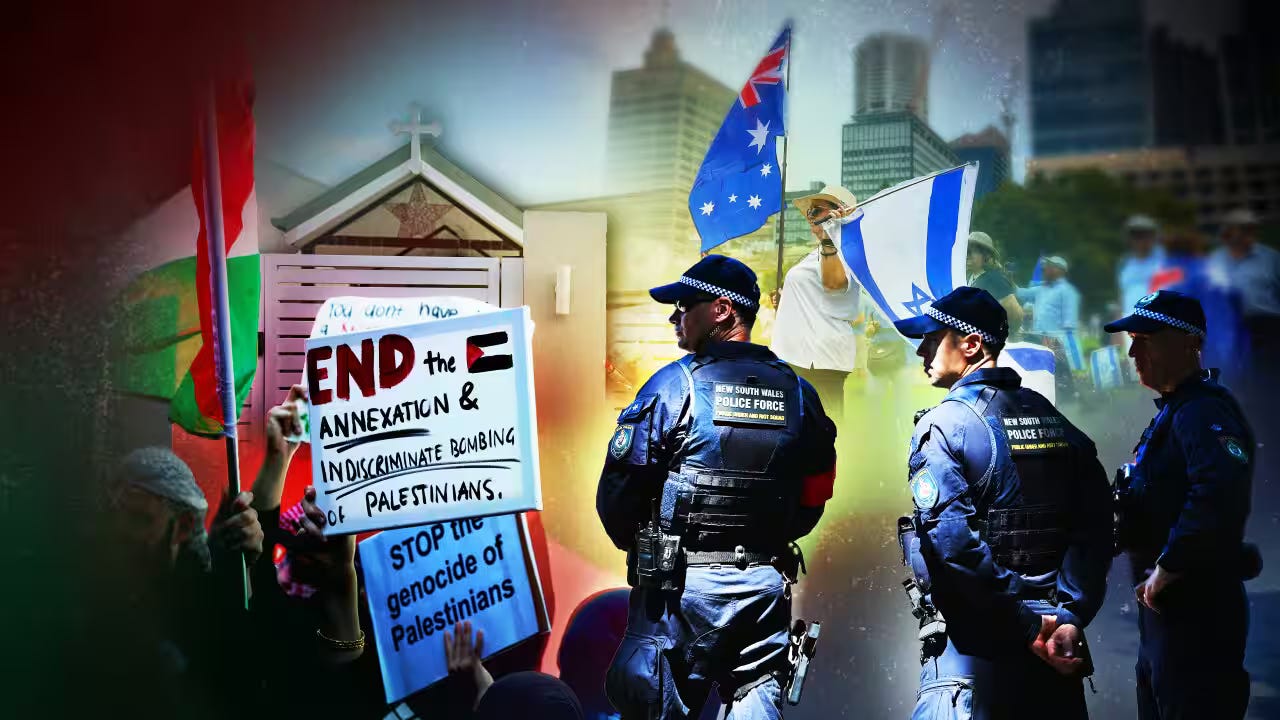
Australia offers the pattern in miniature. In July 2024 its government appointed a special envoy to combat antisemitism. A companion envoy to combat Islamophobia was promised at the same moment, but finding a suitable candidate proved harder, and that appointment came almost three months later. Some Muslim Australians read the delay as a ranking. Palestinian advocates warned that the paired posts implied some communities’ suffering counted for more than others’. The second envoy, on taking office, observed that the two hatreds rarely travel alone; where one appears, the other is usually close by. Seventeen months later, after an attack that police early on linked to Islamic State ideology left fifteen people dead on that beach, the state’s response arrived already sorted: a royal commission titled for one of the two hatreds, with cohesion appended almost as an afterthought.
Hatred never respects such divisions. Gordon Allport, writing in 1954, set down as one of the firmest findings in the study of prejudice that people hostile to one out-group tend to be hostile to others. Bigotry is a disposition before it settles on a target. A response organised by portfolio mirrors the target list, leaving the disposition untouched. A commission organised around one hatred will tend to hear mostly from that hatred’s targets. Australia’s received more than 20,000 public submissions, upwards of 14,000 of them from Jewish Australians. Their testimony was real and often harrowing. Yet the public hearings dwelt on experiences of abuse far more than on where the hostility came from, while evidence about the attack itself was taken behind closed doors to avoid prejudicing the criminal trial. The worldview that drove the gunmen, contemptuous of many peoples besides Jews, stayed largely outside the public frame.
The literary scholar Michael Rothberg made a related argument regarding memory. Public remembrance, he proposed, isn’t a zero-sum contest in which one people’s suffering crowds out another’s. Memories of different atrocities have repeatedly sharpened each other, borrowed each other’s language, opened space for each other. The administration of enmity runs on the opposite premise. Its arithmetic is fixed. Every new envoy implies a ranking, and every ranking invites someone to ask who came first.
This habit runs far deeper than any one government. James C. Scott, who died in 2024, spent decades describing how states make the people they govern readable to the administrator’s eye: countable, locatable, taxable. Surnames were imposed where there had been none, forests replanted in rows, whole populations sorted into categories a clerk could easily tabulate. A portfolio of animosities is that instinct turned on the darkest region of human behaviour. Governments tend to assume that hatred, once classified, becomes more manageable. What classification actually yields is a hatred that can be counted, budgeted for and reported on, which isn’t the same as one that has moderated. Then the classification begins to shape what it was meant to describe, as people learn to present their injuries in whichever category has an office attached. Even the language of this essay, with its Islamophobia and its antisemitism set side by side as parallel nouns, has been shaped by the filing system it sets out to question.
Then there’s the inquiry. After an atrocity, a commission has become the default response of democratic governments, the institutional equivalent of a wreath. In July 1967, with Detroit still burning, Lyndon Johnson appointed a commission under Otto Kerner, the governor of Illinois, to explain the riots tearing through American cities. Its report, published at the start of March 1968, concluded that the country was splitting into two racially divided societies, separate and unequal, and laid the blame squarely on white racism. It sold around two million copies. Johnson rejected it out of hand. He even objected to signing the customary letters thanking the commissioners he’d appointed. Within weeks Martin Luther King was assassinated, and rioting broke out in more than a hundred cities.
Britain’s version arrived in 1999. Sir William Macpherson’s inquiry into the police investigation of Stephen Lawrence’s murder found the Metropolitan Police institutionally racist and made 70 recommendations. Twenty years later, MPs marking the anniversary complained that nobody could even measure how many had been implemented. In 2023 Baroness Casey’s review found institutional racism still embedded in the force. Canada’s Truth and Reconciliation Commission issued 94 Calls to Action in 2015. A decade later, 15 had been completed. The Yellowhead Institute, which had tracked progress every year since 2019, stopped publishing its accountability reports after recording that not a single call was completed in 2023.
These reports didn’t fail for want of quality. Several were brilliant. They failed, if failure is even the right word, because of what the genre is for. A commission of inquiry is a rite. It gathers grief in public, listens to the bereaved, takes evidence under oath, then converts everything it has heard into a clinical document. Publication completes the rite. The government receives the report, notes its findings, accepts certain recommendations in principle, and the nation is released from any obligation to keep mourning. A wound becomes a file. Files can be closed.
Australia’s commission will be the next to complete the rite. Across 62 days of hearings it heard 346 witnesses and compelled some 550,000 pages of documents. Its commissioner moved the final report back four days, to 18 December, so that it wouldn’t land on the anniversary of the massacre. The calendar of mourning and the calendar of reporting have been aligned with genuine care, a few days apart, which is exactly how the rite is meant to unfold. Part of the report, built from classified evidence, will go into a confidential volume; that portion of the file will be closed before anyone outside government has opened it. The rest will be received and noted a week before Christmas, and the rite will be complete.
What unites the statute, the envoy and the commission is a shared assumption that social and cultural cohesion flows downward, from those who govern to those who are being governed. Yet survivors’ accounts of mass attacks, on every continent, keep describing the opposite. In the first minutes, before any institution arrives, strangers who share no faith, no label and no office drag each other out of danger, press cloth against each other’s wounds, shelter children who aren’t theirs. On that Sydney beach, the man who wrestled a gun from one of the attackers, taking two bullets as he did so, was a fruit seller who happened to be nearby, meeting a friend for coffee.
Inquiries study those minutes for the failures of police, intelligence and planning. Australia’s interim report, tabled at the end of April, did precisely that, recommending a review centred on the joint counter-terrorism team. What inquiries rarely ask is where the other response came from, and in the years after the report is tabled the people who gave so unselfishly are seldom consulted again. The fruit seller was visited in hospital by the state premier and held up by the prime minister as humanity at its best. Whether anyone has asked him where that instinct to help other people came from, and treated his answer as evidence, is another matter. He and the strangers around him didn’t decide to cohere that evening. They were already woven into a fabric no statute had produced and no envoy was appointed to protect.
The commission was asked to strengthen social cohesion. On the very night that called it into being, cohesion was there to see: a man running at a gunman to save people he’d never met. He didn’t stop to ask their faith, and they had no need to know his. Within hours the coverage had sorted him anyway, into the categories the state understands, as though his courage needed a label before it could count. Nobody legislated what he did. No envoy arranged it. No government could order it. It’s the most important evidence the commission could hold, and its method has nowhere to put it, because it doesn’t begin with a hatred, a definition or an office. So the inquiry has studied the failure in exhaustive detail and largely ignored the cure that ran up the beach towards the gunfire.
Perhaps I am being too coy. I will state it plainly. Social cohesion is not a management problem. It can’t be cultivated or controlled. Neither can it be legislated, allocated by portfolio, or delivered in a report. Why? Because it was never produced from on high or by edict in the first place.
It grows from all directions, between people, slowly, through the ordinary traffic of their lives, and it shows itself only when the fabric comes under strain. Treat it as an output to be managed, and every instrument the state reaches for will be operating at the one level cohesion has never occupied. That approach is bound to fail. It failed in American cities after 1968, in London after 1999 and across Canada after 2015, and there’s no reason to think a commission built on the same premise will fare any better in Australia.