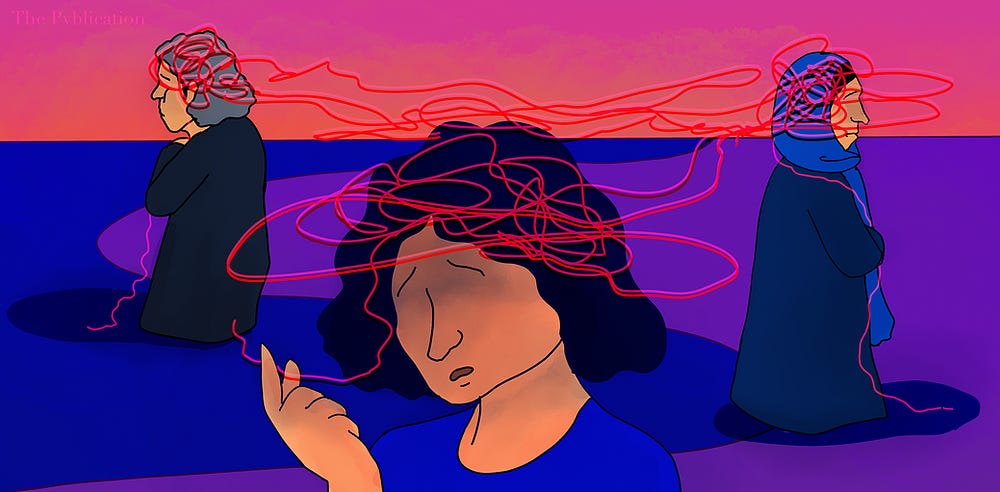
The threads of historical memory weave themselves into the fabric of collective identity with remarkable tenacity. As I reflect on the transgenerational transmission of group trauma, I am struck by how past events echo through generations, shaping our present and potentially defining our future.
More than six centuries after the Battle of Kosovo in 1389, that defeat remains a cornerstone of Serbian national identity. The emotional resonance of this moment transcended time, becoming not merely a footnote in history but a living, breathing component of social consciousness. Such historical losses can become embedded in the collective psyche of a people, transmitted through narratives, commemorations, art, music, and education.
The Jewish Holocaust represents the most extensively documented case of intergenerational trauma in modern history. The systematic genocide of six million Jews created psychological imprints that research shows manifest in subsequent generations who never directly experienced the atrocities. Similarly, the current devastation in Gaza will undoubtedly leave psychological scars that will ripple across future generations--shaping the lives of both Palestinians and Israelis, albeit through vastly different lived experiences.
What fascinates me about collective trauma is its subjective power. The emotionally raw reality of historical loss doesn't require external validation to exert influence over a group's psychology and behavior. When a community feels the weight of ancestral suffering, the felt experience becomes a powerful motivational force, regardless of how others might interpret or dismiss their suffering. The internal psychological landscape of a community can drive action independently of external assessments of legitimacy.
This is where path dependence theory provides a crucial framework for understanding how these historical traumas become entrenched and self-perpetuating. Path dependence explains how decisions and interpretations become increasingly constrained by previous choices, creating self-reinforcing patterns that become difficult to escape even when better alternatives emerge. The initial framing of a collective trauma—how it is first narrated, commemorated, and institutionalized—establishes a trajectory that subsequent generations find increasingly difficult to alter.
When a society experiences profound loss, the initial interpretive frameworks establish cognitive and institutional "lock-in" effects. Educational systems perpetuate specific narrative perspectives. Memorial practices institutionalize particular emotional responses. Political structures often derive legitimacy from these narratives. Thus, each generation inherits not just the memory of the trauma but the accumulated apparatus for interpreting it, creating increasing returns to the established path of understanding and response.
The true danger emerges when unprocessed collective grief encounters opportunistic rulers and tyrants. Figures like Slobodan Milošević demonstrated a sinister talent for transforming shared mourning into weaponized grievance. By channeling unresolved historical pain toward present enemies, such individuals create a dangerous alchemy - converting sorrow into entitlement for revenge.
History offers numerous examples of this phenomenon. Vladimir Putin has masterfully exploited Russia's collective trauma from the collapse of the Soviet Union and the perceived humiliation by Western powers in its aftermath. By framing NATO expansion as an existential threat to Russia's sovereignty and security - not altogether untrue - he weaponized a historical grievance to justify the attack on Ukraine, presenting it as a defensive action against Western encroachment on Russia's traditional sphere of influence.
In Rwanda, Hutu Power leaders exploited historical grievances about colonial favoritism toward Tutsis, transforming legitimate concerns about social inequity into genocidal hatred. Radio broadcasts continually referenced historical grievances, framing Tutsis as invaders and oppressors to justify the eventual slaughter of over 800,000 people in just 100 days.
Adolf Hitler himself represents perhaps the most devastating example of this mechanism. He channeled Germany's collective humiliation following the Treaty of Versailles and the economic devastation of the Great Depression into a narrative of Jewish conspiracy and betrayal. The Nazis transformed genuine German suffering into a lethal grievance that justified unprecedented atrocities.
In contemporary India, Narendra Modi has effectively weaponized historical grievances about Mughal rule and partition to advance Hindu nationalist agendas that marginalize the Muslim minority. By continually referencing historical wounds and framing Muslims as threatening outsiders, his government has created an environment where violence against Muslims can be framed as historical justice. We see similar patterns in how Benjamin Netanyahu has framed Israel's conflict with Arabs, leveraging historical Jewish grief to justify disproportionate military responses that perpetuate cycles of violence rather than heal historical wounds.
These rulers exploit the path-dependent nature of trauma narratives. Like inferior technologies that persist due to accumulated investments and network effects, destructive interpretations of historical trauma persist because of the psychological, cultural, and institutional investments already made in those narratives. Netanyahu's government exemplifies this intersection—the path-dependent narrative of existential threat facing Jews has created institutional structures, military doctrines, and political incentives that make deviation from established response patterns increasingly costly, even when these responses generate counterproductive results.
The ripple effects of this transformation from grief to grievance are staggering. The assassination of Archduke Franz Ferdinand - itself connected to historical grievances in the Balkans - triggered the catastrophic cascade of events that led to World War I. The Bosnian genocide of the 1990s arose from unprocessed historical narratives manipulated by nationalist figures. The current situation in Gaza represents another iteration of this pattern, where unresolved trauma becomes justification for inflicting new trauma, ensuring the tragic cycle continues.
As we look toward creating more sustainable futures, interrupting this grief-to-grievance pipeline becomes an imperative. Just as economists recognize that breaking path dependencies often requires exogenous shocks to the system, interrupting the grief-to-grievance pipeline typically demands extraordinary circumstances or leadership.
Societies that find constructive pathways for processing collective loss - through truth commissions, meaningful commemorations, educational initiatives, or restorative justice practices - demonstrate remarkable resilience against manipulation. When grief is acknowledged, honored, and processed communally, it becomes less vulnerable to exploitation. The work of reconciliation in post-apartheid South Africa, though imperfect, offers glimpses of alternative possibilities when societies consciously choose healing over revenge.
The most hopeful aspect of understanding grief-to-grievance realities is recognizing that systems are not deterministic. Critical junctures offer opportunities for redirection. For peacebuilders, effective intervention requires identifying the specific path dependencies at work—locating critical junctures and detecting systemic acupuncture points where alternative narratives might gain traction, recognizing the increasing returns that maintain current trajectories, and creating opportunities for narrative 'branch points' where new interpretive paths become viable.
The grief-to-grievance pipeline reveals something profound about our nature as social beings. We carry the emotional baggage of our ancestors, their joys and sorrows shaping our identities in ways we might not fully comprehend. This psychological reality demands our attention as we navigate increasingly complex global tensions. Those who understand this mechanism - and its extraordinary power to either heal or destroy - will be better positioned to guide humanity toward more conscious relationships with our collective past.
Our shared future may well depend on the capacity to honor historical suffering without allowing it to become the justification for creating new victims. Understanding historical grief as operating within path-dependent systems helps identify acupuncture points where skillful intervention might guide collective trauma processing toward healing rather than perpetual grievance. This represents one of the most crucial evolutionary challenges facing our species in the coming decades.