When someone shouts, ‘Pick a side!’ The room doesn’t grow clearer; it shrinks. Every chair slides toward one of two uncompromising poles, and the oxygen to think slowly and lucidly is gone.
Complex problems—climate risk, racial justice, fiscal solvency, and technological disruption—arise as knots. A single snip can’t resolve them; it leaves pieces tangled and others cut beyond use. Yet the order to declare loyalty before investigation demands precisely that: amputate the curiosity, trim the doubt, and choose your jersey before you have seen the shape of the game.
The moment we obey, language itself contracts. Compromise becomes “capitulation”, uncertainty becomes “betrayal”, and the modest statement “I need to know more” is heard as “I am defecting.” What follows is a shallow aesthetic; a politics in which policies are judged by the emblem on the podium rather than by the data in the legislation. The eye scans for tribal markings; it stops hunting for evidence. Under that hormonal haze, even the definition of “fact” mutates: if our side suffers a statistical setback, we do not revisit the premise—we poll-test a new slogan. Meanwhile, the unaffiliated—the technician who sees the power grid failing, the nurse who notices the supply chain fracture, and the student who has read three peer-reviewed papers—learns to stay quiet because hesitation is now read as treason. Their expertise is exiled just when it is most urgently needed.
This is not a cultural irritation; it is institutional quicksand. Laws harden around symbols instead of realities, until the very adversaries once vilified become the only partners left to solve a crisis. Gridlock is not an accident of procedure; it's the deliberate product of a political culture that rewards intransigence over resolution and the harvested crop of seeds sown every time a talk-show host shouts, “Which side are you on?” The same habit infects diplomacy. When multilateral problems—viruses, carbon, refugees—are fed into a binary meat grinder, the output is a world split into hostile camps, each hoarding information, each inflating its own myth of innocence. Pandemics don't care which flag you wave; pollution doesn't ask for your party registration. They simply accumulate while we rehearse battle cries.
There is a healthier reflex, and it begins with a different question: “What is the system doing, and where are the levers none of us can reach alone?” That inquiry forces us to map interests instead of identities. It invites the soybean farmer who distrusts regulators and the climate scientist who distrusts agribusiness to sit over the same watershed model and watch phosphorus move in real time. Suddenly the moral drama shifts: the enemy is not the person across the table; the enemy is the runoff neither side wants. The conversation becomes iterative instead of performative—hypotheses tested, instruments recalibrated, trust accrued like interest. Progress is measured not by how loudly a base is aroused but by whether the reservoir is cleaner, the asthma rate lower, and the soil more alive. Those victories are small-bore, unsexy, and cumulative; they do not fit on a banner, but they do compound into resilience.
Democracy, at its best, should not be a stadium where choirs trade anthems; it's a laboratory noisy with dissent, replication, and revision. The insistence that we “pick a side” is an attempt to turn the lab into a coliseum. We don't have to comply. We can stay stubbornly, vulnerably inquisitive—refusing to outsource our judgement to colour-coded jerseys, insisting on the right to walk the entire terrain before we plant a flag. The reward for that refusal is not moral superiority; it is practical capacity. Problems that look intractable under a tribal lens reveal hidden hinges once the aperture widens: a tax tweak that makes coal plants financially extinct, a visa rule that reverses a nation's brain drain, and a procurement standard that seeds an entire domestic battery supply chain.
None of those hinges appear on the Red or Blue platform in their entirety; they are discovered by people who consent to be confused long enough to trace causation across disciplinary lines.
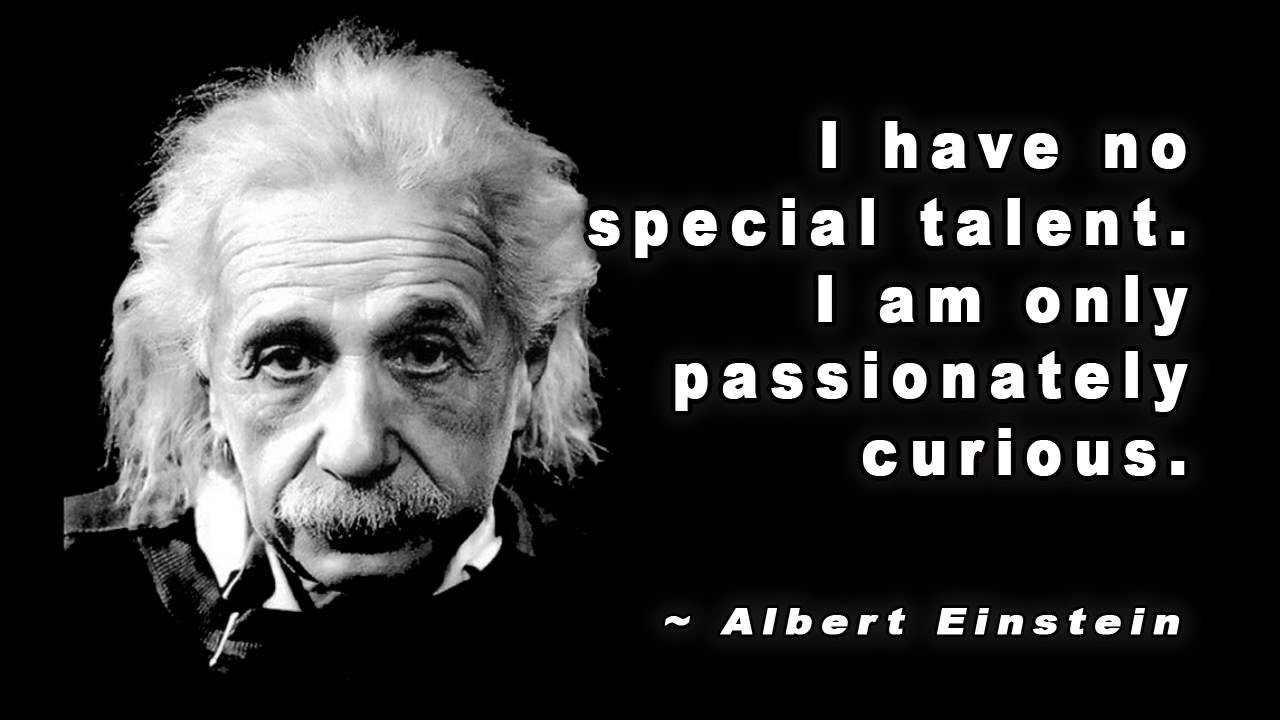
So the next time the command arrives—Pick a side!—consider answering, “I choose the side that still has questions.” It's not a centrist cop-out; it's a wager that the most valuable renewable resource is not passion but disciplined curiosity. Curiosity is mobile; it crosses borders, climbs silos, and sleeps restlessly until the pattern is found. It's the only force that has ever outrun a pandemic, cooled a climate model, or dismantled a nuclear arsenal. Tribal certainty can fill a plaza with cheers; systemic inquiry can fill a reservoir with clean water, a treaty with verification protocols, and a grid with redundant power. That's the victory worth claiming—and it will never fit on a two-sided placard.
Yet the command to “pick a side” is a siren song of simplicity, and its aftermath is a wasteland of atrophied potential. To choose the side of the inquiry that still has questions is to declare a different allegiance altogether—not to a tribe, but to a process. It is to wage a quiet, persistent rebellion against the impoverishment of thought. But in a world engineered for immediacy, where algorithms feed on outrage and attention is a currency spent on declarative judgements, how does one cultivate this most subversive of traits? How do we nurture the slow, meandering growth of curiosity when the cultural climate demands the swift return of certainty?
The cultivation begins as an act of personal defiance, a conscious rewiring of one’s own cognitive habits. It requires building a small interior sanctuary against the gale-force winds of the "take" economy. This means actively seeking out the disorienting, the unfamiliar, and the complex not as threats to our worldview but as nutrients for it. It's the deliberate practice of the beginner’s mind—reading the peer-reviewed study that challenges a deeply held assumption, listening to the cultural critic from a tradition not our own, not to mine for counter-arguments, but to genuinely map the topography of their logic. We must become gardeners of our attention, planting the slower‑growing seeds of long‑form journalism, technical reports, and primary sources. The goal is to recalibrate our internal metrics of value, to feel the same thrill for an elegantly framed question that we once felt for a conclusively wielded verdict.
But a single mind, no matter how well-tended, cannot survive indefinitely in a desert. Curiosity must be socially sanctioned to genuinely flourish; it requires the oxygen of conversation to become a sustaining flame. We must collectively learn to model a different kind of strength, one expressed not in the rigidity of conviction but in the plasticity of intellectual humility. This looks like being the first in a discussion to say, “I hadn’t considered that,” or “My understanding was incomplete.” It means shifting our social interactions from debates to be won toward collaborative enquiries to be pursued. We can create protected spaces—a book club, a community forum, a professional working group—where the explicit currency is not persuasion but exploration and where the most valued contribution is not a final answer but a better, more insightful question. In these spaces, we rehearse a different rhythm of engagement, one where we ask not “What do you believe?” but “How did you come to believe that?” and “What would cause you to reconsider?”
Ultimately, however, for curiosity to cease being an act of rebellion and become a default state of being, our institutions must be reimagined. Educational systems, too often factories of answers, must be transformed into laboratories of questions—spaces where Socratic dialogue and the history of failure are as valued as triumphs. It requires our media ecosystems to be nourished by subscribers who reward subtlety over outrage, who value the complexity of a five-thousand-word investigation more highly than the adrenaline spike of a thirty-second takedown. And it demands that our political and corporate "leaders" be persuaded to create the conditions needed for pragmatic problem-solving, measured by their ability to convene disparate experts and synthesise solutions that no single ideology could have conceived alone.
This is the quiet work of cultural stewardship: cultivating common ground. The reward is not a world without conflict but a world where conflict is productive—where friction generates light instead of just heat. It's to discover that the most powerful lever is not the one that forces a win for one side but the one, hidden in the interconnections, that elegantly realigns the incentives for all. This is the practical capacity born of disciplined curiosity. It moves quietly beneath the stadium’s roar, connecting, synthesising, and building. It's the force that charts a path through the knotted forest of our problems, not by hacking it down with the blunt axe of a chosen side, but by patiently, reverently, learning to untangle it.