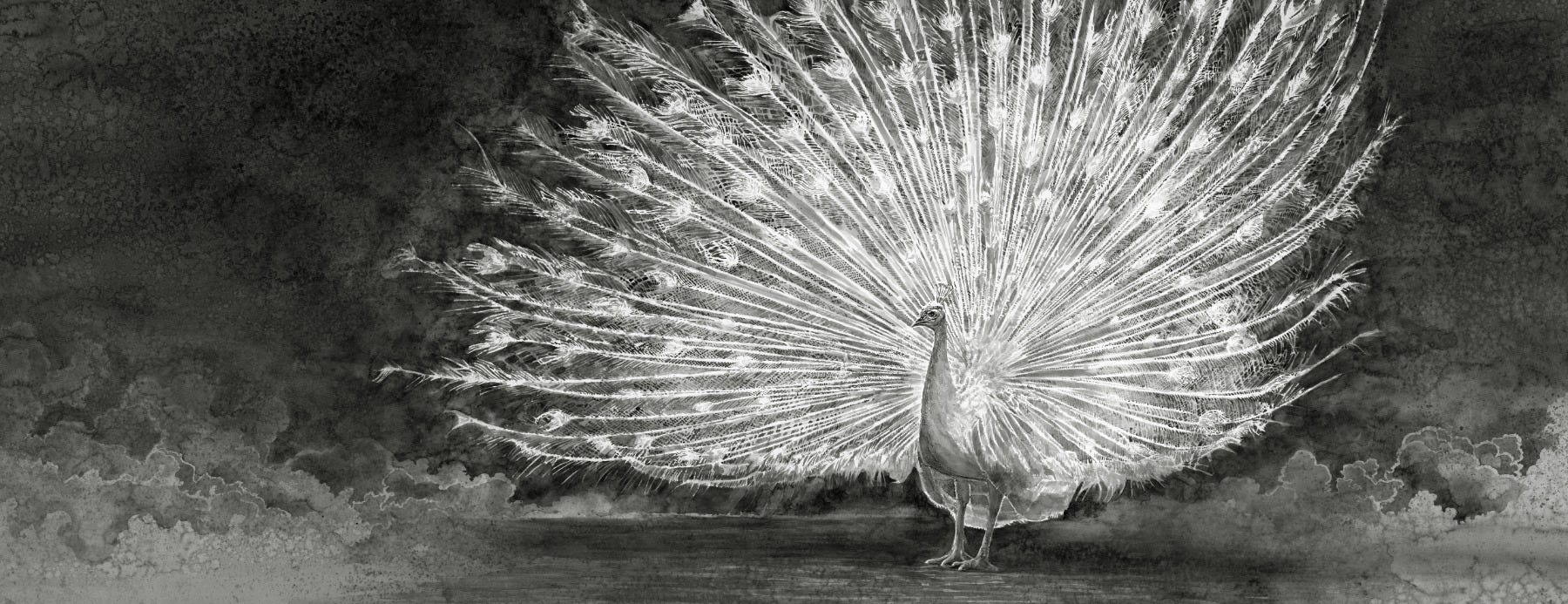
At one stage early in my career I was living in a caravan on a cherry farm in the tiny village of Spilamberto, just outside Modena in Reggio Emilia. I spent several months in that idyllic place, with the snow-capped Apennines clearly visible, composing my only piece for full orchestra: Melencolia after Albrecht Dürer. My daily routine was to rise around 6am and walk to the village for a coffee and cornetto, returning to my task around 9am and writing for sometimes 12 to 13 hours without a break.
Throughout human history, countless abilities that once served as hallmarks of our species have slowly faded from common use. We have lost our ability to navigate by the stars, to identify edible plants in the wild, or to craft tools from raw materials. Yet among all these diminished aptitudes, one stands out as uniquely disastrous in its disappearance: our capacity for deep, sustained attention. This cognitive faculty, once the cornerstone of human achievement and understanding, is vanishing at an alarming rate, taking with it our ability to think deeply, connect meaningfully, and create lasting value in an increasingly disjointed world.
To understand the magnitude of this loss, we must first recognise what deep attention truly represents. I hope my example illustrates that it's not simply the capacity to focus on a task for an extended period of time, though that is certainly one manifestation. Deep attention is the cognitive state that allows us to immerse ourselves completely in a single stream of thought or activity, establishing the conceptual space needed for genuine insight, creativity, and understanding. It's the difference between hearing words and truly listening, between consuming information and actually learning.
This capacity for sustained focus has been the engine behind humanity's greatest achievements. Every scientific breakthrough, every literary masterpiece, every philosophical insight, and every work of art that has moved us has emerged from minds capable of dwelling intensely within a single domain of inquiry for long periods of time. Einstein's theory of relativity arose from years of concentrated thought. Beethoven's symphonies emerged from countless hours of solitary work. The great novels and poems that have shaped our understanding of the human condition were born from writers who could sustain their concentration on character and narrative for months or years at a time.
Yet today, this fundamental capacity is under siege. The modern "attention economy" has created an environment specifically designed to fragment our focus into ever-smaller units. Every notification, every alert, every ping from our devices represents an assault on our capability to maintain focused thought. We have constructed a world where interruption is not an occasional disruption but a constant state.
I tend not to rely on statistics, but in inthis instancde they are sobering. Research suggests that the average knowledge worker checks email every six minutes. The typical smartphone user receives between 60 and 80 notifications each day. Students report being unable to read for more than a few minutes without feeling the urge to check their phones. Even when we're not actively engaging with technology, the mere presence of a smartphone in the room measurably reduces cognitive performance. We have created what might be called an "attention deficit environment" – a world systematically designed to prevent the very kind of deep focus that has historically driven progress.
The unintended consequences of this erosion extend far beyond individual productivity. When we lose our capacity for prolonged concentration, we're essentially compromising our ability to access or create profound knowledge. Instead of developing deep expertise in particular domains, we become perpetual beginners, collecting fragments of information without ever developing a coherent understanding that's necessary for true mastery. We mistake the ability to quickly locate information for actual knowledge, forgetting that wisdom emerges not from access to facts but from the patient contemplation, convergence, and integration of ideas over time.
Perhaps more troubling still is how the loss of deep attention affects our relationships with others. Genuine human connection requires the ability to be fully present with another person, to listen not just to their words but to the more subtle emotional currents beneath them, and to note the full expression of their body language. When our attention is constantly divided, when part of our mind is always elsewhere, we lose the capacity for the kind of empathetic engagement that builds and sustains lasting bonds. We may be more "connected" than ever before in terms of digital communication, but we are increasingly isolated in terms of meaningful human understanding.
The implications regarding inventiveness are equally worrying. Creativity requires what psychologists call "divergent thinking" – an ability to explore multiple scenarios and make unexpected connections between a range of disparate ideas. This kind of thinking emerges only in periods of sustained concentration, when the mind is free to wander within a defined domain long enough for novel associations to form. When our attention is constantly redirected, we lose access to the "theta" mental states that trigger genuinely original thought.
The erosion of deep attention also undermines our capacity for self-reflection. Understanding ourselves – our motivations, our habits, our values code – requires the kind of sustained introspection that becomes impossible when our minds are continuously distracted by external stimuli. In effect we become strangers to ourselves, reacting rather than reflecting, consuming rather than contemplating.
Yet the problem obviously runs deeper than individual consequences. A society composed of individuals incapable of sustained attention becomes equally incapable of addressing complex, long-term challenges. The most threatening situations facing us all require the kind of patient, sustained thinking that can only emerge from minds trained in deep analysis. When our collective attention becomes fractured, so does our collective problem-solving capacity. We become a society of crisis managers rather than thoughtful planners, reactive rather than proactive, and tactical rather than strategic.
When you think about it, the irony becomes overwhelming. At the very moment in human history when we have access to unlimited information, countless perspectives, and more opportunities for learning and connection than ever before, we're losing the cognitive capacity needed to make meaningful use of these resources. We have built the greatest library in human history – the internet – but we are forgetting how to read deeply. Likewise, we've generated unprecedented opportunities for global communication, but we are losing the ability to truly listen to what's being communicated.
Some argue that this signifies adaptiveness – that we're evolving new forms of intelligence better suited to our information-rich environment. They point to our enhanced ability to multitask, to rapidly switch between contexts, and to process multiple streams of information simultaneously. But this misses a crucial distinction between intelligence and wisdom and between processing and understanding. The ability to rapidly shift attention may be useful for certain tasks, but it can't replace the deep comprehension that emerges only from sustained focus.
The gravity of this situation cannot be overstated. If we continue on our current trajectory, the risk is that we become a species of intellectual nomads, wandering across the surface of the human experience, but without ever making a home in comprehension. We risk losing not just the individual capacity for deep thought but the collective wisdom necessary to navigate an increasingly complex world.
Awareness of the problem points toward potential solutions. Just as we have recognised the importance of physical fitness in an increasingly sedentary world, we must begin to treat attention as a capacity that requires deliberate cultivation and protection. This means creating spaces – both physical and temporal – that are designed for sustained focus rather than distraction. It means developing practices and habits that strengthen our capacity for deep attention rather than fragment it. Most crucially, it means granting that in a world designed to scatter our focus, the ability to concentrate deeply is not just a useful skill but a radical act of resistance.
Our collective wellbeing hinges on whether we can restore this essential ability. Attention shapes not just how we process information but the entire fabric of our thoughts, emotions, and identity. When we surrender our ability to focus deeply, we risk abandoning what makes us most profoundly human.