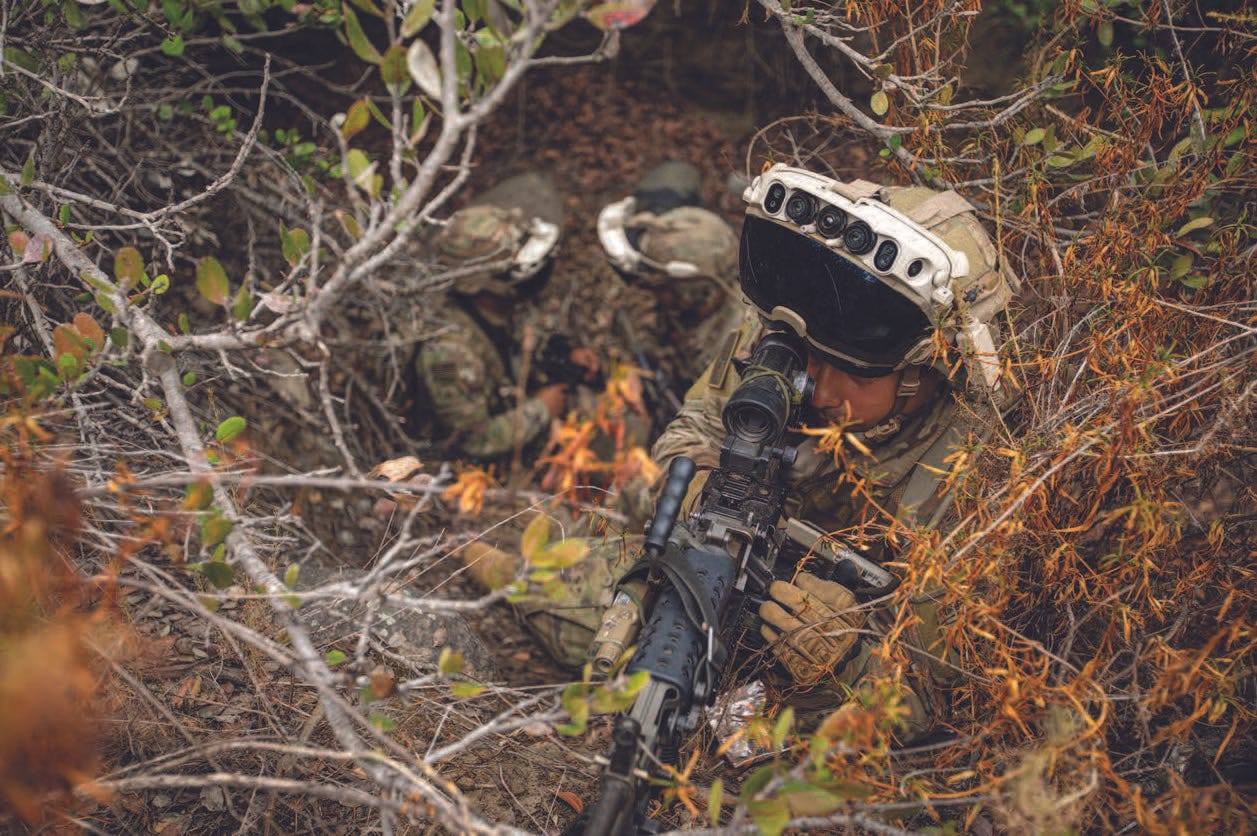
They like to call it “command”. In practice, it is the art of persuading other (mostly young) people to die on your behalf, or to kill on your behalf, while retaining for yourself the illusion of clean hands and a guilt‑free superior purpose.
From time to time, the facade cracks. A sniper in a ruined city confesses that he can no longer live with what he was ordered to do, and becomes his own executioner. A drone operator thousands of kilometres from the battlefield moves from detachment to despair. A general, interviewed in old age, admits that he never quite believed the justifications he repeated from the podium. Such public moments of rupture are rare, but they illuminate a deeper question: what kind of civilisation allows a small cadre of political and military elites to order mass killing, and yet remain convinced – and convince others – that this is both necessary and virtuous?
If we treat war simply as the outcome of bad leadership or failed diplomacy, we miss its function as a mirror. It reflects back to us our most cherished assumptions about obedience, sacrifice, identity and legitimacy. It shows how grand narratives – about security, destiny, civilisation, tribe, faith, progress – condense into the intimate choreography of a finger on a trigger and a mind trying afterwards to live with what that finger has done.
The conventional analysis begins and ends with the soldier: the one who pulls the trigger, drops the bomb, or refuses to obey orders. But the more consequential moral problem lies upstream, with those who authorise violence on an industrial scale and then furnish moral cover for acts that, judged individually, would be called murder. These are the people we dignify as presidents, prime ministers, chiefs of staff and spiritual leaders – the designers and custodians of what I have elsewhere described as our “civilisational operating system”.
The puzzle for me is not that some politicians and generals commit or enable atrocities; history is awash with that. The puzzle is that entire societies can be induced to accept, rationalise, and even celebrate these acts, all the while believing themselves to be humane and enlightened. How is it that a culture capable of composing exquisite music, designing complex technologies or articulating sublime spiritual teachings can, in almost the same breath, mobilise to exterminate a population, starve a city, or convert entire regions into uninhabitable rubble, and then call that civilisation? I call that satanic.
It is tempting to partition such contradictions into the familiar boxes of good and evil, victims and perpetrators, “their atrocities” and “our responses”. That shift may offer psychological relief, but it doesn’t help us redesign the conditions under which violence on this scale becomes thinkable.
If we step back, three connected layers become evident. At the deepest level, shared civilisational belief systems – worldviews – define what counts as real, valuable and possible. These are not mere opinions. They are organising myths about human nature, the purpose of life, the meaning of death, the relationship between self and other, humans and nature, time and eternity. From these worldviews emerge more tangible world‑systems: political structures, military institutions, economic arrangements, technologies of control and extraction. And living within these systems, individuals and groups improvise from a repertoire of cultural mindsets – habitual ways of making sense of their circumstances.
Genocidal orders, and the compliance they so often receive, can only be understood as a product of the interaction between these layers.
One type of worldview, still prevalent in many societies, imagines humanity as fundamentally separate and competitive. Existence is framed as a struggle for survival in which security is achieved primarily through dominance over others. In this frame, it becomes plausible to think of entire groups as “threats” to be neutralised, and of historical suffering as a license for pre‑emptive or “defensive” brutality. A people once victimised can, without noticing the transition, come to see themselves as permanently endangered and eternally entitled to use overwhelming force to prevent the repetition of trauma. In that shift, “never again” can subtly mutate from a universal vow into a tribal privilege.
If, at the same time, our economic and political world‑systems reward conquest, centralisation of power and control over territory and resources, it should not surprise us that militaries are built as rigid hierarchies. Obedience is drilled into young minds long before they don a uniform. The child learns early that questioning authority carries a cost; that loyalty is prized more than curiosity; that aggression in the right direction will be excused, while dissent, even when softly spoken, can provoke sanctions. By the time this child stands before a commanding officer, refusal will feel like a betrayal not just of an institution, but of family, history, and identity.
Within such a field, the politician who orders a bombing campaign, or the general who designs rules of engagement that all but guarantee civilian casualties, does not experience himself as a criminal. He is an instrument of destiny, guardian of the realm, a protector of the innocent – provided “innocent” is defined narrowly enough. The civilian dead on the other side can be coded as “human shields”, “regrettable collateral”, or, more insidiously, as an undifferentiated mass whose suffering does not fully register as real. The rhetoric varies from one culture to another, but the pattern of distancing is remarkably consistent.
Is there any society that has entirely resisted this pattern? I am not aware of one. That alone should give us pause for thought.
At the same time, there’s another phenomenon we neglect at our peril: the persistence of conscience. Worldviews, world‑systems and mindsets all shape behaviour, but they don’t fully extinguish the intuitive recognition of another human being. We see this in soldiers who disobey or quietly subvert orders, in whistle‑blowers who expose the lies of their own governments, and in those who, after participating in atrocities, are psychologically unable to maintain the official story. Their minds fracture on the contradiction between what they did and what they were told it meant.
We have labelled much of this breakdown as “post‑traumatic stress disorder”. That term is accurate in part, but it obscures what many of these individuals describe: not only terror and revulsion, but crushing guilt and shame. In more recent discourse, the phrase “moral injury” has emerged to capture the damage done when people act, under orders, against their own deepest sense of right and wrong, or when they later come to see those actions in that light. How much of the epidemic of veteran suicide is, at its core, an attempt to resolve an impossible equation: “The person I believe myself to be would never do this. But I did this”?
If that’s so, it suggests an unsettling corollary. Generals and politicians who issue criminal orders are not simply compromising the physical safety of others; they are actively injuring the moral fabric of those they command. They are creating conditions in which obedience becomes a form of unconscionable self‑betrayal. Within those conditions, the only exits appear to be denial, fanaticism, or self‑destruction.
Is it any wonder that, under such pressure, some choose denial? Faced with the choice between acknowledging one’s role in mass suffering and clutching the comforting fiction of necessity, many cling to the fiction. Leaders exploit that tendency unmercifully. They surround the act of killing with ritual and abstraction – uniforms, anthems, flags, legalese, gaming, technical jargon. The more distant the killing, the easier the abstraction: a drone strike on a screen is just a “surgical operation”, a vital “degrading of capabilities”. Where once a sword had to meet flesh, now a keystroke can erase a family. We were promised that such technologies would make war cleaner. Instead, they have made it hideously easy—cowardly, bloodless for us, but butchery for them—to choose slaughter.
A futurist is expected to ask what will change as technologies become more autonomous, as decisions of life and death are delegated to algorithms. Will the chain of moral responsibility become even more diffuse? Or will we finally be forced to confront the absurdity of assigning “blame” to machines built to execute the priorities we encoded in them? An autonomous weapon has no conscience to injure. But the engineers who design it, the officers who deploy it, the politicians who authorise its use – how will they live with themselves when those systems fail, as they inevitably will? Or will they persuade themselves that they have only built tools, and that responsibility lies elsewhere?
Underneath these questions is a deeper matter. Are we dealing here primarily with individual moral failure – a corrupt general, a ruthless politician – or with a civilisational design flaw? If the latter, then no amount of replacing individual “leaders” will suffice. We’ll simply install new managers atop an operating system optimised for control, extraction and competitive dominance, and the machine will continue to produce the same outcomes, adorned with different slogans.
To see this, we must consider how war and atrocity function not as aberrations but as implicit options in the repertoire of the modern state. The capacity to organise violence on a grand scale is, in most political orders, taken for granted as a core attribute of sovereignty. The phrase “all options are on the table” scares the life out of me. States are judged “serious” or “insignificant” in part by their ability to project force. Military spending is justified as an insurance policy, yet the very existence of the capacity for war creates its own gravitational pull. What is insured must, from time to time, be demonstrated. Weapons must be “tested”; alliances must be “reassured”; enemies, actual or imagined, must be “deterred”.
In this context, generals and politicians sit at a dangerous intersection. They are custodians of vast destructive capacities, embedded in cultures and histories that equate restraint with weakness and glorify decisive action. To survive at the apex of such systems, they must, almost by definition, be willing to accept the killing of others as a legitimate instrument of policy. Those who are incapable of that acceptance rarely rise to the top. So we create selection mechanisms that filter out precisely the kind of empathic, morally reflective individuals we most urgently need in positions of influence.
There are, of course, exceptions: leaders who resist the pull towards escalation, who refuse to demonise entire populations, who understand that the humiliation of an adversary today becomes the fuel for catastrophe tomorrow. But they operate within constraints set by grander narratives and institutional logics. If a population has been schooled for generations in the story that it is uniquely threatened or chosen, how far can any one figurehead deviate from that script before being replaced?
Gaza, for many observers, has become a brutal case study in these dynamics. Yet to focus only on that theatre risks missing the general pattern. The spectacle of overwhelming force used against a largely defenceless population, justified in the name of security or even of a supposedly superior social model, is one that recurs across time and geography. So does the subsequent claim that those issuing the orders had “no choice”. How often do we hear that refrain, and how rarely do we interrogate the worldview that rendered alternatives unseen?
This is where the conversation typically stalls. One side recites legal categories: war crimes, crimes against humanity, genocide. The other dismisses those terms as politicised weapons. In the meantime, the dead accumulate, and those conscripted and ordered to kill develop psychic wounds that will echo through families and communities for generations.
I sometimes wonder: what might change if we were to treat the issuing of manifestly illegal or immoral orders not just as a violation of law, but as an act of deep cultural vandalism? Not just a crime against specific victims, but an assault on the moral and psychological integrity of whole societies? Would we design our institutions differently if we recognised that the real “collateral damage” of such commands includes the conscience of the young, the trust between communities, and the credibility of the values we claim to uphold?
If we follow this line, accountability can no longer be confined to courtroom dramas after the fact. It must move upstream to question the myths in which violence is embedded. Which histories are taught, and from whose perspective? Which lives are grievable and which are invisible? Which forms of suffering trigger avalanche coverage, and which are treated as background noise? How is “security” defined, and whose security counts?
A society that has been conditioned to believe that its pain is singular, its virtue exceptional, and its enemies subhuman requires only the slightest nudge from an opportunistic leader to tip into catastrophe. Conversely, a society that understands its own traumas as part of a wider human experience, and its own capacity for wrongdoing as structurally similar to that of its adversaries, is far harder to mobilise for genocide, however skilful the propagandist.
This isn’t a call for false equivalence or moral relativism. It’s an appeal to recognise that no culture, however noble its self‑image might be, is immune from the temptation to sanctify violence when it suits perceived interests. If that’s so, then the defence against atrocity lies less in proclaiming our righteousness and more in building comprehensive checks on our own potential for brutality.
What might those checks look like in practice? At the level of institutions, can we imagine military structures where the explicit duty to disobey unlawful orders is not just codified but actively rehearsed, modelled, rewarded? Legal frameworks where political leaders cannot unilaterally deploy overwhelming force without transparent deliberation and real consequences for deceit? Cultural ecosystems where artists, scholars, spiritual figures and survivors of past atrocities have genuine influence in reshaping how a people understands its history and its obligations to others?
At the level of our inner being, the question becomes even more challenging. How do we cultivate in individuals – including those drawn to or handed positions of power – a capacity to hold competing loyalties and narratives without collapsing into simplistic binaries? Is it possible to train future generals to see beyond the short horizon of tactical victory to the long cycles of grievance that today’s “decisive blow” will almost certainly unleash? Can we imagine educational systems that teach not only critical thinking, but critical feeling: the disciplined examination of how fear, humiliation, pride and trauma can be harnessed to justify the unjustifiable?
These questions press upon us every time we watch an official spokesman explain away the incineration of children as necessary, tragic, but inevitable. They surface every time a dissident voice, from within the armed forces or the political class, is silenced or smeared for refusing to sanctify the latest operation. They hover over the grave of every soldier who could not live with what he was ordered to do, and over the unmarked graves of those he killed.
There is, of course, a darker possibility we must face. What if our current civilisational architecture is such that large‑scale organised violence is not a deviation at all, but an intrinsic feature? What if the very categories in which we think – nation, race, civilisation, development, deterrence – predispose us to define entire swathes of humanity as expendable when they obstruct our preferred futures? If that’s the case, and I strongly suspect that it is, then the issue is not how to make our wars slightly more humane, or the “rules of war” more stringent, but how to evolve beyond a system that normalises war as politics by other means.
I am interested in understanding these deeper patterns and asking whether we have the imagination and courage to transcend them. The emergence of global communications, planetary ecological limits, and increasingly autonomous technologies means that the old justifications for mass violence are becoming not only morally bankrupt but strategically suicidal. A general who authorises the poisoning of a river today is not just harming an enemy; he is accelerating systemic collapse that will impact his own successors. A politician who treats millions of displaced people as a disposable problem to be contained rather than a sign of a failing global order may be winning a short‑term domestic victory at the cost of long‑term instability that knows no borders. In that sense, the figure of the bold sabre‑rattling leader is no longer only a local menace. He’s a global risk factor.
The temptation, when confronted with such a figure, is either to demonise or to pathologise: to insist that only monsters or madmen could give such orders. But this lets the rest of us off the hook too easily. These individuals are selected, sustained and celebrated by particular cultures. They emerge from our schools, our families, our religious communities, our shared silences. They are us. To treat them as aberrations is to absolve ourselves of the responsibility to interrogate the worldviews that made their ascent possible.
This does not mean collapsing responsibility into an amorphous collective guilt. It means recognising that moral agency is distributed. The general who drafts a doctrine of overwhelming force, the politician who signs the order, the lawyer who stretches language to provide legal cover, the media executive who repeats the talking points, the religious teacher who blesses the troops, the voter who cheers the bombardment of distant strangers they will never ordinarily meet: each plays a part in normalising the unacceptable. At each of these nodes, a different choice is possible. At each, conscience flickers, even if only for a moment.
The suicide of a lone sniper is, in this light, both a private tragedy and a symptom of a wider pathology. He could not reconcile his actions with his sense of self. Others in his position resolve the tension differently: by numbing themselves, by doubling down on ideology, by convincing themselves that the victims were less than human. Which of these responses we, as societies, encourage or even permit will shape the moral landscape for decades to come.
It’s sometimes said that evil destroys itself. There is some truth to that: systems built on systematic dehumanisation eventually generate blowback they can’t contain. Yet while we wait for such systems to unravel, they consume lives without number, and they corrode the inner lives of those caught up in them. The more urgent task is to ensure that our species does not destroy itself in the process. That requires more than reactive condemnation after each atrocity. It demands a deliberate redesign of the stories, structures and sensibilities through which we organise and execute power.
If the capacity to order others to kill and be killed is one of the most alarming and immoral functions we have created, then one measure of a mature civilisation might be the extent to which it constrains, disperses or renders obsolete that capacity. We are a long way from that condition. But the fact that soldiers can still be pierced by conscience, that citizens still rise up against unjust wars, that survivors of one genocide can sometimes stand in solidarity with victims of another, suggests that our operating system is not yet fixed beyond repair.
Will we use that remaining plasticity to evolve towards forms of collective life in which the role of the general and the war‑authorising politician is radically diminished, or will we continue to hand them the authority to decide who deserves to live and who may be consigned to rubble and memory? That’s not a question for them alone. Ultimately, it’s a question for all of us, wherever we happen to live, whatever stories we have been told about who we are and what we must defend.