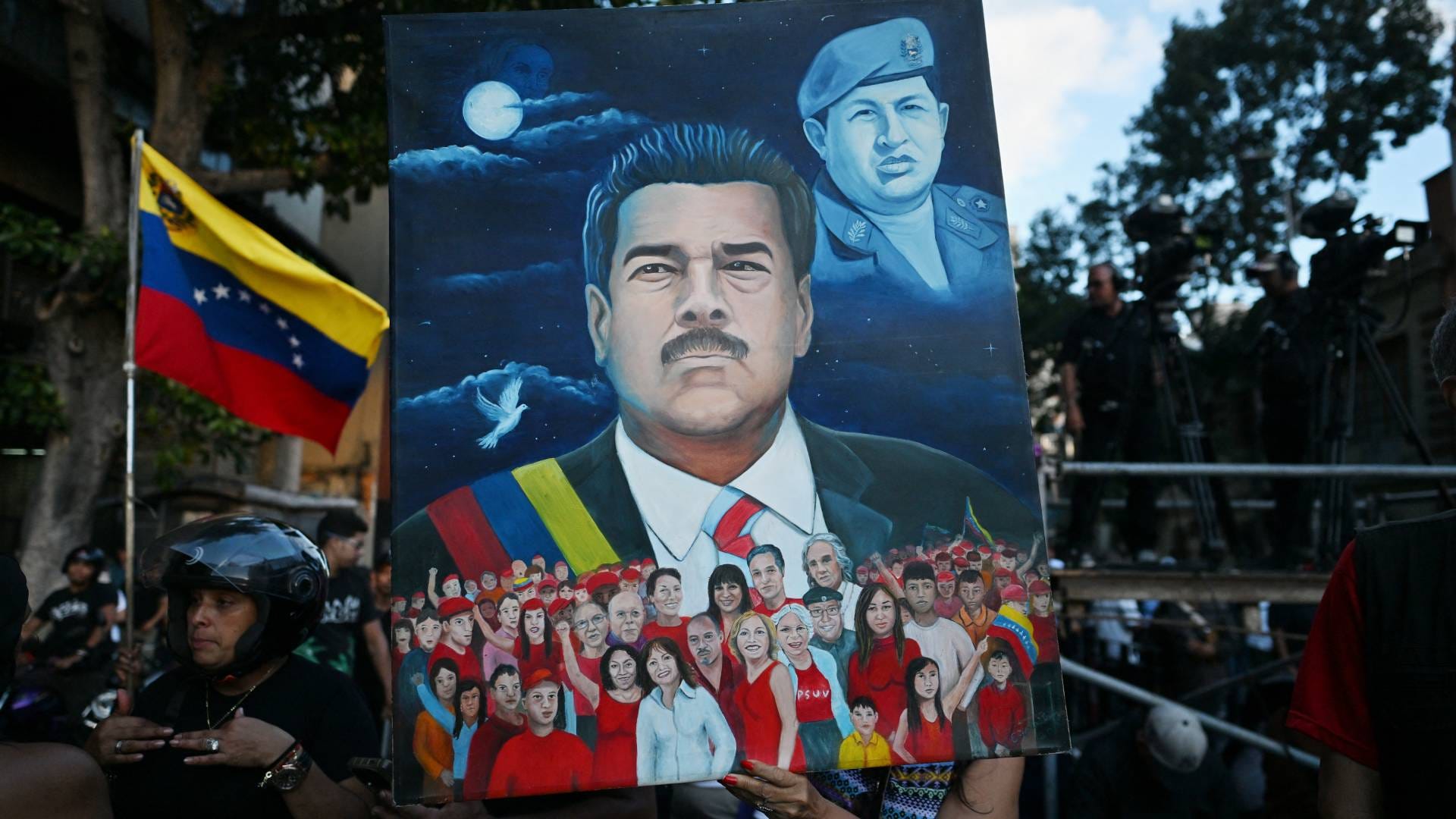
I am frequently asked what comes next, as though history were a Netflix series and we are simply waiting for the next episode to drop. My answer is less entertaining. We have already crossed the threshold. The plot twist has happened. Most people just have not caught up with it yet, as can be seen from the range of generally uniformed and mostly emotional comments on social media.
The extraterritorial seizure of a Venezuelan leader by the United States – let us call it what it is: the armed removal of a sitting head of state from his own territory – is not an isolated incident to be analysed as a legal curiosity or an ethical puzzle. Put aside the character of the individual for one moment. This action is a public admission that the old international order, such as it was, no longer exists in any meaningful way. One state has asserted the unilateral right to reach into another sovereign jurisdiction, remove its leader, and subject him to its own legal and political theatre. That is not an aberration. It’s a revelation.
For decades we sustained a fragile illusion: a “community of nations” inching towards a world in which democracy, human rights, and the rule of law gradually extended their reach. That illusion has now burned away. What stands exposed is a much harsher landscape: a handful of large powers, each driven by its own civilisational story, scrambling for advantage on a planet whose life-support systems are fraying.
The End of the Liberal Masquerade
The United States still wraps its actions in the vestiges of a crusading morality: democracy, liberty, human rights. Yet Washington’s behaviour – from sanctions that immiserate civilians, through covert operations, to now a publicised kidnapping of a foreign leader – is difficult to reconcile with those slogans. One doesn’t need to be especially radical to see the mismatch. Just read the record of foreign interventions since 1950 in any serious historical account and ask a simple question: whose lives were improved in the long run?
What ended with the Venezuelan abduction was not “international law” – that has been selectively applied for a very long time – but the pretence that the West’s dominance serves a universal moral project. When the mightiest military power on earth abandons even the appearance of restraint, when it behaves like a global sheriff in a movie nobody else agreed to act in, credibility evaporates. Allies begin to hedge. Rivals sharpen their knives. Neutral states quietly look for alternative patrons.
This is where the fantasy of a coherent, liberal, rules-based order dies. The body has been on life-support for some time. The ventilator has just been switched off.
From Civilisational Goods to Civilisational Loot
In my work I have often pointed to those fragile, shared achievements that raise a civilisation above the merely predatory: peace as more than an interlude between wars; justice as something other than victor’s privilege; cooperation that’s not just temporary collusion; equality that is much, much more than an advertising slogan; dignity as a lived experience rather than a speechwriter’s line. You could add clean air, safe water, accessible education, and energy systems that don’t destroy the conditions for life. These are not “nice-to-haves”. They are the infrastructure of any future worth inhabiting.
Once upon a time we could imagine these goods expanding – haltingly, unevenly, but at least directionally. That expectation is now in tatters. What we see instead is a reversion to something more primitive: civilisational looting. Great powers circle the remaining stocks of resources, data, labour, and attention like scavengers around a dying whale. The carcass still looks huge, but anyone paying attention to climate science, biodiversity loss, soil depletion, and fresh water stress knows the feast will not last.
In that context, the Venezuelan episode is symptomatic. Oil is not just a commodity; it’s the bloodstream of the industrial paradigm. To seize control of a key producer is to grab at the arteries of a fading energy regime. Those who believe this is about “restoring democracy” might care to examine how often oil and gas fields lie coincidentally under the territories we feel moved to “liberate”.
Three Projects, Three Stories
The United States, Russia, and China are not interchangeable villains – three mighty empires bent on conquest. That framing is satisfying in its bleak symmetry to a mind saturated with propaganda from Washington, but it obscures more than it reveals. Power is always narrated through myth. Each of these entities is acting out a distinct story about who they are and what the world is for.
Washington’s story is rooted in a belief – now dangerously detached from reality – that it is both indispensable and exceptional. That belief authorises extraterritorial law, economic coercion, and military adventures as if they were simple housekeeping: tidying up the world. When that conceit collides with visible decay at home – broken infrastructure, a brutalised underclass, decaying institutions, and a politics veering into open authoritarianism – the dissonance produces hysteria. Power becomes more erratic precisely as its foundations erode.
Moscow’s narrative is quite different: a wounded empire attempting to rewind the tape. Its gaze is fixed on lost territories and imagined historical rights. It uses cruder tools: direct military aggression, targeted assassinations, manipulation of fringe movements. The aim is less to build something new than to prevent further erosion of status. In that sense it is reactive, even nostalgic. Dangerous, yes; visionary, no.
Beijing’s project is again of another order. Here we meet a civilisation that sees itself not as an upstart, but as returning to the centre after a brief, humiliating detour. The language is less evangelical. There is little talk of converting others to a Chinese-style political system. The promise is more prosaic and, for many leaders in the global South, more seductive: capital, technology, infrastructure, and trade, unaccompanied by sermons on governance or explicit demands for regime change. The mantra is sovereignty, stability, mutual development.
Does this mean China is benign? That would be naïve. An authoritarian state with a formidable surveillance architecture, an expanding blue-water navy, and a strategic grip on supply chains is not running a charity. Belt and Road projects have created debt problems in some countries; disputes over labour standards and environmental damage are real. Yet for governments scarred by decades of Western conditionality, structural adjustment, and covert interference, the Sinic offer looks refreshingly free of moral cosmetics. Power is wielded as power, not camouflaged as salvation.
Industrial Economism in Terminal Phase
All three of these projects operate within a deeper, more pervasive frame I have long described as industrial economism: the belief that the primary purpose of human societies is the continuous expansion of production and consumption, measured in abstract tokens we call money, extracted from matter we treat as inert “resources”, and justified by a story in which competition is natural law and greed is merely self-interest with better clothes and fashion sense.
In this worldview, people are inputs. Forests are inventory. Oceans are sinks. Time is money and money is the only language the system truly respects. The Venezuelan abduction is a gesture from within that creed. An incumbent “leader” is removed; not to heal a ravaged society but to secure access to hydrocarbons and intimidate others who might question who really owns what lies under their soil.
The industrial paradigm is now colliding with hard biophysical limits. Climate models, although complex and frequently refined, converge on an uncomfortable point: we are pushing the Earth system into states unseen in human history. Biodiversity studies published over the past five years point to accelerating extinctions and habitat loss. Reports from agencies, ranging from the UN Environment Programme to national academies of science, all tell similar stories about soil erosion, water stress, and pollution. None of this is hidden. It’s simply compartmentalised so that it doesn’t derail business-as-usual.
When a growth-obsessed system meets a finite planet, two possibilities present themselves: transformation, or a scramble for the remaining spoils. The seizure of Venezuela’s leadership, framed as a triumph of justice by some Western leaders, indicates which of those two options currently appeals to Washington’s operators. It is not transformation.
The Darkening Horizon
Will this spiral into a third world war? It’s tempting to reach for that label because it offers a familiar script: blocs, alliances, frontlines. But the emerging configuration is more erratic. Power slides across domains: financial markets, data flows, climate shocks, narrative storms. A blockade of microchip exports can be more devastating than a missile strike. A cyber-attack on logistics can paralyse a city faster than an armoured division.
Imagine, for instance, a sudden move by Beijing to enforce its territorial claim over Taiwan. Given the island’s role in manufacturing advanced semiconductors, such a move would reverberate through every supply chain on the planet. Pension funds, currency markets, food systems, and public services would all feel the shock. Military confrontation might follow, but the first effect would be an economic heart attack.
Or picture a scenario in which Moscow abducts or assassinates a serving European leader, claiming the same prerogative Washington just asserted in Latin America. A European invocation of collective defence treaties would collide with a United States whose leadership no longer sees obligations as binding. Bankers in Frankfurt and Paris would read the message more quickly than most generals: assets held in dollars are hostage to a state that no longer plays by its own rules. The unwinding of that realisation could be rapid and brutal.
These are not predictions. They are boundary conditions, drawn from current trajectories and publicly available facts. They tell us something about the density of risk now surrounding ordinary lives. The margin for error is narrowing. A single miscalculation, misreading, or manufactured crisis can cascade through an over-connected, under-resilient world in days.
China, Corruption, and the Search for An Exit
In that turbulent context, many societies are quietly exploring what one might call “strategic escape routes” from Western tutelage. It is here that the Sinic project reveals its unsettling promise.
Across Africa, Latin America, Southeast Asia and parts of the Middle East, Chinese investment has financed ports, railways, power stations, and telecommunications infrastructure. Studies by research institutes tracking these flows show a mixed record: some projects have been transformative, others mired in mismanagement or controversy. Yet viewed from presidential palaces in Nairobi, La Paz, or Phnom Penh, Beijing appears less hypocritical than Washington or Brussels. There are few lectures on democracy. Few threats about human rights. No invasion fleets on the horizon. The price is influence, access, and sometimes leverage over strategic assets. It’s not submission to a moral doctrine.
That difference matters. Western powers still cling to a self-image as guardians of universal values, even as their own democracies slide into plutocracy and surveillance. Citizens in many countries know this; they have seen the coups, the client dictators, the selective outrage. When an alternative appears that does not dress up self-interest as a holy mission, it can feel – paradoxically – more honest.
Does China offer a pathway out of Western corruption, or merely an alternative patronage system? That is an open question, and one that will be answered differently by different people in different places. On one level, the very existence of another gravitational field – with its own banks, technologies, payment systems, standards, and diplomatic forums – weakens Western monopoly power. That shift alone can open spaces for local autonomy, experimentation, and bargaining.
On another level, we must ask: what kind of world are we building when the dominant options on the table are a crumbling liberal empire, a resentful military power nursing historic grudges, and a technocratic civilisation that treats dissent at home as a pathology to be screened and corrected? Is it plausible that a system grounded in industrial economism can truly escape corruption – whether Western, Eastern, or otherwise – while the organising principle remains extraction and predation?
The Personal Reckoning
I have been writing about these transitions for decades now. My work has never been about predicting headlines. It has been about reading the shifting tectonic plates beneath them. When I warned that Trump’s return to power would accelerate a totalitarian turn in the United States, many dismissed that as melodrama. Yet the indicators are openly available: the erosion of checks and balances, the capture and intimidation of institutions, the securitisation of everyday life, the growing contempt for independent media, and the willingness to bend law into a weapon rather than a safeguard. These are not secrets. They are symptoms.
What has always troubled me more than the hostility is the squandered time. Years in which we might have been cultivating alternative economic logics, reimagining governance, shielding communities from foreseeable shocks, and inventing new forms of solidarity, were instead spent defending the status quo or indulging in comforting polarities: left versus right, East versus West, “democracy” versus “authoritarianism”. None of these binaries has much explanatory power any more. They are props from a fading stage illusionary act.
I will continue to advise those who are serious about building what I call havens – not bunkers for the rich, but living systems in which resilience, meaning, and mutual care can take root in practical ways. These are not utopian communes. They are pragmatic experiments in living differently within, against, and beyond industrial economism. Some are geographical. Others are organisational, cultural, or digital in form. All are designed to lessen dependency on institutions that are visibly failing.
But I am under no illusion: not everyone will listen. Some will cling to the familiar until it crumbles in their hands. Others will misread what is happening and look for redemption in strongmen, magical technologies, or nostalgic nationalism. That, too, is part of the human repertoire.
A Species at the Crossroads
What does any of this mean if you are a nurse in Lagos, a coder in Chiang Mai, a farmer in Uttar Pradesh, a teacher in Sydney, a street vendor in Manila, or an unemployed graduate in Detroit? It means your life is now entangled in a web of system-wide hazards whose scale and speed are historically unprecedented.
Your pension, if you have one, depends on digits in a financial system that can be wiped out by geopolitical games you will never be consulted about. Your food depends on supply chains stretched across continents, vulnerable to droughts, floods, cyber-attacks, and ill-judged sanctions. Your information diet is shaped by platforms optimised for outrage, fear and distraction rather than understanding. The air you breathe, the water you drink, the climate that underpins your local ecology, are all being altered by economic activities you did not vote for and cannot directly control.
In that sense, the abduction of a Venezuelan president is not some distant quirk. It’s another fragment of evidence that those steering our most life-critical systems are prepared to abandon inhibitions when their access to strategic assets is threatened. If a head of state can be snatched across borders with impunity, what protection do you imagine your rights, savings, or expectations really enjoy?
This is not a counsel of despair. It is a call to lucidity. To drop the comforting belief that “they” – politicians, experts, markets – will sort it out while we get on with our private lives. That story has expired.
Beyond Industrial Economism
The real frontier now is not between East and West, democracy and autocracy, socialism and capitalism. It’s between those who still believe industrial economism (capitalism for those of you who prefer simple definitions) can be patched up and those who recognise that a civilisation built on relentless extraction, competition, and commodification has reached the end of its adaptive capacity.
Can we imagine and enact forms of life where wealth is measured in the health of ecosystems, the depth of relationships, the quality of insight, and the freedoms that come from sufficiency rather than accumulation? Can we treat time as a medium for reflection, artistry, and care rather than a ledger to be filled with transactions? Can we educate children to be stewards of complexity rather than cogs in a machine that’s already juddering to a halt?
These are existential questions. And they must be asked everywhere – in Beijing and Boston, in Johannesburg and Jakarta, in rural villages and megacities. They cut across religion, ethnicity, and class, because the atmosphere doesn’t filter carbon dioxide by ideology and the oceans don’t distinguish between plastic from a rich country and plastic from a poor one.
If there’s any consolation in the present turbulence, it is this: when the old myths fall apart, when the masks slip and the empires reveal their insatiable appetites, imagination is no longer a luxury. It’s a survival skill. The collapse of credibility in Western moral leadership, the rise of a Sinic alternative that exposes its hypocrisies without offering a simple cure, and the visible exhaustion of industrial economism all create a space in which new narratives can germinate... if that is what we want.
Whether we seize that opening, or allow it to be filled entirely by digital authoritarianism, corporate feudalism, theological extremism, or some other fasionable ism.... remains an open question.
For now, the Venezuelan abduction stands as a bleak marker on the road we have chosen. It signals the point at which the comforting fable of a kindly liberal order shed its final disguise. What will take its place is still opaque to me. Yet, as a futurist, a father, and a citizen of this perplexing species, I hold on to the faint but stubborn conviction that we might yet shape whatever comes next in ways that expand, rather than diminish, our shared humanity.