I am no sage, no oracle cloaked in certainty. I have been standing at the edge for 80 years, observing systems convulse, nations fragment, ecologies bleed, and ideologies calcify. What follows? These are not prophecies, but patterns; not answers, but apertures. These fragments of truth are born of vigilance, a Cassandra’s ledger scrawled against the gathering dark. They map the fault lines beneath our feet, the silent screams in the data, the arrogance of power, and the stubborn embers of dignity that refuse extinction. Read them not as doctrine, but as waypoints in a landscape where old maps are burning.
I. The Machinery of Violence
On escalation
In an age of instantaneous connection, conflict metastasises exponentially. Distance is dead; consequence is contagious.On sovereignty
Borders are palimpsests—fictions etched in blood and ink. When drones erase them with impunity, we witness the autopsy of the nation-state.On militarism
Weapons flow like capital, lubricated by the same markets. Arms dealers trade not in security, but in the perpetual anxiety that fuels their ledgers.On law
International order is performance art. When the powerful discard the script, parchment becomes ash. Justice without enforcement is an elegy.
II. The Human Stain
On the innocent
Civilians are the calculus war ignores. Their ruins are not collateral; they are the verdict.On rulers in exile
Commanders in Doha penthouses, generals in Washington's bunkers—their courage is measured in the distance from the graves they order.On complicity
Silence is the mortar that builds empires of suffering. To look away is to lay the brick.On narratives
Truth is the first battlefield. When reality fractures into curated feeds, even trauma becomes propaganda.
III. Cracks in the Edifice
On blame
Seek not villains, but systems. Violence is the exhaust of ideology, profit, and fear—machine-tooled by governance.On scarcity
Water, soil, hope—true scarcity is manufactured. Greed designs deserts.On abundance and poverty
Skyscrapers shadow slums. A civilisation that calls this “progress” confuses engineering with ethics.On corruption
Corruption is any architecture that sacrifices the many to feed the few. It wears suits, not shackles.
IV. Time & The After
On foresight
Collapse whispers in data streams and dying reefs. We record its breath and call it “news”.On despair
Civilisations end. What lingers is not the rubble but the choice: did we meet the dusk with cruelty or kinship?On renewal
Phoenixes rise from pyres. But rebirth demands we release the bones of broken systems.On choice
The fire is not fate—it's design. And design can be unmade. In the smoke, we choose: replicate the machine or forge a humbler humanity.
V. Fault Lines of Power
On empire
Empires do not fall; they rot, collapsing inward while still insisting on their dominion.On ideology
Doctrines are cages gilded with certainty. The bars may differ, but the prison remains.On technology
Innovation without ethics is acceleration toward chaos. We mistake faster for better and louder for wiser.On capital
The market is an altar, its priests indifferent. Human lives are coins shovelled into its furnace.
VI. Fragments of Collapse
On climate
The planet does not negotiate. It responds. Our treaties are whispers against storms.On migration
Borders buckle under tides of need. Migrants are prophets—they reveal what is already broken.On fragility
Banks topple like dominoes, power grids stutter, shelves empty. Complexity is a house of glass we pretend is stone.On memory
Civilisations forget faster than they fall. Memory is the first casualty of convenience.
VII. The Interior Battles
On fear
Fear is the tyrant’s coin. Spend it wisely or not at all.On hope
Hope is not optimism. It is rebellion against inevitability.On agency
Every decision not taken by you is taken for you. Neutrality is a design choice.On solidarity
To stand with another’s pain is to declare: ‘I will not profit from your fire.’
VIII. Masks and Myths
On truth
Truth is not discovered but defended. Abandon it, and lies become architecture.On media
The algorithm curates outrage, carving reality into spectacle. We scroll as if attention were infinite.On faith
Faith is not certainty but fidelity: remaining when answers dissolve.On illusion
Illusion is the kinder twin of despair. Both keep us docile before the pyre.
IX. The Tipping Points
On threshold
Every age has a line it dares not cross—until one morning it's already behind us.On turning
History pivots quietly. Revolutions are seeds watered long before they sprout.On resistance
Resistance need not win to matter. Its presence alone unsettles the empire.On vision
Without vision, collapse is only rubble. With it, ruins become foundations.
X. The Long Reckoning
On justice
Justice delayed does not wither; it accrues interest. The future is its collector.On interdependence
Every supply chain is a parable of fragility. Our fates are already entangled.On survival
Survival is not bare existence. To live without dignity is another form of death.In future
The future is not ahead of us—it is built now, in the marrow of each decision.
XI. Toward Renewal
On creation
New worlds are not discovered; they are designed from the debris.On kinship
The stranger is not a threat but a mirror. To see them as kin is to rescue ourselves.On imagination
Imagination is the rarest resource. Without it, we only replicate the collapse we flee.On humility
We are not masters of the earth, only guests. Arrogance is the extinction we write ourselves.
XII. Thresholds of Decision
On catastrophe
Catastrophe is less an event than a revelation: it unmasks what was fragile all along.On endings
Endings can be elegies or invitations. The difference is whether we dare to plant afterwards.On abundance
True abundance is not warehouses but relationships—a network of sufficiency.On courage
Courage is not fearlessness. It is fidelity to what must be done despite trembling.On choice
History is the sum of small choices made in shadows. Choose as though they echo.On the flame
The fire consumes, but it also illuminates. To see by its light is to decide how not to repeat it.
Closing: The Embers and the Dawn
The flames we see today were lit decades ago—in boardrooms, parliaments, and the quiet cowardice of normalised indifference. This is not an epitaph. Systems shatter; power fragments; empires dissolve into myth. What endures is the irreducible core: our capacity to choose dignity amid ruin, to see the stranger as kin, and to plant seeds in scorched earth.
Cassandra’s curse was truth without an audience. Ours is the heavier burden: to speak, and then to act, knowing the gates may already burn. The next world is not written. It is shaped in the stubborn acts of those who refuse to let the fire consume compassion.
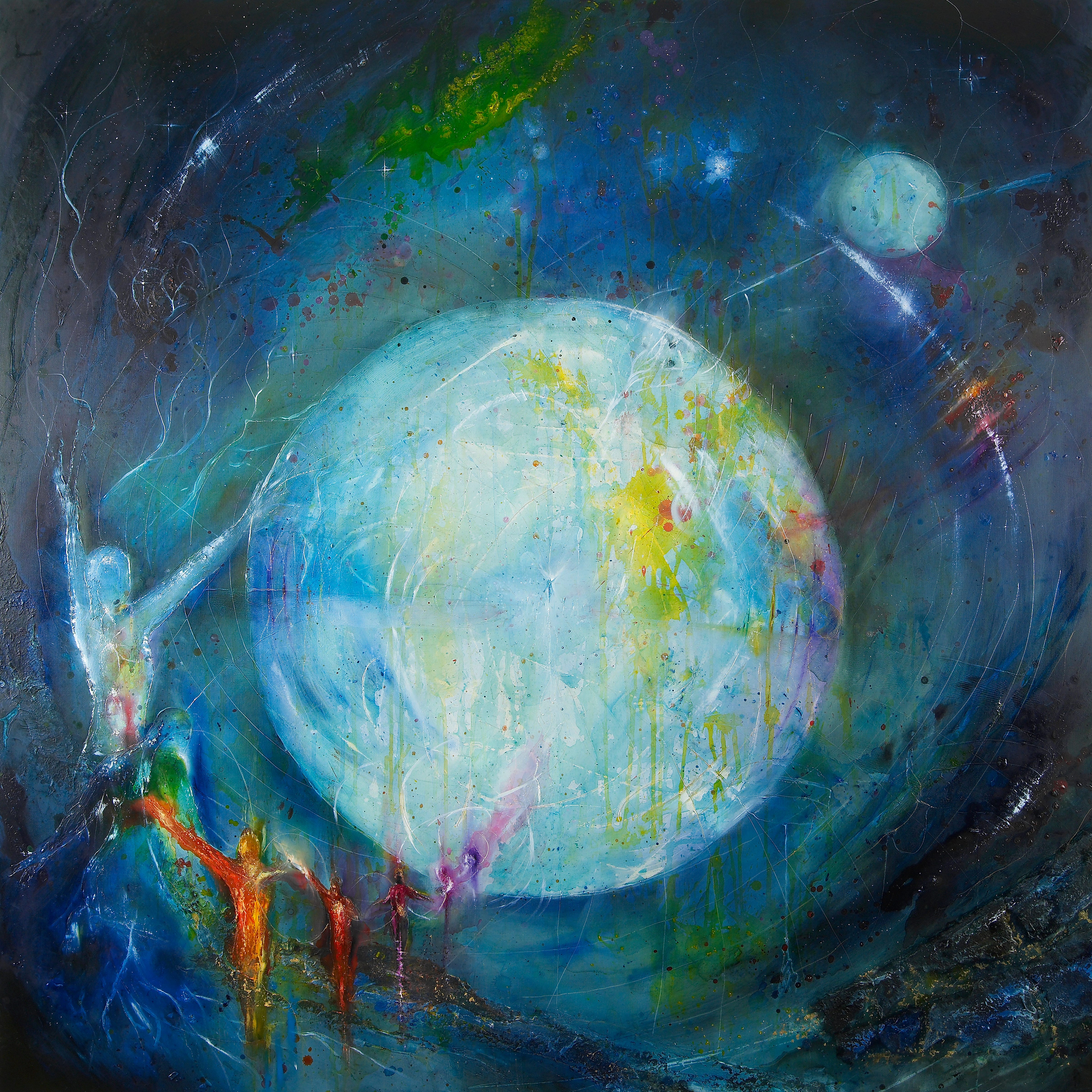
Illustration by Louis Parsons.