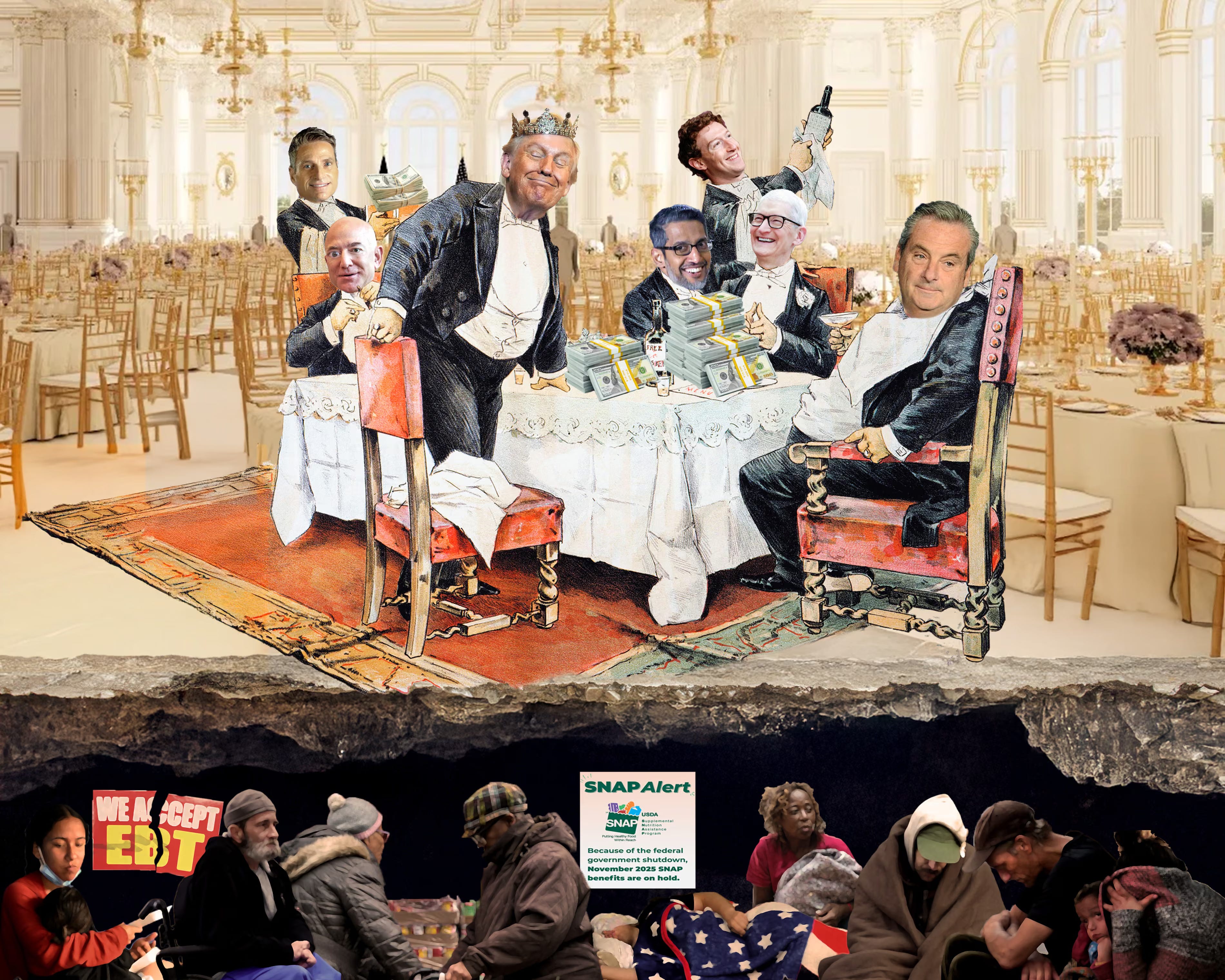
In the relentless churn of modernity, where the cacophony of daily life can so easily drown out any subtle whispers of the heart, traditional values—once revered as the cornerstones of human civility and interconnectedness—find themselves eclipsed or redefined to fit the prevailing zeitgeist. Gratitude, a soft and heartfelt emotion, now languishes in the shadows, perceived by many as an antiquated relic in a world that prizes speed, efficiency, vigour and individual gain above all. Alongside gratitude, other values such as humility, patience, respect (and even honesty) are increasingly viewed through a lens of scepticism, if not outright disdain.
In this post-modern landscape, the self is often idolised while the ‘other’ is treated as adversary. Gratitude is mistaken for vulnerability, humility for lack of ambition, patience for inefficiency. Under the glow of neoliberal triumph, a competitive zero-sum worldview remakes achievement as purely self-made and entitlement as a reasonable posture. The intricate web of interdependencies that enable any success fades from view, and with it the sense that gratitude and humility are not concessions but acknowledgements of reality.
The digital age, with its relentless flow of information entangled with distortion, reshapes our cognitive topology, rewarding performance and immediacy over the contemplative and sincere. Echo chambers encourage a tribalism that thrives on division rather than unity, and on indignation rather than appreciation. Within these digital enclaves, respect—especially across generations and cultures—struggles to be heard. Dialogue yields to a commotion of competing monologues, each amplified, seldom altered.
Meanwhile, trust thins. Half-truths circulate easily, facts are trimmed to fit narrative, and suspicion settles where confidence once stood. When honesty erodes, the common ground required for resolution and consensus disappears with it. To reverse this corrosion we must create conditions where truth can be named and held: transparent communication, shared standards, and a culture that treats honesty as a collective asset rather than a personal weapon.
Frictional geopolitical uncertainties compound this malaise, as nationalistic fervour and propaganda elevate the supremacy of one nation over any notion of shared fate. In such a climate, gratitude toward other cultures is dismissed as naïveté. The demonisation of the ‘other’ leaves little room for recognising our shared humanity or acknowledging the diverse contributions that enrich the human project.
As always, amidst these challenges lies an opportunity for reflection and renewal. The erosion of gratitude, humility, patience, respect, and honesty signifies more than the loss of individual virtues; it signals a shift in the foundational elements that support the fabric of society. These values do not stand alone. They interweave with truth-telling, openness, and curiosity—the conditions of genuine connection and understanding.
Truth-telling, embedded within honesty, is crucial for maintaining trust and integrity in human relationships. In an era increasingly marked by disinformation and the blurring of fact and opinion, the commitment to truth becomes more vital. Yet truth cannot flourish without openness—a willingness to engage with perspectives that challenge our certainties. Nurtured by humility and respect, openness asks us to admit our limits and recognise the richness that difference brings. Consider the parent who listens deeply to their teenager’s concerns, or the executive who seeks input from the newest hire—moments of receptivity where dialogue can thrive and differences become opportunities for growth rather than battlegrounds for dominance.
This openness, in turn, feeds curiosity—the engine of discovery that propels both personal growth and collective progress. Curiosity, born from patience and sustained by respect, drives us to ask questions that have no easy answers, to explore beyond the familiar. When was the last time you sat with a question long enough to let it transform you rather than simply asking Google for the answer? The scientist who spends years pursuing a hypothesis, the artist experimenting with unfamiliar techniques, the citizen who seeks to understand rather than condemn—such sustained curiosity resists the cult of immediacy.
Empathy emerges from the interplay of openness and curiosity. When we actually listen and seek to understand, we begin to feel the weight of others’ experiences and recognise our shared vulnerability. Empathy bridges divides that fragment our societies, creating pathways across chasms of difference and indifference. A nurse holding the hand of a dying patient; a teacher sensing the struggle behind a student’s failure; a neighbour who offers help unbidden—these are acts of recognition as much as kindness, acknowledgements that our individual stories thread into a common tapestry.
This recognition of interconnectedness extends to our relationship with community and the bonds of solidarity that hold societies together. The erosion of community values in favour of hyper-individualism may be modernity’s most corrosive feature: when personal achievement eclipses communal well-being and success is measured solely by individual metrics, the networks that sustain us grow brittle through underuse. Yet community is not an abstract ideal. It becomes concrete in the mutual support that arises in crisis, in the neighbourhood association that advocates for local needs, in collective action that challenges injustice and outlasts a news cycle.
These expressions of solidarity remind us that our fates are bound together, that the flourishing of one depends upon the flourishing of all. Such solidarity demands accountability. In an era where misinformation outpaces correction, where corporate malfeasance hides behind legal complexity, and where politicians evade responsibility through calculated ambiguity, accountability becomes a form of repair rather than retaliation. It asks for transparent mechanisms and shared standards, where neither power nor powerlessness exempts anyone from ethical scrutiny. A corporation that acknowledges environmental damage and commits to remediation; a public official who admits error and changes course; an individual who owns mistakes and makes amends—acts like these begin to restore trust where cynicism had settled.
This web of accountability extends beyond human relations to our responsibilities toward the natural world. Sustainability and stewardship are not simply environmental concerns but questions about our place in the larger ecosystem of life. Indigenous wisdom that speaks of obligation to the seventh generation reminds us we are borrowers, not owners, of the Earth’s resources. Every choice we make—from the food we eat to the energy we consume—either honours or violates that trust. The farmer who rebuilds soil health, the architect who designs for minimal environmental impact: both embody a value system that extends moral consideration beyond the human sphere.
Yet even as we grapple with material concerns, we cannot ignore the questions of purpose that give coherence to human existence. In a cultural moment that equates worth with productivity and measures success in financial terms, the search for meaning can feel indulgent. But when we strip away superficial metrics, what remains? The parent who sacrifices career advancement to be present for their children, the artist who creates despite poverty, the volunteer who gives time without compensation—these choices align action with values that transcend market logic and reveal that purpose emerges from contribution rather than accumulation, from service rather than self-aggrandisement.
This pursuit of meaning intersects inevitably with equity and justice. A society cannot claim to value human dignity while tolerating systematic inequality. When some children receive world-class education while others attend run-down schools, when healthcare depends on wealth rather than need, when justice varies according to social status, the gap between stated values and lived reality becomes untenable. The pursuit of equity calls for more than charity; it requires dismantling the structures that perpetuate advantage and disadvantage across generations. The community organiser pushing for affordable housing, the lawyer offering pro bono representation, the policymaker crafting legislation to address systemic barriers—these are practical expressions of a commitment to fairness that goes beyond principle.
Such work requires resilience: the capacity to persist in the face of setbacks, to adapt when situations change, to keep faith when outcomes remain uncertain. Resilience is not stoic suppression but the flexibility that allows us to bend without breaking. It emerges from the interplay of the very values we’ve named: the curiosity that transforms failure into learning, the tenacity that sustains effort through hard seasons, the solidarity that shares burdens. Think of the refugee who rebuilds in a new land; the young Jewish nurse who endures antisemitic vitriol and still turns up for her patients; the person who finds meaning despite chronic illness; the activist who persists after defeats and arrest. These lives show resilience reshaping suffering into wisdom.
Mindfulness and presence offer the soil in which these values grow. Amid constant distraction—multiple screens, splintered attention, minds pulled toward regret and anxiety—the simple act of being present becomes radical. Mindfulness is not an escape but a deeper contact with reality as it is. When we cultivate presence, we notice the suffering that calls for empathy, the injustice that demands accountability, and the beauty that invites gratitude. The meditator who sits in stillness and the friend who listens without rehearsing a reply both create the space where values can take root.
So the question is not whether traditional values can survive modernity; of course they can. What matters is what we will risk to keep them alive—and that demands more than nostalgia for a golden age that never existed. Gratitude need not mean passivity in the face of injustice. Humility can coexist with a fierce assertion of dignity. Patience is not incompatible with urgency when crisis demands immediate action. These values must meet the world as it is, and sometimes they must wrestle with it.
Consider what we stand to lose. A society that abandons gratitude becomes entitled and resentful, unable to recognise the web of interdependence beneath even the most “self-made” success. One that discards humility grows arrogant, convinced of its own infallibility until reality intervenes. Without patience, we lose the capacity for deep work and sustained attention, reduced to what fits into a thirty-second clip. Without respect, we fragment into warring tribes, each certain of its righteousness. Without honesty, trust dissolves and cynicism becomes the only rational posture in a world of manipulation.
The evidence is all around us: rising rates of anxiety, depression and loneliness in spite of unprecedented material wealth; political systems paralysed by mutual contempt; environmental systems pushed toward collapse by our collective inability to value what cannot be monetised. These are not abstractions; they are the lived reality of millions who sense that something essential has been lost even as technology multiplies our capabilities.
What remains to be seen is whether we possess sufficient collective will to interrupt these trends. In our schools, will we teach children to think critically about the information they absorb, shield them from corrosive platforms until they are ready, or simply teach them to consume junk more efficiently? In our workplaces, will we create cultures that value play and restoration alongside productivity, or continue extracting maximum output while externalising the costs of burnout and despair? In our politics, will we demand accountability from those entrusted with power, or resign ourselves to a cynicism that treats corruption as inevitable?
These are not rhetorical questions. They require answers in the form of action. The teacher who cultivates genuine curiosity rather than teaching to the exam, despite administrative and parental pressure. The business leader who sacrifices short-term profits to invest in staff recreation and development. The citizen who shows up to local council meetings, organises neighbours, and refuses the comfortable retreat into private life. Values are preserved not by declaration but by the daily friction of living them in a world structured to resist them.
The interweaving of these values is most visible in moments of crisis. When disaster strikes, empathy motivates action, community organises response, and resilience emerges from collective effort rather than individual grit. The neighbour who shares a generator, the volunteers who sort donations, the local officials coordinating relief: these responses are not abstractions but acknowledgements that survival is mutual. Crisis strips away the illusion of self-sufficiency.
We need not wait for catastrophe. The patience to let someone finish speaking; the humility to admit ignorance rather than bluff; the curiosity to ask a genuine question instead of performing expertise—these micro-practices accumulate. They shape the texture of daily life and the quality of our relationships. They become small pockets of resistance against forces that would reduce all interaction to transaction, all communication to performance, all value to price.
The digital realm, so often a source of fragmentation and performativity, also offers possibilities for embodying these values. Online communities form around shared struggles, offering support to those isolated by geography or circumstance. Platforms enable the coordination of mutual aid, environmental activism, and citizen journalism. The challenge is not to reject technology but to refuse its colonisation of consciousness. We can use these tools without becoming tools ourselves, maintaining reflection, analysis, and presence as we navigate digital spaces.
What becomes abundantly clear is that these values cannot be preserved in amber, protected from all things modern. They must be tested, questioned, and, at times, violated when rigid adherence would cause greater harm. The parent who lies to protect a child from trauma, the whistleblower who breaks loyalty to expose wrongdoing, the activist who abandons patience when gradualism permits ongoing injustice—such contradictions show that values are not absolute commandments but guideposts requiring judgment.
This complexity is precisely what makes the work both difficult and necessary. If gratitude, humility, patience, respect, and honesty could be reduced to simple rules, they would require no cultivation, no practice, no wisdom. Instead, they demand ongoing negotiation between competing goods, careful attention to context, and the courage to act despite uncertainty. We must hold multiple truths at once: that we are autonomous and interdependent; that we must care for ourselves and for others; that we need both confidence and humility, both action and reflection.
The cost of abandoning these values is not only the loss of a nostalgic past but the foreclosure of particular futures. Without gratitude, we cannot recognise what is worth preserving. Without humility, we cannot learn from our mistakes. Without patience, we cannot undertake the slow work of transformation. Without respect, we cannot build the coalitions that enable collective action. Without honesty, we cannot even name our problems, let alone address them.
What we choose to cultivate now will determine what becomes possible later. The values we embody in our institutions, our relationships, and our daily practices will shape the world our children inherit. This is not a call to return to an imagined golden age but to discern which wisdom from our cultural, religious, and philosophical traditions remains vital for navigating an uncertain future. We must separate what enabled flourishing from what merely felt familiar or served exclusion.
The work is both individual and collective, both immediate and long-term. It appears in the choice to listen deeply in a difficult conversation and in support for policies that prioritise equity over expedience. It manifests in the practice of daily gratitude and in the structural reforms that make such gratitude plausible by ensuring basic needs are met. Personal transformation and systemic change are each necessary; neither is sufficient without the other.
We cannot individual-action our way out of collective crises, and yet collective change begins nowhere but in the transformed consciousness of individuals willing to live differently. Values require conditions. Patience is easier when you are not working three jobs to survive. Openness is easier when you are not constantly threatened. Empathy is easier when you are not exhausted by your own struggles.
This recognition does not excuse us from the work of embodying these values wherever we are. It clarifies that cultivation and transformation must proceed together. The labour organiser fighting for living wages restores time and energy to families and communities. The healthcare advocate pushing for universal coverage allows attention to rise above survival. The environmental activist protecting ecosystems preserves the world that sustains and steadies us. Each struggle is practical and ethical, material and spiritual.
What emerges then is an invitation to conscious choice. Moment by moment we can respond with gratitude or entitlement, humility or arrogance, patience or reactivity, respect or contempt, honesty or expedience. These choices accumulate, shaping not only our individual character but the character of our communities and institutions. They create the culture we inhabit, which in turn shapes what is possible for those who come after us.
The cost of forsaking traditional values is ultimately the cost of forsaking our own humanity—the capacity for reflection, connection, and meaning-making that distinguishes us from mere biological mechanism or economic unit. When we reduce ourselves to consumers, producers, and competitors, we impoverish our inner lives and our collective ability to face the challenges ahead. The problems of our age will not yield to cleverness alone; they require wisdom grown slowly.
Whether we possess the collective will to undertake this cultivation remains an open question. The forces arrayed against it are formidable: economic systems that reward extraction over stewardship, political structures that incentivise short-term thinking, technologies that fragment attention and commodify connection, cultural narratives that celebrate individual achievement while ignoring interdependence. History offers no guarantees, only possibilities that we can seize or surrender.
What we can say with some certainty is this: the values discussed here—gratitude, humility, patience, respect, honesty, and their kin: openness, curiosity, empathy, community, accountability, sustainability, purpose, equity, resilience, mindfulness—represent accumulated wisdom about the conditions of human flourishing. They are not arbitrary preferences but hard-won insights into what makes life meaningful together. To forsake them is to gamble that something better will rise from the rubble of their abandonment. I am sorry to say that the evidence suggests otherwise.