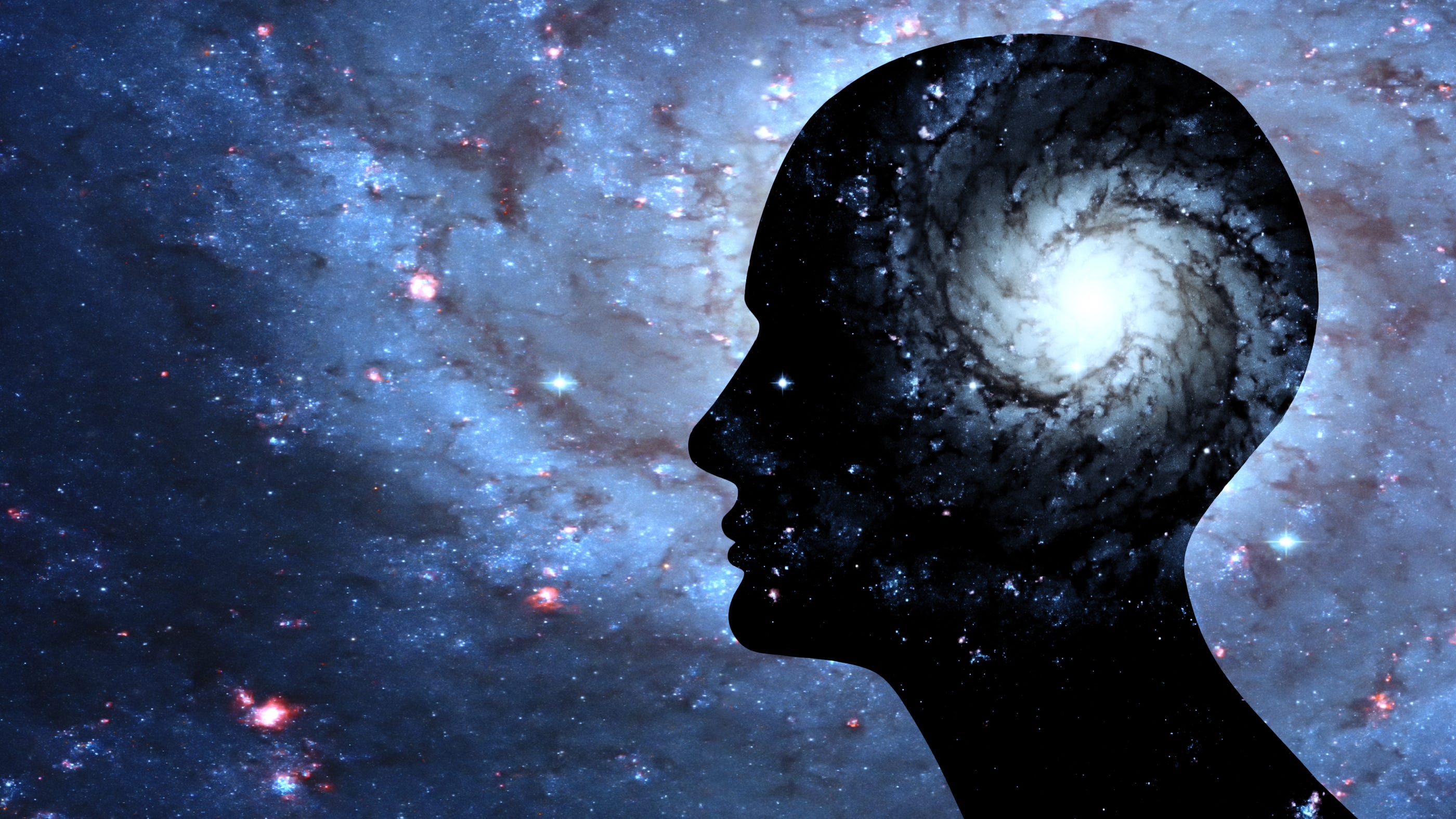
The intriguing question of consciousness—what it is, how it arises, what relationship it bears to physical reality, and whether the universe itself is conscious—stands as perhaps the most profound ontological mystery facing humanity. Personally it relates to a number of studies I have recently undertaken into a range of non-standard topics (for me) like peace of mind, our collective potential, morphic resonance, and stuff bordering on science fiction - like telepathic communication, for example.
There are certainly unique challenges inherent in studying that which makes study itself possible. At a minimum we must confront fundamental questions about the nature of reality, the limits of scientific inquiry, and ultimately what it means to be human in a universe that has somehow given rise to subjective experience.
The paradox at the heart of consciousness studies is that consciousness itself seems at once the most certain and the most elusive aspect of our existence. As René Descartes observed, we can doubt everything except the fact that we are doubting—that we are experiencing. Yet this most intimate and immediate reality resists objective analysis precisely because it is inherently subjective. We cannot step outside consciousness to examine it, for consciousness is the very medium through which examination occurs.
The Materialist Framework: Consciousness as Computation
One of the most comprehensive materialist accounts of consciousness comes from my friend and recently deceased philosopher Daniel Dennett, whose eliminative materialism rejects the notion that consciousness involves special "mental stuff" beyond physical processes. Dennett's approach rests on three interconnected pillars: the rejection of the "Cartesian Theater," a computational theory of mind, and an evolutionary account of consciousness.
Dennett dismantles what he calls the "Cartesian Theater"—the intuitive but problematic notion that somewhere in the brain exists a central "viewing point" where all sensory information comes together to be observed by a unified self. This model creates an infinite regress: if consciousness involves an inner observer watching an inner screen, then what is observing inside that observer? Instead, Dennett proposes a "multiple drafts" model where consciousness emerges from parallel, distributed processes without any central headquarters.
Building on this distributed model, Dennett's computational approach frames consciousness as fundamentally information processing. What we experience as qualia or subjective experiences are, in his view, not mysterious non-physical properties but complex representational states implemented in neural architecture. Consciousness becomes not a special kind of thing but a particular kind of functional organisation—one that can potentially be replicated in non-biological systems.
The evolutionary dimension completes this picture by explaining how such sophisticated cognitive architecture could develop through natural selection. The ability to model the world, predict outcomes, and create internal narratives all confer survival advantages. Consciousness, in this framework, is not a metaphysical mystery but an evolved biological function with clear adaptive benefits.
This materialist position has significant strengths. It maintains parsimony by not multiplying entities beyond necessity. It creates continuity between human experience and the rest of the natural world. Perhaps most importantly, it frames consciousness as potentially investigable through standard scientific methods rather than requiring special epistemological approaches.
Yet critics argue that accounts like Dennett's leave something essential unexplained. Even if we fully mapped the neural correlates of consciousness and understood all the functional relationships involved, would we have explained why there is "something it is like" to be conscious? This question points toward what philosopher David Chalmers famously called the "hard problem" of consciousness.
The Hard Problem and Its Implications
Chalmers distinguishes between the "easy problems" of consciousness—explaining cognitive functions, discriminatory abilities, information integration, and reportability—and the "hard problem" of explaining why these physical processes are accompanied by subjective experience at all. The easy problems, while tremendously complex in practice, are conceptually straightforward: they involve explaining how certain functions are performed. The hard problem asks why these functions are accompanied by first-person experience.
Consider a complete neuroscientific explanation of color vision that accounts for every aspect of how we discriminate, categorise, and respond to different wavelengths of light. Would this explanation, no matter how detailed, necessarily explain what it feels like to see red? Many philosophers argue that there seems to be an explanatory gap between functional descriptions, no matter how complete, and the qualitative and personalised character of experience.
This gap has led some thinkers to propose varieties of dualism—the view that consciousness involves properties beyond the purely physical. Modern dualists generally avoid Cartesian substance dualism in favour of property dualism, which maintains that consciousness emerges from physical systems but involves non-physical properties. While addressing the hard problem, dualism creates its own difficulties, particularly in explaining the causal relationship between physical and non-physical properties.
Beyond the Binary: Alternative Frameworks
The apparent impasse between materialism and dualism has motivated exploration of alternative frameworks that might transcend this binary opposition. These approaches suggest that the hard problem itself might result from conceptual limitations rather than metaphysical mystery.
Panpsychism proposes that consciousness or proto-consciousness might be a fundamental feature of reality, present in some form at all levels of organization. In this view, complex consciousness doesn't emerge mysteriously from non-conscious matter but rather represents a highly organized form of something that exists throughout the physical world. Philosophers like Galen Strawson and Philip Goff have developed sophisticated versions of panpsychism that attempt to avoid both the problems of dualism and the explanatory gaps of strict materialism.
Non-reductive physicalism, advocated by philosophers like John Searle, maintains that consciousness is entirely physical but cannot be reduced to lower-level descriptions. Just as the wetness of water cannot be found in individual H₂O molecules, consciousness may be a higher-level property of certain physical systems that cannot be reduced to component-level descriptions. This view preserves physicalism while acknowledging that different levels of organization may require different explanatory frameworks.
Certain interpretations of quantum mechanics suggest consciousness might play a role in physical reality itself. Theorists like Henry Stapp and mathematicians like Roger Penrose have proposed that quantum effects in the brain might be integral to consciousness, potentially connecting subjective experience to fundamental physical processes.
Phenomenological approaches, following thinkers like Edmund Husserl and Maurice Merleau-Ponty, prioritize the study of consciousness as directly experienced rather than theoretically constructed. Rather than beginning with third-person physical descriptions and trying to derive consciousness, phenomenology starts with the reality of consciousness itself and works outward to understand its structure and relationship to the world.
The Participatory View: Consciousness and Reality Reconsidered
Emerging from these various frameworks is a more participatory understanding of the relationship between consciousness and reality. Rather than viewing consciousness as either a passive observer of an independent reality or merely a product of physical processes, this perspective suggests a more dynamic interrelationship.
Consciousness, in this view, doesn't merely observe reality; it participates in constructing our experience of it. This doesn't mean reality is subjectively determined in a simplistic sense, but rather that the boundary between observer and observed may be more permeable than conventional models suggest. The act of observation itself becomes part of what is being observed.
This perspective finds support in diverse traditions. Quantum physics suggests observation influences the behavior of particles at fundamental levels. Cognitive science demonstrates how perception actively constructs rather than passively receives information. Phenomenologists have long argued that consciousness is not in the world like an object but is rather the opening through which world appears.
Such a participatory framework doesn't resolve all questions, but it reframes them in potentially productive ways. Rather than asking how physical stuff produces conscious experience, we might ask how consciousness and physicality relate as aspects of a more fundamental reality that is neither purely mental nor purely material in the conventional sense.
Practical Implications: Why Consciousness Matters
The question of consciousness extends far beyond academic philosophy. How we understand consciousness profoundly influences domains ranging from ethics to artificial intelligence to environmental philosophy.
If consciousness is fundamentally computational, as Dennett suggests, then artificial systems might eventually develop consciousness comparable to our own. This would raise profound ethical questions about the moral status of such systems. Conversely, if consciousness involves non-computational elements, as some theorists propose, then artificial intelligence might develop very differently from biological intelligence regardless of functional similarities.
Our understanding of consciousness also shapes how we relate to other forms of life. If consciousness exists on a continuum rather than appearing suddenly with human complexity, then many non-human animals likely experience forms of consciousness that deserve moral consideration. The recognition of consciousness in other species has already influenced animal welfare ethics and could potentially reshape our relationship with the more-than-human world more broadly.
The question of consciousness even influences how we approach mortality and the possibility of existence beyond biological death. Different conceptions of consciousness yield radically different understandings of what might constitute survival beyond bodily death, from the possibility of consciousness persisting independently to the prospect of uploading consciousness to non-biological substrates.
Navigating Uncertainty: Toward an Integrative Approach
Given the profound nature of these questions and the limitations of our current understanding, intellectual humility seems warranted. Rather than committing dogmatically to any single framework, we might benefit from holding multiple models simultaneously—employing different approaches based on the specific questions we're addressing.
Materialist accounts offer tremendous explanatory power for understanding the neural correlates of consciousness and developing practical applications in medicine, psychology, and potentially artificial intelligence. Yet phenomenological approaches may better capture the qualitative dimensions of experience that seem to resist third-person description. Alternative frameworks like panpsychism might help bridge conceptual gaps that arise from our historical dichotomy between mind and matter.
This integrative approach doesn't represent philosophical indecision but rather a recognition that consciousness may be too multifaceted to be captured by any single explanatory framework. Just as physics requires both quantum mechanics and general relativity despite their conceptual tensions, understanding consciousness may require multiple complementary frameworks.
Morphic Resonance: A Quirky Spanner in the Works
Morphic resonance, a hypothesis proposed by biologist Rupert Sheldrake, represents one of the more controversial theories related to consciousness and its manifestation in physical systems. While not primarily a theory of consciousness itself, morphic resonance makes claims that significantly intersect with fundamental questions about mind, memory, and the structure of reality.
Sheldrake's theory proposes that systems self-organize according to "morphic fields"—non-physical organizing principles that shape the development of systems ranging from crystals to organisms to social groups. These fields are said to contain a kind of collective memory that influences similar systems across space and time. According to this hypothesis, when a particular pattern of organization occurs in one location, it becomes more likely to occur elsewhere, not through conventional energy or information transfer, but through a process Sheldrake terms "morphic resonance."
In relation to consciousness, morphic resonance suggests several provocative possibilities that stand largely outside mainstream scientific discourse while intersecting with some alternative frameworks mentioned above.
Intersections with Existing Frameworks
Morphic resonance most obviously aligns with panpsychist perspectives in suggesting that something like memory or information patterning may be inherent in nature itself, not merely in brains or conventional information-processing systems. Where panpsychism proposes that consciousness might be fundamental to reality, morphic resonance suggests that memory and habit might likewise be properties that extend beyond individual organisms into the fabric of nature.
There are also resonances with quantum approaches to consciousness. While Sheldrake doesn't typically frame his theory in quantum mechanical terms, both approaches suggest connections that transcend conventional understandings of causality and locality. Just as quantum entanglement suggests connections between particles that don't depend on spatial proximity, morphic resonance proposes connections between similar systems regardless of their distance in space or time.
From a phenomenological perspective, morphic resonance might provide a naturalistic (though highly unconventional) account for what Carl Jung called the "collective unconscious"—the apparent inheritance of archetypal patterns and symbols across cultures and generations. If morphic resonance operates as Sheldrake suggests, it could explain how certain experiential patterns might recur across humanity without requiring genetic encoding.
Tensions with Materialist Accounts
Morphic resonance stands in stark tension with materialist frameworks like Dennett's. Where Dennett sees consciousness as emerging from physical processes that can be understood through conventional scientific methods, morphic resonance posits non-physical organizing principles that operate through means not recognized by standard physics or biology.
The theory particularly challenges the computational theory of mind by suggesting that memory might not be stored in physical substrates like neural connections at all, but rather accessed through resonance with past similar patterns. This fundamentally alters how we might understand the relationship between brain and mind, suggesting the brain might be more like a receiver tuning into fields of information rather than a storage and processing device generating consciousness.
This aspect of Sheldrake's theory relates to what philosopher Karl Popper and neuroscientist John Eccles called "interactionist dualism"—the idea that mind and brain interact but remain distinct. However, Sheldrake frames this interaction not in dualistic terms but through his concept of fields that, while not conventionally physical in the reductive sense, are nevertheless part of an expanded conception of nature.
Epistemological challenges
The most significant challenge facing morphic resonance is epistemological. Sheldrake has proposed various experiments to test aspects of his theory, including studies of animal learning across separated populations and investigations of human abilities to detect when they're being stared at. However, these studies remain highly contested within the scientific community, with critics arguing they contain methodological flaws or that positive results have failed to replicate under more controlled conditions.
The theory illustrates a broader tension in consciousness studies between explanatory power and empirical testability. Morphic resonance offers an expansive framework that could potentially explain phenomena ranging from the evolution of species to psychic experiences that seem difficult to account for in conventional terms. Yet this very expansiveness makes the theory difficult to conclusively verify or falsify through standard scientific methods.
Integration with a Participatory Framework
While maintaining appropriate scepticism toward its empirical claims, we might consider how morphic resonance conceptually aligns with the participatory framework described earlier. Both suggest that consciousness does not merely observe reality but actively participates in shaping it—morphic resonance through the accumulation of patterns that influence future similar systems, and the participatory view through the co-creative relationship between observer and observed.
Morphic resonance adds to this picture the provocative suggestion that this participation might extend across time, with present consciousness not merely interacting with current reality but potentially resonating with patterns from the past and even influencing patterns in the future. This temporal dimension of participation—consciousness not merely as a present phenomenon but as part of an ongoing process extending backward and forward in time—offers a distinctive perspective on consciousness's role in reality.
Practical implications
If something like morphic resonance were to be valid, the practical implications would be profound. Learning might be facilitated not just by individual effort but by resonance with others who have learned similar skills or knowledge. Cultural patterns might persist through mechanisms beyond genetic inheritance or explicit teaching. Intentional states like meditation or prayer might influence reality not just through their immediate physical effects but through establishing patterns that resonate across wider systems.
Mass meditation undoubtedly changes the participants themselves, which can lead to social change through conventional means. Whether it directly influences physical reality beyond this depends on which model of consciousness most accurately reflects reality—a question that remains open. What makes this question particularly interesting is that it sits at the intersection of empirically testable claims and fundamental assumptions about consciousness that shape how we interpret any evidence we might gather.
These implications might seem far-fetched from a conventional scientific perspective, yet they align with persistent human intuitions across cultures and traditions—intuitions that materialist frameworks often struggle to accommodate. The question becomes whether these intuitions represent mere wishful thinking or point toward aspects of reality that our current scientific paradigms fail to capture.
Holding Multiple Frameworks
Morphic resonance illustrates the value of the integrative approach advocated above. While maintaining appropriate scientific scepticism toward its specific claims, we can recognise how it challenges conventional boundaries between mind and matter, individual and collective, past and present. These challenges, whether or not Sheldrake's specific formulation proves empirically sustainable, point toward the limitations of our current conceptual frameworks for understanding consciousness.
In the ongoing exploration of consciousness, morphic resonance serves as a reminder that the most significant breakthroughs might come not from working within established paradigms but from fundamental reconceptualizations of what consciousness is and how it relates to the physical world. Whether such reconceptualizations ultimately incorporate something like morphic resonance or take entirely different forms, they will likely continue to challenge our assumptions about the boundaries between mind and matter, individual and collective, observer and observed—boundaries that, when examined closely, may prove more permeable than our conventional thinking suggests.
In this vein, morphic resonance takes its place alongside other frameworks, not as a definitive answer but as part of an ongoing conversation about consciousness—a conversation that continues to evolve as we bring new questions, new methodologies, and new experiences to bear on the enduring mystery of how mind and reality interrelate.
The Ongoing Quest
There's no doubt that the question of consciousness stands at the intersection of our most advanced scientific understanding and our most fundamental human experience—highlighting the persistent gap between explaining the mechanics of existence and understanding what it means to exist at all. This tension is not merely an academic curiosity but touches the core of what it means to be human.
Perhaps what makes consciousness so fascinating is precisely its resistance to a final resolution through conventional inquiry. As we investigate consciousness, we inevitably transform it, for the act of investigation itself is a conscious act that changes the very phenomenon being studied. This recursive quality may not represent a limitation to be overcome but rather a fundamental characteristic of consciousness itself—one that invites ongoing exploration rather than definitive conclusion.
In this ongoing quest, we confront not just an abstract philosophical puzzle but the mystery of our own existence. Whether consciousness ultimately proves to be purely physical, irreducibly subjective, or something that transcends this dichotomy entirely, the journey of understanding consciousness remains one of humanity's most profound intellectual adventures—one that continues to unfold with each moment of awareness through which we perceive the world and ourselves within it.
Furthermore, the mystery of consciousness doesn't diminish with greater understanding; it actually deepens. And perhaps that deepening itself—that capacity for wonder in the face of existence—represents one of consciousness's most remarkable qualities. As we continue to explore the frontiers of mind and reality, we participate in consciousness's ongoing evolution, not merely as passive observers but as active contributors to its unfolding mystery.